Choosing the right colorbond fence panels for a B2B project is not only about size, colour, or price. This guide will help you understand panel sizes, sheet profiles, coating options, complete fence systems, gates, accessories, and bulk packing details before you place an order.
At JZH Fence, we supply Colorbond-style steel fence systems for wholesalers, contractors, builders, farms, schools, and commercial boundary projects in Australia, New Zealand, and other overseas markets. Based on our export experience, many project delays can be reduced when buyers confirm panels, posts, rails, gates, labels, and accessory lists before production.
Let’s go through the 7 key checks that can help you choose the right panels and prepare a smoother bulk fencing order.
COLORBOND® is a registered trademark of BlueScope Steel Limited. JZH Fence supplies Colorbond-style steel fencing systems, not genuine COLORBOND® steel unless otherwise confirmed.
What Are Colorbond-Style Fence Panels?
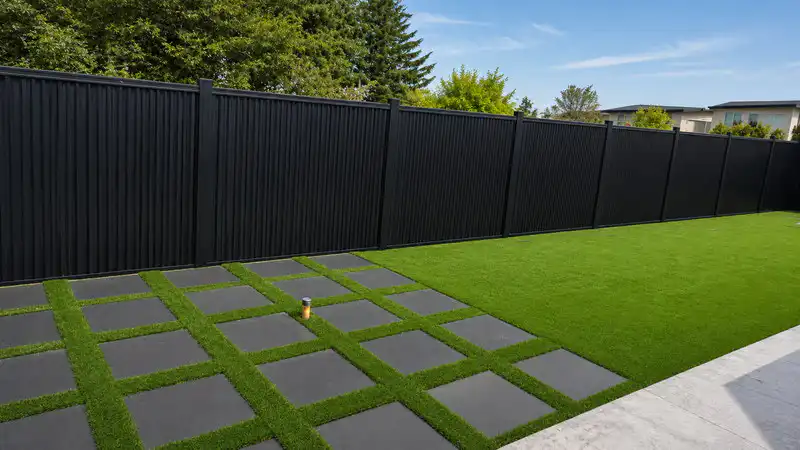
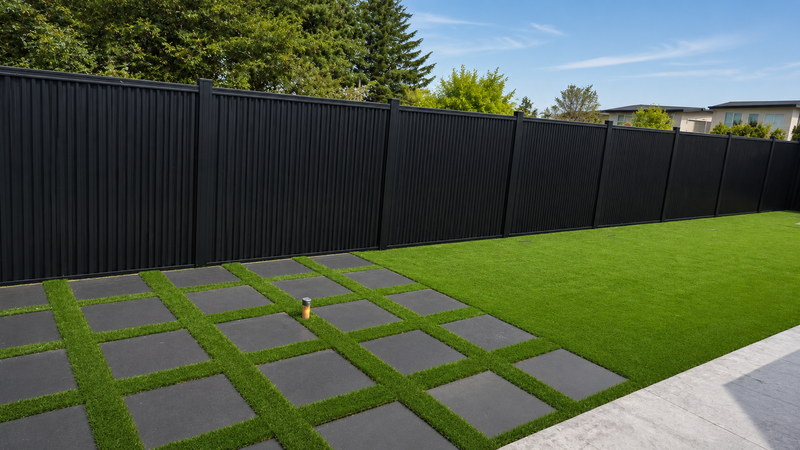
Colorbond-style fence panels are pre-painted steel fence panels used for boundary fencing, privacy fencing, and light commercial perimeter projects. A complete fence system usually includes roll-formed steel sheets, top rails, bottom rails, channel posts, caps, screws, brackets, and matching gates.
Many buyers use the term colorbond fence panels when searching for this type of steel privacy fence. For international supply, it is better to describe the product as Colorbond-style steel fence panels or pre-painted steel fence panels, especially when you are not buying the original Australian branded material.
A complete system can include:
- Fence panels
- Top rails and bottom rails
- Channel posts
- Post caps
- Screws and brackets
- Optional plinths or sleepers
- Matching pedestrian gates or driveway gates
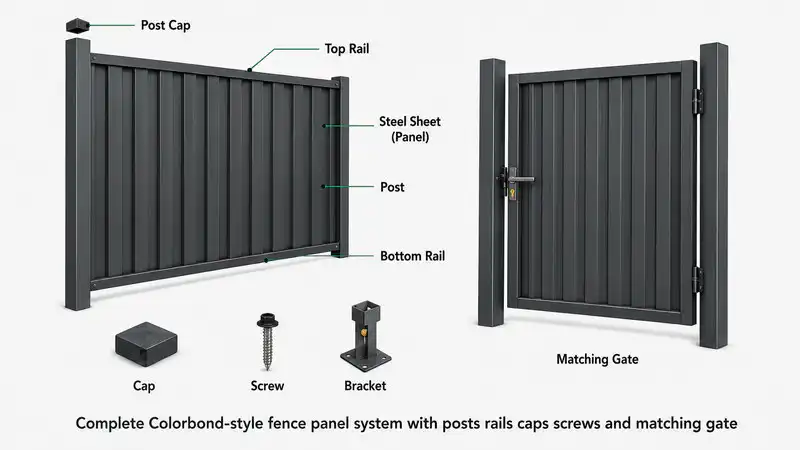
For B2B buyers, the key point is simple: the panel is only one part of the full fence system. If the panel, post, rail, gate, and accessories are not planned together, your project may need extra confirmation before production or installation.
Check 1: Confirm the Standard Panel Height
Most standard colorbond fence panels are supplied in three common heights: 1.5m, 1.8m, and 2.1m. These sizes are widely used for residential boundaries, commercial fencing, school projects, farms, and bulk fencing supply.
Common panel heights include:
| Common Panel Height | Typical Application |
|---|---|
| 1.5m | Front boundary, garden fencing, moderate privacy |
| 1.8m | Standard residential side and rear boundary fencing |
| 2.1m | Higher privacy, commercial boundary, school or project fencing |
| Custom height | Project-based privacy, screening, or special site requirements |
For many residential projects, 1.8m high fence panels are the most common option. If the project needs more privacy or a stronger boundary appearance, buyers may choose 2.1m panels.
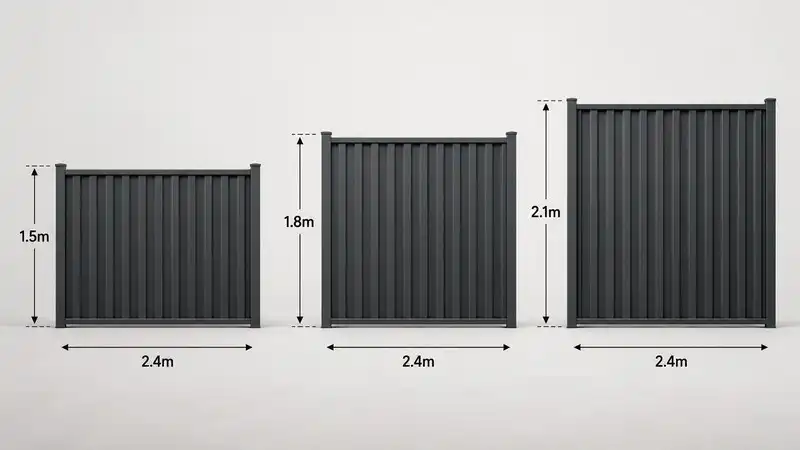
For large B2B orders, JZH Fence can also manufacture custom panel sizes according to drawings, layout plans, or project requirements.
Check 2: Decide Whether You Need Standard or Custom Heights
Some projects need a height outside the common 1.5m, 1.8m, and 2.1m range. This is common when the fence is used for extra privacy, equipment screening, school boundaries, farm fencing, or commercial perimeters.
When choosing a taller or custom-height panel, do not look at panel height alone. Taller panels may need stronger posts, thicker rails, deeper footings, or project-specific installation planning.
For residential projects, you should also check local fence height rules before confirming production, because height limits and permit requirements may vary by council area. For example, Monash Council notes that side and boundary fence rules can depend on location and planning requirements.
For commercial or industrial sites, the suitable height may depend on project type, site exposure, security needs, and local regulations.
Check 3: Choose the Right Sheet Profile and Thickness
The sheet profile affects both the appearance and system compatibility of colorbond fence panels. It decides how the steel sheets interlock and how they fit with rails and posts.
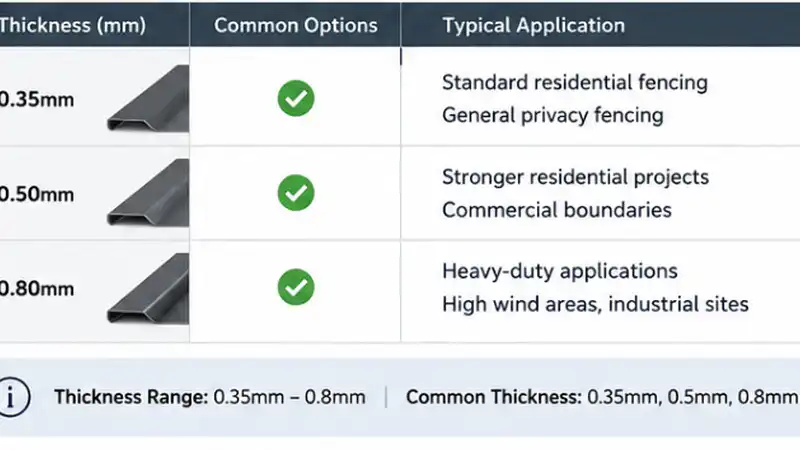
The sheet thickness can usually be selected within the 0.35–0.8mm range, depending on the project requirement. The most common thickness options are 0.35mm, 0.5mm, and 0.8mm.
| Sheet Thickness | Typical Use |
|---|---|
| 0.35mm | Standard residential boundary fencing and general privacy fencing |
| 0.5mm | Stronger residential projects, commercial boundaries, or higher rigidity needs |
| 0.8mm | Heavy-duty applications, exposed sites, or projects requiring stronger impact resistance |
| Custom thickness | Project-based requirements upon confirmation |
If you only need replacement sheets, confirm these details before quotation:
| Required Information | Why It Matters |
|---|---|
| Width | Helps match the required bay or existing fence |
| Height | Matches privacy and boundary requirements |
| Sheet profile / tile type | Matches the visual style and rail system |
| Thickness | Affects rigidity and project suitability |
| Colour | Matches existing panels or project design |
However, sheet thickness should not be selected alone. Posts, rails, fixings, and footings must work together as a complete fence system. If your fence is used in an open, windy, coastal, or commercial environment, confirm the full structure instead of only asking for a thicker sheet. For Australian and New Zealand projects, wind exposure is commonly assessed with reference to AS/NZS 1170.2 wind actions, which covers procedures for determining wind speeds and resulting wind actions on structures.
Check 4: Select the Right Coating and Colour
The coating system is one of the most important parts of Colorbond-style fence panels, especially for coastal or exposed projects. Corrosion can be reduced by isolating metal from the environment with suitable coating systems, according to the Australasian Corrosion Association. It affects corrosion resistance, colour retention, maintenance, and long-term appearance.
Common finish considerations include:
- Smooth or low-sheen finish
- Matte finish
- Standard outdoor coating
- Coastal-grade coating upon request
- Custom RAL colour for large B2B orders
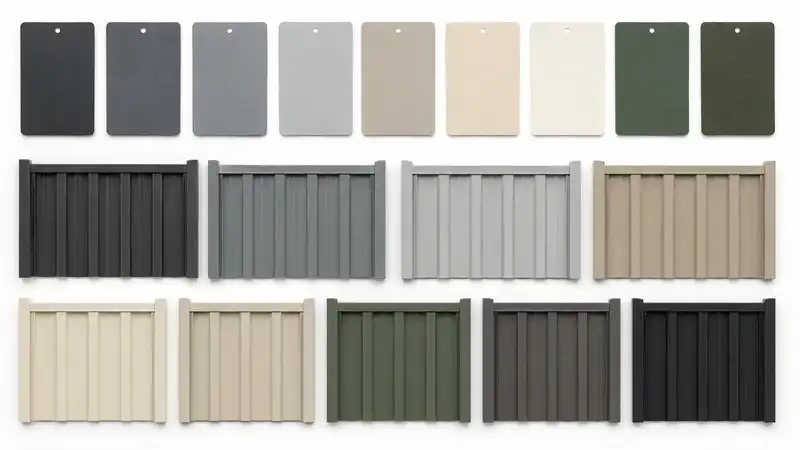
Colour is also important for project appearance. For residential developments, buyers often match the fence with roofing, gutters, garage doors, or exterior walls. For commercial projects, buyers may choose colours that match the building façade or landscape design.
For large orders, confirm the colour before production. This helps reduce the risk of colour mismatch between batches.
Check 5: Decide Between Panel Only and Complete Fence System
Many buyers first ask for colorbond fence panels only. In real project supply, panels usually need to work with posts, rails, caps, screws, brackets, gates, and sometimes plinths or sleepers.
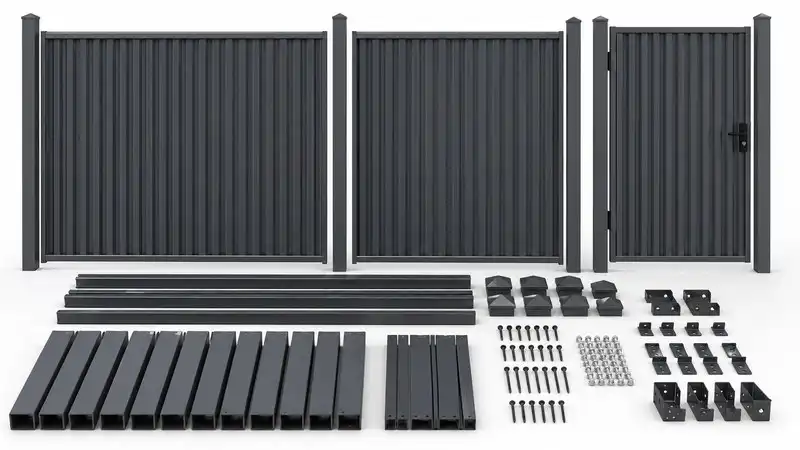
At JZH Fence, we normally ask the buyer to confirm the preferred fence style first. Then we match the suitable posts, rails, and accessories for that system. If the project has special requirements, such as different gate sizes, plinths, sleepers, or custom posts, we can adjust the configuration before production.
When Panel Only May Be Suitable
Panel-only supply may work when:
- You only need replacement sheets
- Your existing posts and rails are still usable
- You can confirm width, height, sheet profile, thickness, and colour
- Your local installer already has compatible accessories
If you are comparing fence replacement cost, panel-only supply may look cheaper at first. But you still need to check whether your existing posts, rails, and accessories can match the new sheets.
When a Complete Fence System Is Better
A complete fence system is usually better for:
- New residential boundary projects
- Townhouse or multi-lot developments
- Commercial boundaries
- School projects
- Farm projects
- Bulk wholesale supply
- Projects with matching gates
A complete system can include:
| Component | Purpose |
|---|---|
| Fence panels | Privacy and boundary coverage |
| Posts | Main structural support |
| Top rails | Upper frame and panel locking |
| Bottom rails | Lower support and alignment |
| Caps | Clean finishing and protection |
| Screws / brackets | Fixing and connection |
| Gates | Matching access points |
| Plinths / sleepers | Bottom gap control or light retaining support |
For B2B buyers, a complete system is often easier than sourcing panels, posts, rails, and fixings from different suppliers. It can also make the colorbond fence price easier to compare because you know what is included in the quotation.
Check 6: Plan the Installation Details Before Production
This article is not a full guide on how to install a colorbond fence, but installation planning should start before production.
Before installing colorbond fence panels, confirm:
- Fence line and boundary location
- Post spacing
- Gate positions
- Corners and end posts
- Ground slope
- Bottom clearance
- Whether plinths or sleepers are required
- Soil condition and footing depth
- Local installation requirements
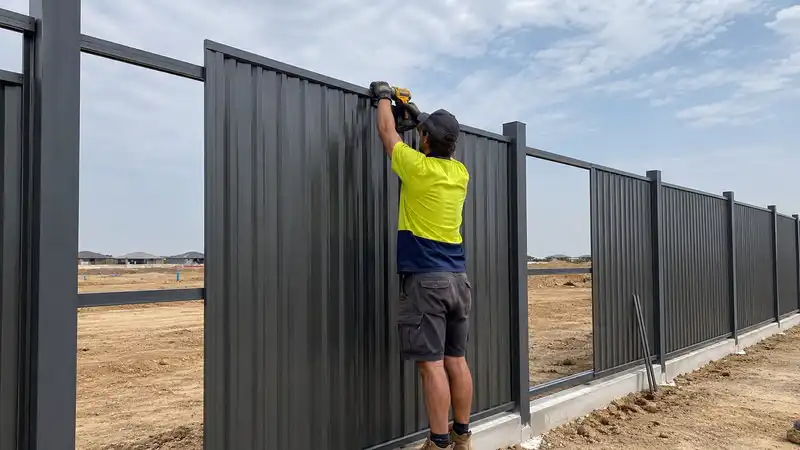
Large or tall panels usually need more accurate post positioning. If the site has slopes or uneven ground, decide early whether the project should use stepped installation or raked installation.
Planning these details before production can reduce cutting, rework, and installation delays.
Stepped vs Raked Installation on Sloped Ground
Sloped land often needs special planning. Two common methods are stepped installation and raked installation.
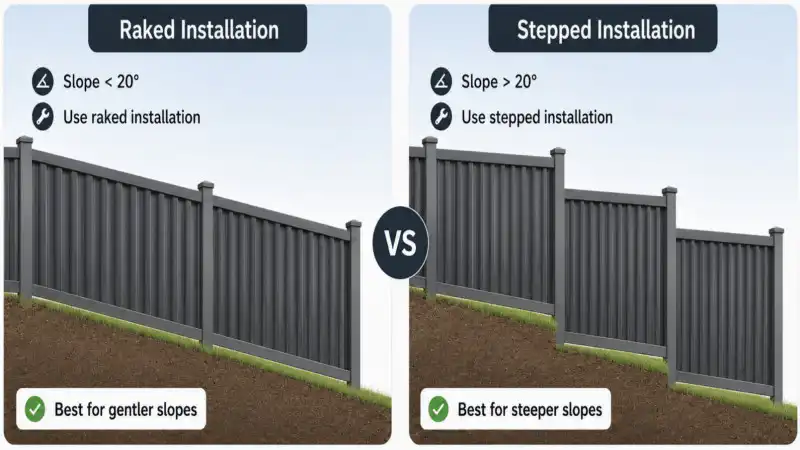
| Installation Type | Best For | Appearance |
|---|---|---|
| Stepped installation | Clear level changes or stronger slopes | Panels step down like stairs |
| Raked installation | Mild slopes | Panels follow the ground line |
If your site is sloped, send drawings or site photos before confirming the order. This helps the supplier check whether standard panels are enough or whether over-length sheets, special posts, or adjusted gate planning may be needed.
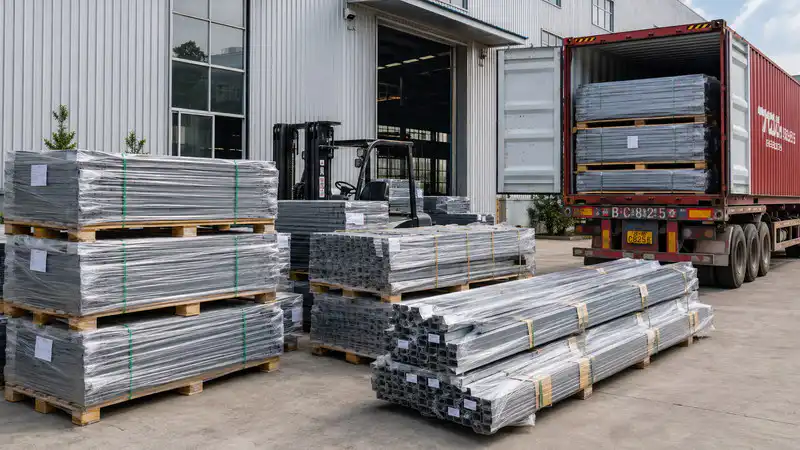
Check 7: Confirm Packing, Labels, and Accessory Lists for Bulk Orders
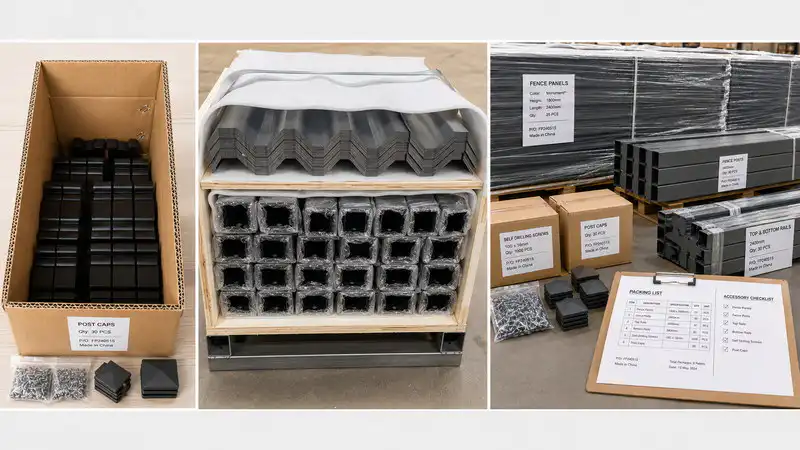
For B2B orders, packing is not just about putting panels into a container. It affects unloading, warehouse checking, site sorting, and installation efficiency.
A bulk order may include different panel heights, colours, posts, rails, gates, and accessories. If the packing is unclear, the customer may spend extra time checking which package belongs to which part of the project.
At JZH Fence, packing can be arranged according to product type, space-saving needs, gate assembly requirements, and project delivery requirements.
Gate Packing
If the order includes gates, JZH Fence can pre-assemble gates when required. This may help customers reduce site assembly work.
If the buyer wants to save container space, gates can also be packed in parts. This depends on order size, project needs, and loading requirements.
English Labels
JZH Fence can use English labels for export orders. Labels help buyers identify product name, size, colour, quantity, and package information more quickly after unloading.
This is especially useful for wholesalers, contractors, and multi-lot development projects.
Accessory Checklist
Small accessories are easy to overlook during unloading. Screws, caps, brackets, hinges, locks, and gate fittings should be checked carefully.
An accessory checklist helps the buyer confirm small parts before installation begins.
Packing List and Installation Drawing
For B2B fence projects, JZH Fence can provide:
| Document | Why It Helps |
|---|---|
| Packing list | Helps with unloading and warehouse checking |
| Accessory checklist | Helps check screws, caps, brackets, and gate fittings |
| Installation drawing | Helps match panels, posts, rails, and gates |
| English labels | Helps identify packages faster |
| Gate assembly details | Helps buyers understand the gate packing method |
In Australia and New Zealand projects, clear labelling and complete packing information have helped customers reduce sorting time before installation. For project buyers, this is a real cost-saving detail. Less time spent checking materials means faster site preparation.
Design Options for Colorbond Fencing
Modern colorbond fencing is not limited to plain steel panels. Many projects combine steel fence panels with other materials to improve appearance or match the property style.
Common design options include:
- Steel panels between masonry piers
- Steel panels with aluminium slat tops
- Two-tone colour combinations
- Matching steel gates
- Plinths or sleepers at the bottom
- Decorative screen sections
- Different post and panel colour combinations
For townhouse developments, builders often want a clean and consistent boundary. For commercial projects, buyers may care more about durability, privacy, and a neat exterior. For wholesale buyers, repeatable sizes, stable colours, and easy reordering are often more important.
When choosing a design, keep the full project in mind. The best fence is not only attractive. It should also be easy to quote, pack, install, and reorder.
Maintenance and Longevity
One reason buyers choose colorbond fencing is low maintenance. Compared with timber fencing, pre-painted steel panels do not require regular painting, staining, or oiling.
Basic maintenance includes:
- Washing panels with clean water
- Removing dirt, salt, or chemical residue
- Checking post bases
- Checking rail connections
- Avoiding long-term soil contact with steel sheets
- Repairing coating damage early
Panel size can also affect maintenance. Larger panels create fewer joints, while smaller panels may be easier to replace if one area is damaged.
For coastal or industrial environments, maintenance should be more regular. Correct coating selection and proper installation are key to long-term performance.
How to Compare Colorbond Fence Price and Cost Per Meter
When buyers compare colorbond fence price or colorbond fence cost per meter, they should check what is included in the quotation.
A low price may only include sheets. A more complete quotation may include panels, posts, rails, caps, screws, brackets, gates, packing labels, and installation documents.
Before comparing prices, check:
- Does the quote include panels only or a complete fence system?
- Are posts and rails included?
- Are caps, screws, and brackets included?
- Are gates included?
- Is the colour standard or custom?
- Is the coating suitable for the project environment?
- Are packing list, English labels, and accessory checklist included?
- Is installation drawing support included?
This is why two suppliers may give different colorbond fence cost per meter. The cheaper quote is not always the better quote if it misses key accessories or project support.
Quick Buying Checklist for B2B Buyers
Before ordering colorbond fence panels, use this checklist:
- Confirm total fence length
- Confirm panel height
- Confirm standard or custom width
- Confirm sheet profile / tile type
- Confirm sheet thickness
- Confirm colour and coating
- Confirm whether you need posts and rails
- Confirm whether you need matching gates
- Confirm whether you need plinths or sleepers
- Confirm whether the site is flat or sloped
- Confirm whether you need English labels
- Confirm whether you need packing list, accessory checklist, and installation drawing
For B2B buyers, a clear quote is not only based on panel size. It should include the full project requirement: panels, posts, rails, gates, accessories, coating, packing, and delivery expectations.
Frequently Asked Questions About Colorbond-Style Fence Panels
1. What are the standard sizes of Colorbond-style fence panels?
Common fence heights include 1.5 m, 1.8 m and 2.1 m, while custom heights can be produced for specific projects. Sheet thickness, panel width and profile should be selected according to the fence system, wind exposure and application. Buyers should confirm the complete panel dimensions and local height requirements before production, especially for commercial sites, schools, farms and high-privacy boundaries.
2. Can I order replacement panels for my existing fence posts and rails?
Yes, panel-only supply may be suitable when the existing posts and rails remain usable. However, the replacement sheets must match the existing panel width, height, profile, thickness, rail opening and fixing method. Buyers should provide clear photos, measurements, profile drawings or a physical sample before ordering. A visual colour match alone does not confirm that the new panels will fit the existing fence system.
3. What is included in a complete Colorbond-style fence system?
A complete system can include steel infill panels, channel posts, top and bottom rails, post caps, screws, brackets and other fixing accessories. Matching pedestrian gates, driveway gates, plinths and sleepers can also be included when required. The exact scope should be listed in the quotation and packing list so buyers can identify any missing components before shipping and installation.
4. How can buyers maintain colour consistency across bulk and repeat orders?
Buyers should approve a physical colour sample before mass production and record the colour code, surface finish and coating specification. If panels from different orders will be installed next to each other, the supplier should be informed before production because small colour variations may occur between batches. Keeping approved samples and ordering spare panels can make future replacements and repeat purchases easier.
5. How are Colorbond-style fence panels and accessories packed for bulk orders?
Bulk packing should separate panels, posts, rails, gates and small accessories according to the project or product type. English labels can identify the size, colour, quantity and package contents. Buyers should also request a packing list, accessory checklist and installation drawing. Gates may be shipped pre-assembled or packed in parts depending on container space, unloading conditions and site assembly requirements.
Ready to Order Colorbond-Style Fence Panels for Your Next Project?
Choosing colorbond fence panels is not just a product decision. For B2B buyers, it is also about matching the right panels, posts, rails, gates, accessories, packing method, and installation documents before the goods leave the factory.
JZH Fence supplies Colorbond-style steel fence panels, matching gates, posts, rails, caps, screws, brackets, plinths, and other fencing accessories for wholesalers, contractors, builders, farms, schools, and commercial boundary projects. We can also support custom sizes, colours, sheet profiles, English labels, packing lists, accessory checklists, and installation drawings based on your order requirements.
Send us your fence length, panel height, colour, gate size, quantity, drawing, and destination. Our team will help you prepare a practical quotation for your bulk fencing project.