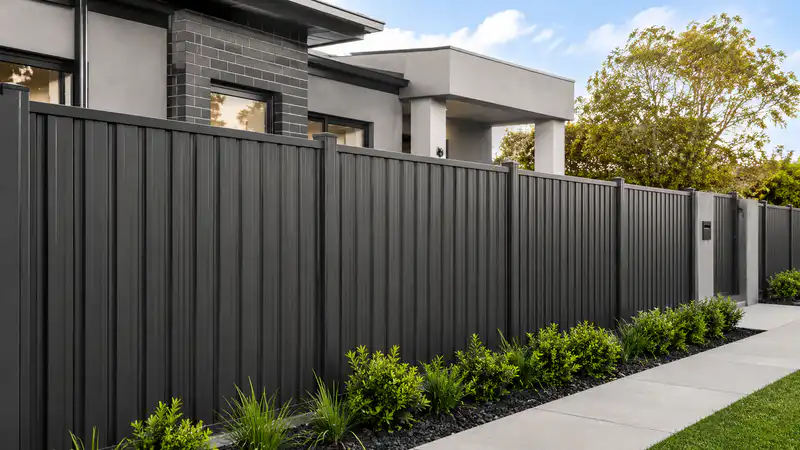
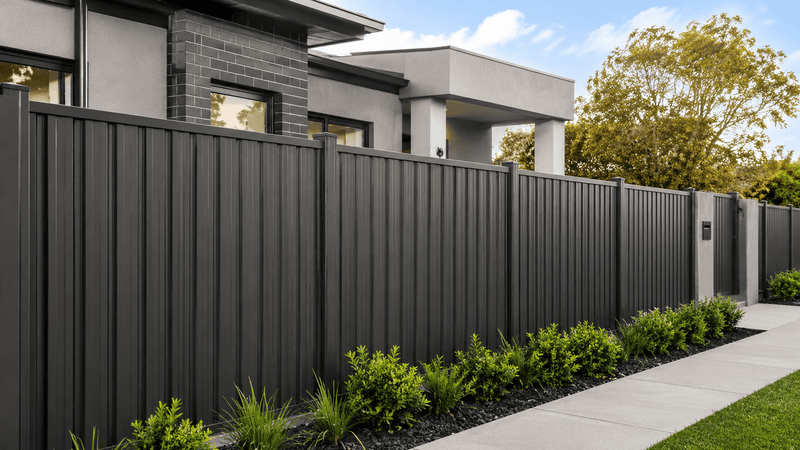
Modern Colorbond-style steel fence designs are no longer only about marking a property boundary. For builders, wholesalers, fence contractors, and project suppliers, the right design can improve privacy, airflow, street appeal, installation efficiency, and long-term maintenance performance. From standard solid panels to slat-style sections, breezeway profiles, lattice toppers, and two-tone colour designs, today’s pre-painted steel fencing styles give project buyers more flexibility for contemporary residential and commercial properties.
Trademark note: COLORBOND® is a registered trademark of BlueScope Steel Limited. JZH Fence is not affiliated with or endorsed by BlueScope Steel Limited. Unless specifically stated and verified by material documentation, our products are Colorbond-style steel fencing systems made with pre-painted or powder-coated steel materials, not genuine COLORBOND® steel.
Modern Colorbond-Style Steel Fence Designs at a Glance
Modern Colorbond-style steel fence designs can be simple, functional, or more architectural depending on the project environment. Some projects need a full privacy boundary. Others require airflow, front-yard visibility, a cleaner street appearance, or a more decorative finish.
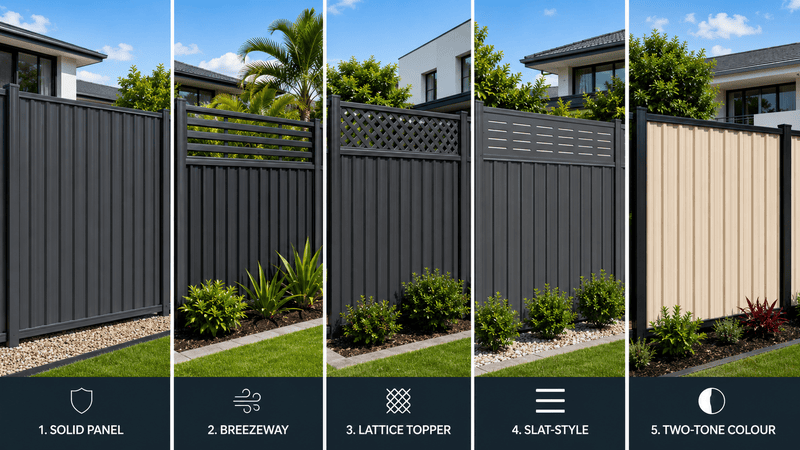
The five most practical design options are standard solid panels, slat-style steel fence design, breezeway fence design, lattice topper design, and two-tone colour design. Each option solves a different problem. Solid panels are usually selected for privacy and cost control. Slat-style panels are suitable when the project needs a balance between privacy and appearance. Breezeway sections work well where airflow is important. Lattice toppers add height and visual detail. Two-tone colours help long fence runs look more modern and less monotonous.
For B2B buyers, a steel fence should not be treated as panels only. A complete pre-painted steel fencing system should include posts, rails, caps, fixings, gates, packing lists, installation drawings, and accessory kits. These details affect how quickly the fence can be installed and how consistent the final appearance will be across multiple project sites.
JZH Fence supplies OEM/ODM Colorbond-style steel fence systems for residential, commercial, and project-based applications. Our solutions can include custom panel profiles, colour options, gates, plinth systems, coating options, and matching accessories for different market needs.
What Makes Modern Colorbond-style Steel Fencing Stand Out?
Modern pre-painted steel fencing is widely used because it offers a clean appearance, strong privacy, and lower maintenance compared with many traditional fence materials. Compared with timber fencing, pre-painted or powder-coated steel fencing does not rot, warp, or attract termites. It also avoids regular repainting or oiling, which helps reduce maintenance work over time.
Compared with chain link fencing, steel privacy fencing provides a more complete visual barrier and a more finished architectural appearance. For residential estates, commercial yards, service areas, and side boundaries, this can make the whole property look cleaner and more organised.
For many contemporary homes and commercial properties, Colorbond-style steel fencing works well because it creates a strong boundary without looking overly complex. The surface is clean, the lines are simple, and the colours can coordinate with roofs, wall cladding, gates, landscaping, and external building finishes.
For B2B buyers, the real value is system stability. When panels, posts, rails, caps, and fixings are designed together, the fence is easier to install and the final result is more consistent. This is especially important for builders, fence contractors, wholesalers, and project suppliers who need repeatable quality across repeated orders or multi-site developments.
Standard Solid Panel Design
Standard solid panels are one of the most practical choices for side boundaries, rear fences, residential estates, commercial yards, and industrial perimeter fencing. This design is usually selected when privacy, cost control, and installation efficiency are the main priorities.
A solid panel fence can block visibility, create a clean boundary, and cover long fence runs without adding unnecessary design complexity. For rear yards, storage spaces, service areas, and long residential boundaries, the main purpose of the fence is usually privacy and separation. In these situations, a full solid panel system is often the most straightforward solution.
For project buyers, standard solid panels are also easier to quote, pack, and install. This makes them a strong option for builders and wholesalers who need a reliable fencing solution for repeated orders or larger developments. When the design is simple and standardised, the supplier can prepare matching posts, rails, caps, and fixings more efficiently.
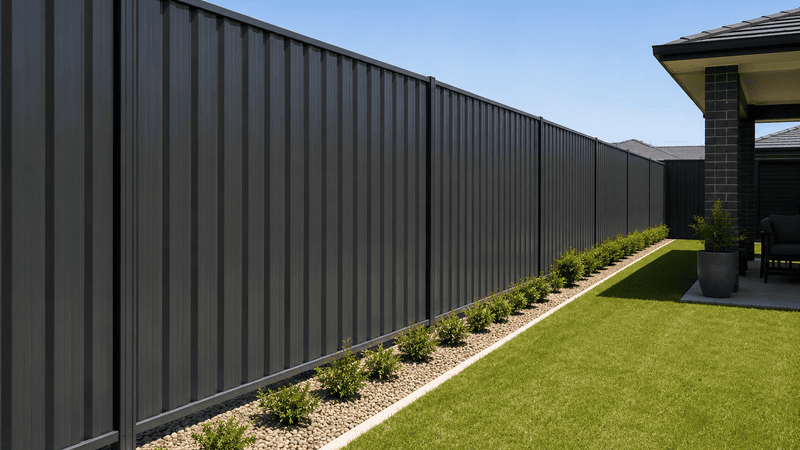
From a purchasing view, solid panel fencing is often the safest choice when the buyer wants predictable product quality, efficient installation, and better cost control. It is also easier to combine with matching gates, posts, rails, and plinths when the site requires a complete system.
Slat-Style Steel Fence Design
Slat-style steel fence design is often used when the project needs a more modern and open appearance. It is suitable for front boundaries, garden entrances, pool surroundings, commercial entrances, and contemporary residential projects.
Compared with a full solid panel fence, slat-style fencing looks lighter and more architectural. It can provide partial privacy while still allowing some light and air movement. This makes it useful when the client does not want the property to feel completely closed in.
Slat-style fencing is often selected for Colorbond front fence ideas because front boundaries are highly visible. Unlike rear boundaries, a front fence should usually balance privacy, street appeal, airflow, and access. A fully solid front fence may feel too heavy for some modern homes, while slat-style sections can create a more welcoming entrance.
For residential developers and landscape contractors, slat-style designs can also help improve the visual value of the property. They give the fence a cleaner and more designed appearance, especially when combined with modern colours, matching gates, lighting, mailbox details, or landscaping.
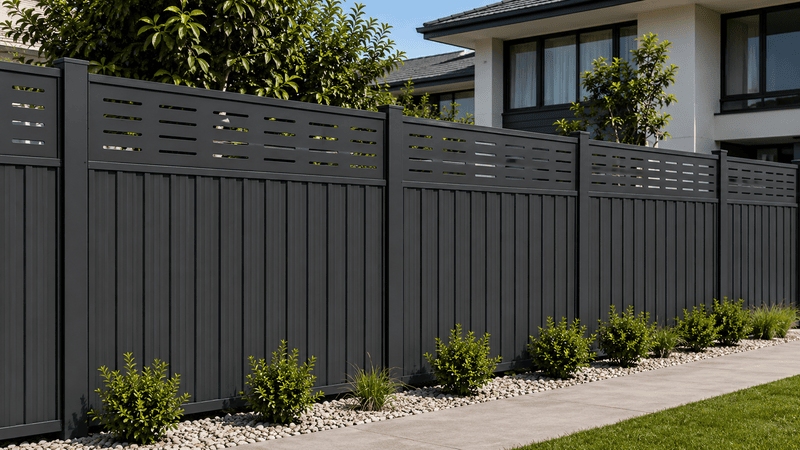
This design is a good choice when the buyer wants a balance between privacy and appearance. It may not provide the same full privacy as a solid panel, but it can make front boundaries, pool areas, and outdoor spaces feel more open, refined, and contemporary.
Breezeway Fence Design
Breezeway fence design is suitable for spaces where airflow matters more than full privacy. It is often used in hot-climate courtyards, pool areas, garden entries, and outdoor living spaces.
A breezeway section can reduce the heavy look of a solid fence and help the space feel more open. It is especially useful when the client wants a boundary that still allows ventilation and light. For hot-climate outdoor spaces, breezeway designs can be more comfortable than fully enclosed solid panels because they allow better air movement.
In many projects, breezeway fencing is used as a feature section instead of the whole fence line. For example, a solid panel fence may be used for the rear boundary, while breezeway sections are added near gates, pool zones, or garden entrances. This allows the project to maintain privacy where needed while improving airflow and visual openness in selected areas.
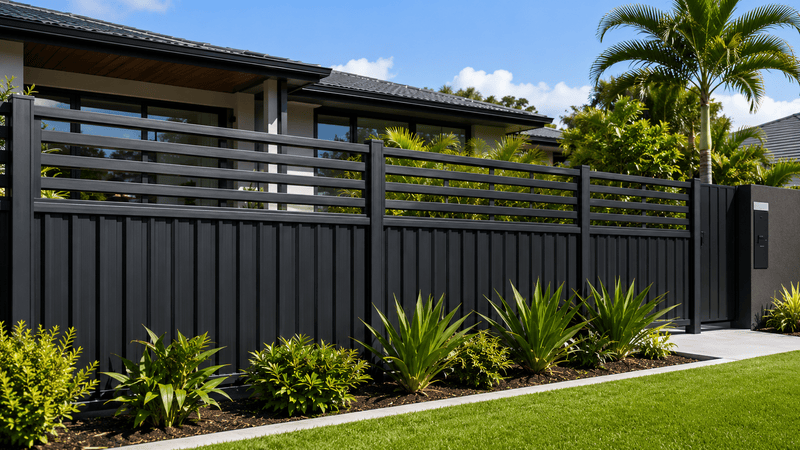
Based on our project experience, clients often choose breezeway designs when they worry that a full solid fence will make the outdoor space feel too closed. For builders and project contractors, breezeway fencing can be a practical way to add design value without changing the entire fence system.
Lattice Topper Design
Lattice topper design is often used when the client wants extra height or decoration without fully blocking light and airflow. It can soften the appearance of a solid fence and create a more traditional or decorative finish.
This design works well for residential backyards, garden boundaries, and properties where the fence needs to look less plain. A lattice topper can also help make a high fence feel less heavy. Instead of increasing the full panel height with a solid sheet, a topper adds visual detail while still allowing some light and air to pass through.
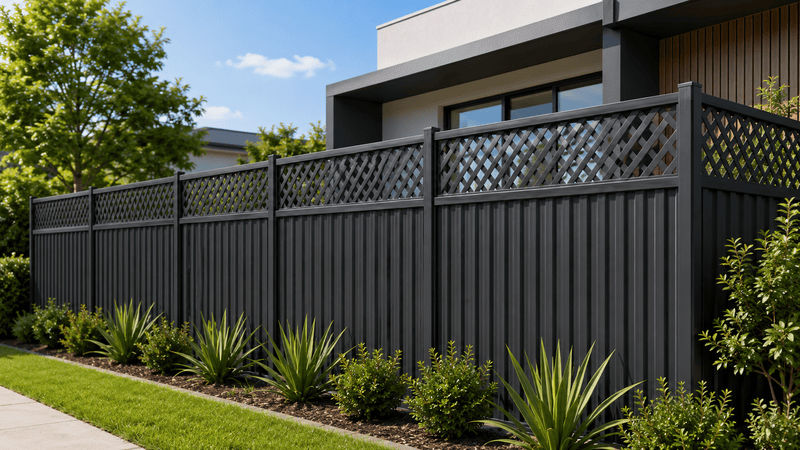
For builders and contractors, lattice toppers are useful when the project needs a balance between privacy, height, and appearance. They can also be used to upgrade a standard fence design without changing the whole fencing system.
A lattice topper is not always required, but it is a useful option when the client wants the fence to look more decorative while keeping a practical solid panel base. In long fence runs, lattice toppers can also help reduce the plain look of steel panels and make the final boundary feel softer.
Two-Tone Colour Design
Two-tone colour design is a simple way to make a Colorbond-style steel fence look more modern. By using different colours for posts, rails, panels, or feature sections, the fence line can look more layered and less monotonous.
This approach is especially useful for long fence runs, modern homes, commercial entrances, and front boundaries. A darker post with a lighter panel can frame the fence line, while a feature bay near the gate can make the entrance more attractive.
Two-tone designs are often selected when appearance is important but the client still wants the strength and low maintenance of steel fencing. For B2B projects, two-tone colour design can also help match the fence with external finishes, such as roofing, window frames, cladding, paving, or gate systems.
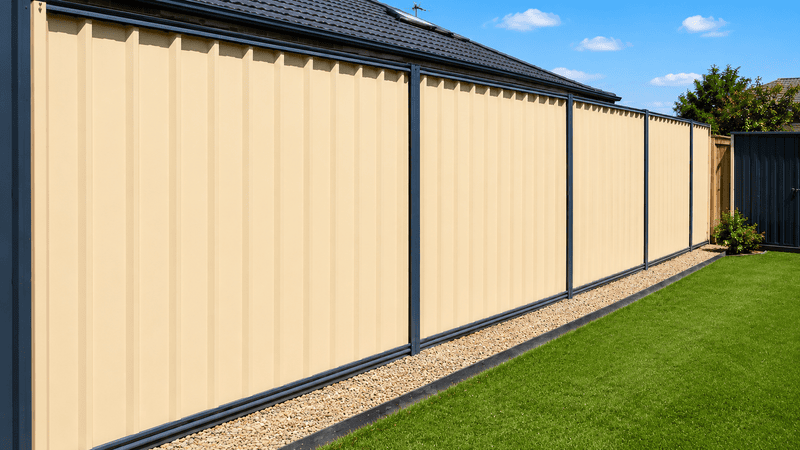
When used correctly, two-tone colour can make a simple steel fence look more customised. It is a practical design upgrade for clients who want better street appeal without moving to a fully decorative or highly customised system.
Project Experience: How Clients Choose the Right Steel Fence Design
Based on our project experience, clients rarely choose Colorbond-style fence designs by appearance alone. Most buyers compare privacy, airflow, appearance, cost, installation efficiency, and project acceptance before making a final decision.
For rear and side boundaries, privacy usually comes first. In these areas, standard solid panels are often the safest and most cost-effective choice. They provide strong privacy, fast installation, and a clean finish for long fence runs.
For front boundaries, airflow and appearance usually matter more. This is where Colorbond front fence ideas, such as slat sections, breezeway profiles, lattice toppers, two-tone colours, and matching gates, become more useful. These designs can make the property feel more open while still providing a clear boundary.
A simple rule we often use when discussing design with clients is this: choose solid panels when privacy is the priority, choose breezeway when airflow is the priority, choose slats when the project needs both privacy and appearance, choose two-tone colour when visual layering matters, and choose lattice toppers when the client wants a more decorative finish.
In the Australian market, dark grey, woodland grey-style, light coastal, and pale green-grey tones are often preferred for modern residential and commercial projects. These colours work well with contemporary homes, neutral building finishes, garden landscapes, and outdoor living spaces.
Colour, Texture, and Corrugated Iron Fence Ideas
Colour has a strong influence on how a pre-painted steel fence feels in the overall property design. The same panel profile can look modern, soft, industrial, or coastal depending on the colour and finish.
Dark grey tones are commonly used for contemporary homes and commercial properties because they create a sharp, modern appearance. They also pair well with green landscaping, concrete, black window frames, and modern roof colours.
Lighter coastal-style finishes can make a fence line look cleaner and brighter. This can be useful for coastal properties, modern residential projects, and outdoor spaces where the owner wants a lighter visual effect.
For properties that need a more industrial or textured appearance, corrugated iron fence ideas can also be considered. Horizontal corrugated-style panels can create a stronger linear texture and suit contemporary, rural-modern, or light industrial settings. Corrugated profiles are useful when the property owner wants a fence that looks more architectural than a flat panel but still keeps the strength and privacy of steel fencing.
Designing Colorbond-Style Steel Fence for Different Outdoor Spaces
A good steel fence design should match the function of each outdoor space. Front boundaries, side fences, rear yards, pool areas, and commercial sites usually have different priorities.
For front boundaries, the fence is highly visible, so it should balance privacy, airflow, and street appeal. Colorbond front fence ideas may include slat-style panels, breezeway sections, lattice toppers, two-tone colours, and matching gates. These options can help the fence look more welcoming while still defining the property line.
For side and rear boundaries, the main priorities are usually privacy, security, and cost efficiency. In these areas, standard solid panels are often the most practical choice. If the ground is flat, a standard solid panel system may be enough. If the ground is uneven or there are visible gaps below the fence, a plinth-supported system may be better.
Commercial and industrial properties often need fencing that looks clean, provides privacy, and supports site security. Solid pre-painted steel panels are suitable for service yards, storage areas, equipment zones, warehouses, and commercial perimeter boundaries. For customer-facing areas, slat sections, breezeway features, or two-tone feature bays can be added near entrances.
Pool and courtyard areas often need better airflow and a lighter appearance. Breezeway designs and slat-style sections can help these spaces feel more open while still creating a boundary. For humid, coastal, or high-UV environments, coating performance should also be considered early.
Practical Considerations Before Ordering
Before ordering a Colorbond-style steel fence, buyers should confirm more than just the panel colour and height. Missing details can cause installation delays, accessory shortages, inconsistent appearance, or extra site adjustment.
Important details include fence height, panel width, ground slope, installation method, post type, rail size, panel profile, colour, coating, accessory quantity, packing method, and project drawings. A fence installed on flat ground is very different from a fence installed on sloping land, near garden beds, or in a coastal environment. These details should be confirmed before production so the supplier can recommend the right posts, rails, coating, accessories, and plinth options.
One detail that is often overlooked is the fit between the rail and the sheet. If the rail and sheet do not fit properly, the fence may be harder to install, and wind movement may cause noise because of panel vibration or collision. This is why a Colorbond-style steel fence should be treated as a complete system rather than a single panel product.
To reduce installation problems, JZH Fence can provide assembly drawings, accessory kits, pre-packed posts, caps, rails, and fixings. This helps contractors check materials more easily before installation and reduces the risk of missing parts on site.
Coastal and Harsh Environment Specification
For coastal, humid, or industrial environments, the fence specification should be reviewed carefully before production. A normal inland specification may not be suitable for long-term exposure to salt air, moisture, strong UV, or industrial pollutants.
For coastal environments, our factory can use AZ150 aluminium-zinc coating together with high-weatherability HDP coating or powder coating. This combination is designed to improve corrosion resistance, colour stability, and long-term outdoor performance in coastal conditions.
This type of specification is suitable for seaside residential projects, Perth coastal projects, commercial properties near the ocean, high-humidity areas, and industrial sites. For B2B buyers, the key lesson is simple: do not use the same fence specification for every environment. A standard residential inland fence, a coastal fence, and an industrial site fence may need different coating and substrate solutions.
Plinths, Retaining, and Ground-Level Details
Plinths are used to close gaps under the fence, improve privacy, manage uneven ground, and provide minor retaining support. They can also help create a cleaner fence line when the site is not perfectly level.
Flat residential sites usually do not need a plinth. However, if the site has uneven ground, visible gaps under the fence, garden beds, soil contact, or minor retaining requirements, a plinth is recommended. A simple rule is: flat ground usually does not need a plinth, but uneven ground, visible gaps, garden beds, or minor retaining needs usually require one.
In one New Zealand residential project, the customer installed a timber plinth beneath the Colorbond-style steel fence to deal with minor ground level differences. The timber plinth helped close the gap under the fence, improve privacy, and create a cleaner fence line while keeping the installation cost under control.
In another project in Perth, Western Australia, a fence contractor selected a fiberglass FRP plinth because of its durability and low maintenance requirements. Compared with traditional timber alternatives, the FRP plinth provided better resistance to moisture, termites, and corrosion while still creating a clean finish beneath the fence.
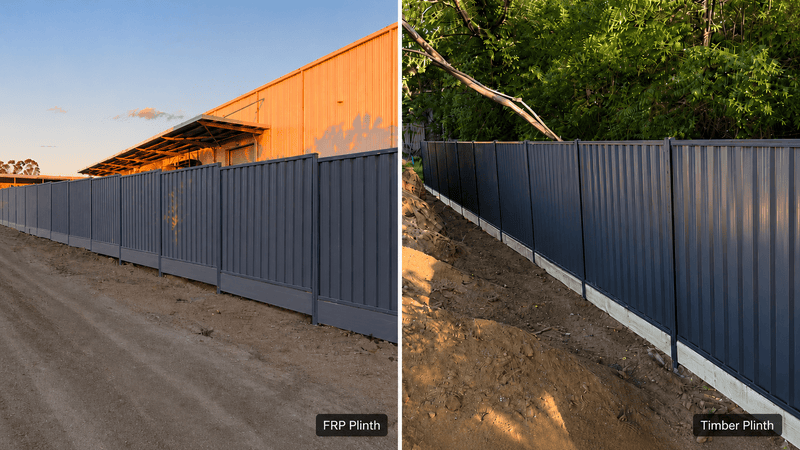
A practical way to choose is simple: use timber plinths when cost control is the main concern, and use FRP plinths when moisture resistance, termite resistance, and long-term durability are more important.
Frequently Asked Questions About Colorbond-Style Fence Designs
1. Which Colorbond fence design provides the most privacy?
A standard solid panel design normally provides the highest level of visual privacy because there are no intentional openings between the fence sheets. It is suitable for side boundaries, rear yards, residential developments, commercial service areas and equipment screening. Slat-style and breezeway designs provide a more open appearance but allow greater visibility and airflow, so buyers should select the design according to the project’s privacy requirements.
2. Which fence design is best when airflow is important?
A breezeway or slat-style steel fence is generally more suitable when airflow and visual openness are important. Breezeway sections can be used near courtyards, pools, entrances and outdoor living spaces, while solid panels can remain in areas where privacy is required. Before production, buyers should confirm the opening size, panel layout, local safety requirements and the balance between ventilation and privacy.
3. Can Colorbond-style steel fencing be installed on sloping or uneven ground?
Yes, but the installation method must be planned according to the site conditions. Depending on the slope and ground-level differences, the fence may require stepped panels, adjusted post lengths, additional ground clearance or a plinth system. Buyers should provide site measurements, slope information and layout drawings before production so the supplier can calculate the correct posts, rails, panels, plinths and accessories.
4. What information is required for an accurate Colorbond-style fence quotation?
For an accurate quotation, buyers should provide the total fence length, required height, panel design, colour, coating requirement, site layout, ground conditions, gate quantities and delivery destination. It is also important to confirm whether posts, rails, caps, fixings, plinths, spare parts and installation drawings are required. A complete project scope allows the supplier to prepare a more reliable bill of materials, packing plan and shipping quotation.
Custom Colorbond-Style Steel Fence Solutions from JZH Fence
JZH Fence manufactures Colorbond-style steel fence panels, posts, gates, plinth systems, and accessories for global fencing projects. Our products are made with pre-painted or powder-coated steel materials and can be customised by profile, colour, coating, height, gate design, plinth system, and accessory package.
Our OEM/ODM support includes custom panel profiles, custom colours, coating options, non-standard sizes, gates, accessories, shop drawings, packing solutions, export logistics, and remote installation support.
For builders, wholesalers, fence contractors, and project suppliers, we can help match the right fence design with privacy needs, airflow requirements, site conditions, coating requirements, and installation methods. Instead of supplying only panels, we focus on complete fence systems that are easier to install and more suitable for project delivery.
Need a Colorbond-style steel fence solution for your next project? Contact us now to get a quote, request a free sample, or download our catalog.