Choosing a composite material fence is not only about finding a wood-look panel. You also need to consider post strength, installation method, quotation style, and long-term maintenance cost. In this guide, you will learn 7 practical ways to choose durable composite fence panels and aluminium posts for B2B fencing projects. Based on our project experience in Brisbane coastal areas and London winter conditions, aluminium posts can reduce deformation risk and keep the fence system more stable. By the end, you will know how to compare panel price, cost per meter, installation support, and low-maintenance value before sourcing.
For distributors and project buyers comparing panel specifications, MOQ, packing, and supplier quotation details, see our composite fence panels distributor buying guide.
What Is a Composite Material Fence?
A composite material fence is a fencing system made with WPC or composite boards. WPC means wood plastic composite. It usually combines wood fiber, plastic polymer, pigments, and functional additives.
The goal is simple: you get a fence that looks close to timber, but with much lower maintenance than traditional wood fencing.
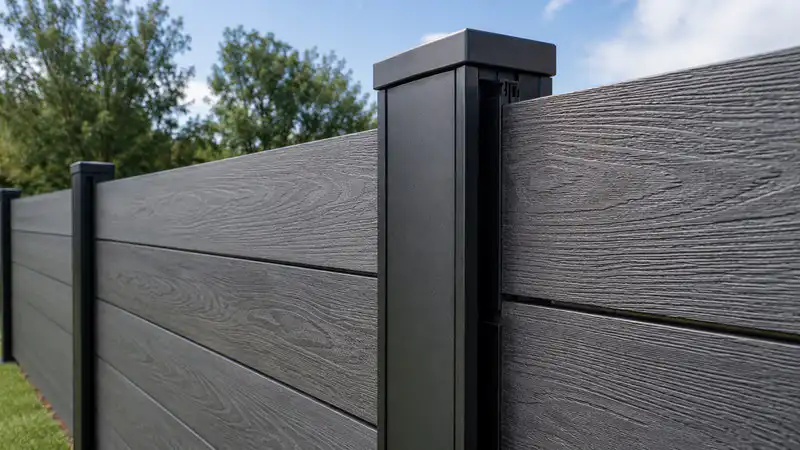
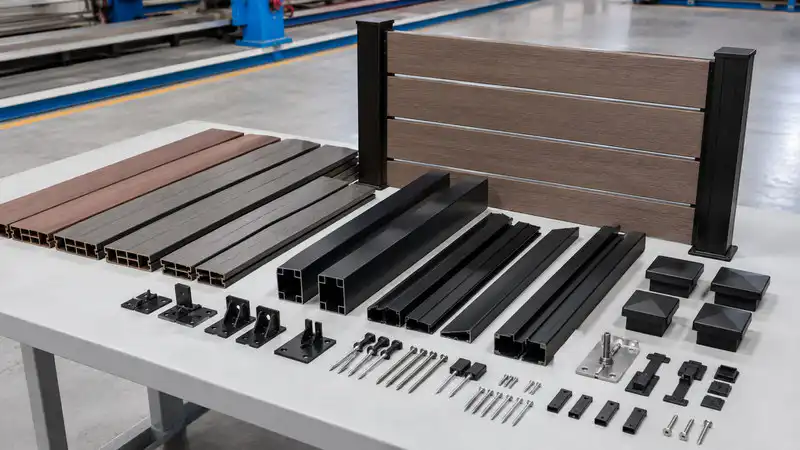
A complete composite fencing system usually includes:
- Composite fence panels
- Composite fencing boards
- Aluminium posts
- Top and bottom rails
- Caps
- Screws and fixings
- Optional matching gates
- Installation accessories
For B2B buyers, you should not view the product as only “boards”. A good composite material fence should be treated as a complete system. The boards give you the appearance and privacy. The aluminium posts give you the structure and long-term stability.
What Are Composite Fence Panels Made Of?
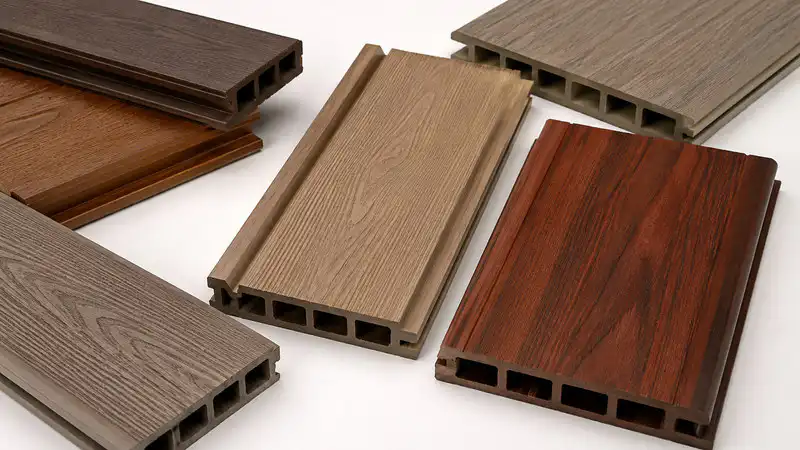
Composite fence panels are usually made from a mixture of wood fiber and plastic polymer. They are recycled wood and plastic materials. The surface can be designed with different colours and textures, such as 3D Embossed or Co-extrusion finishes.
Common surface options include:
| Surface / Colour Option | Visual Effect | Suitable Project Type |
|---|---|---|
| 3D Embossed Light Coffee | Warm timber-look texture | Coastal homes, garden boundaries, residential projects |
| Co-extrusion Red Wood | Strong wood-grain appearance | UK gardens, privacy fencing, winter climates |
| Grey | Modern and neutral | Commercial and housing projects |
| Teak / Brown | Natural timber style | Residential boundaries and landscape projects |
| Black aluminium posts | Clean contrast | Most board colours and commercial projects |
Compared with timber fencing, composite fencing boards do not need regular painting or staining. They are also more suitable for buyers who want a cleaner, more stable appearance across many houses, properties, or project sections.
For developers, contractors, and wholesalers, this can reduce after-sales pressure. Your customers do not want a fence that looks good only at delivery. They want a system that still looks stable after years of outdoor use.
Composite Fence Panels vs Timber Fence vs Vinyl Fence
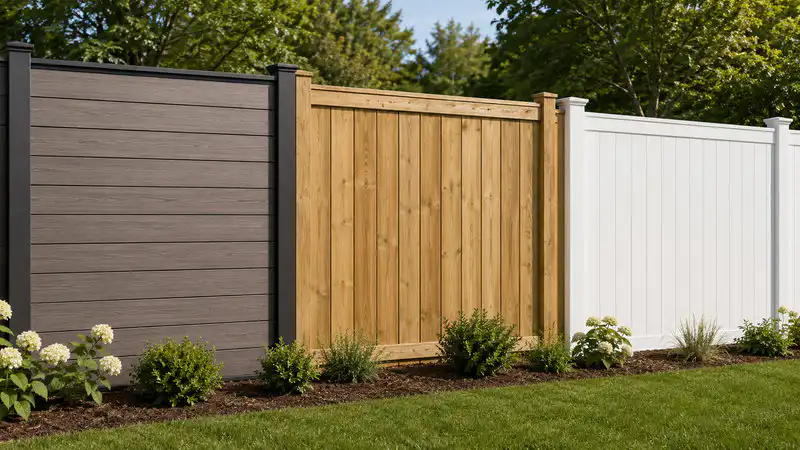
Before you choose a composite material fence, it is useful to compare it with other common fencing materials.
| Feature | Composite Fence Panels | Timber Fence | Vinyl / PVC Fence |
|---|---|---|---|
| Appearance | Timber-look, modern | Natural wood | Smooth plastic look |
| Maintenance | Low | High | Low |
| Painting / Staining | Not usually required | Often required | Not required |
| Moisture Resistance | Good | Medium to low | Good |
| Long-Term Shape Stability | Good with proper post system | Can warp or crack | Can become brittle in some climates |
| Best Use | Privacy and low-maintenance projects | Traditional garden fencing | Residential fencing |
| B2B Project Suitability | Strong | Medium | Medium |
If your project needs a timber-look fence but you want to reduce maintenance work, composite fence panels are usually a better long-term choice than traditional timber.
But there is one important point: the board is only one part of the system. The post is just as important.
Why We Use Aluminium Posts Instead of Composite Posts
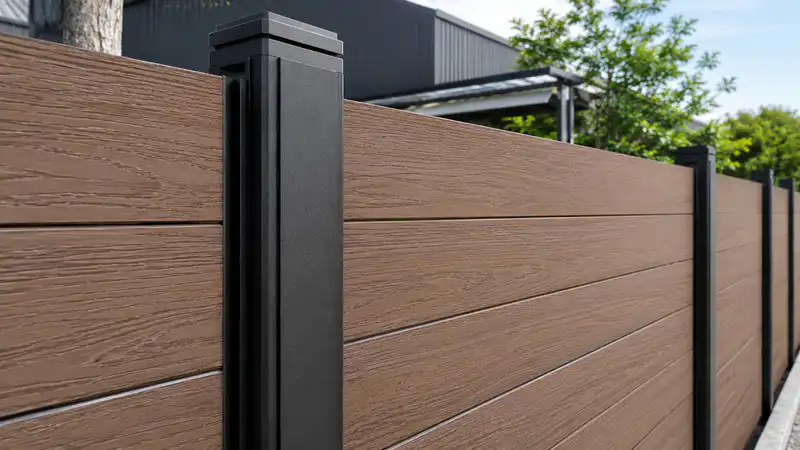
From our project experience, the post is not only a visual part of the fence. It directly affects the fence line, panel stability, installation quality, and long-term maintenance risk.
That is why our composite material fence system uses aluminium posts as the standard structural support instead of composite posts.
Our common aluminium post specifications include:
| Item | Specification |
|---|---|
| Aluminium post size | 70x70mm, 80x80mm |
| Wall thickness | 1.4mm |
| Surface treatment | Electrostatic powder coating |
| Standard colour | Black |
| Suitable scenes | Coastal areas, open areas, high-wind sites, commercial projects |
Compared with composite posts, aluminium posts offer better structural rigidity, dimensional stability, and long-term performance. This is especially important for full privacy composite fences, long fence runs, commercial boundaries, and exposed outdoor sites.
Composite posts may look more visually consistent with WPC boards. But after long-term outdoor use, composite posts are more likely to deform. Once the post deforms, it can affect board insertion, fence line straightness, gate alignment, and overall product use.
For this reason, we do not suggest reducing cost by downgrading the post material. A lower-cost post may save money at the beginning, but it can increase the risk of deformation, maintenance, or replacement later.
For B2B projects, we prefer to keep the structural part reliable and optimize cost in other ways, such as board profile, order quantity, packaging method, container loading, and installation support.
Project Case 1: Brisbane Coastal Composite Fence Project
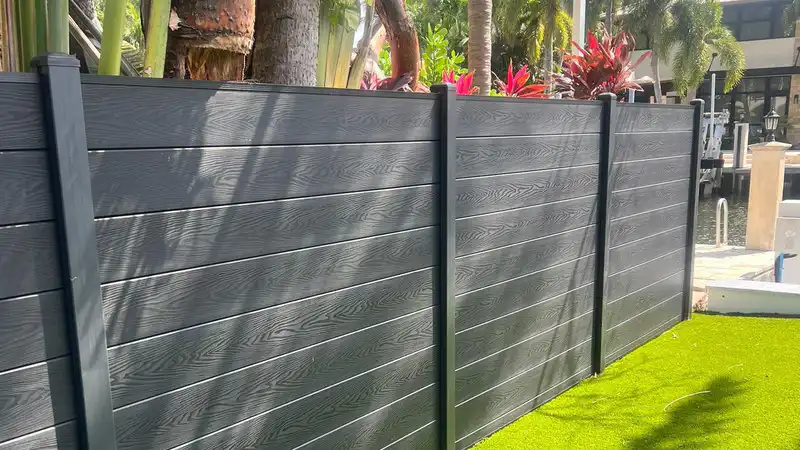
In July 2024, we supplied a composite material fence project in Brisbane, Australia. The customer selected 3D Embossed Light Coffee composite fencing.
Because Brisbane has coastal and humid outdoor conditions, we recommended black electrostatic powder-coated aluminium posts instead of composite posts.
For this type of project, the post must handle moisture, outdoor exposure, and long-term structural pressure. Aluminium posts are more suitable because they provide better rigidity and lower maintenance requirements.
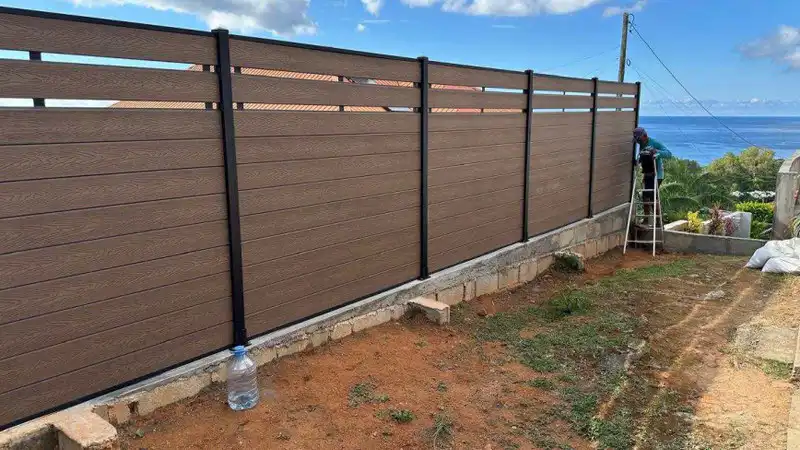
The 3D Embossed Light Coffee boards helped create a warm timber-look finish, while the black aluminium posts improved the overall structure and gave the fence a clean modern contrast.
This project shows one important point: in coastal areas, the post should not be selected only for appearance. Aluminium posts are a safer structural choice when moisture, wind exposure, and long-term maintenance matter.
Project Case 2: London Winter Composite Fence Project
In October 2023, we supplied a composite fencing project in London, UK. The customer chose Co-extrusion Red Wood composite boards.
The site needed to face winter conditions, stronger wind, and snow exposure. For this environment, we recommended black powder-coated aluminium posts to improve the structural support of the full fence system.
In cold and windy climates, composite posts may carry a higher deformation risk after long-term outdoor use. If the post changes shape, the boards may not sit properly inside the channel. This can affect the straightness and stability of the whole fence line.
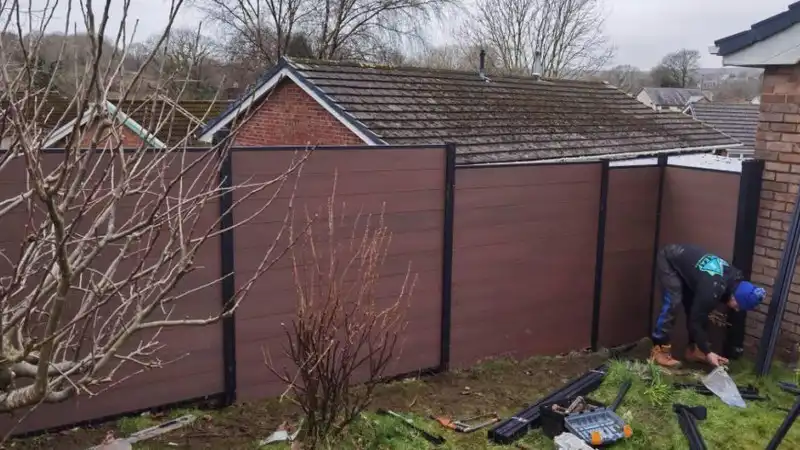
By using aluminium posts, the project gained better support for the composite boards and lower long-term maintenance risk.
The Co-extrusion Red Wood colour also helped the fence keep a strong wood-grain appearance, which suited the UK garden and privacy fencing style.
This case shows that in cold, windy, or snowy environments, aluminium posts are more reliable than composite posts for maintaining fence stability and reducing after-sales risk.
Where Are Aluminium Posts More Suitable?
Because of their performance advantages, aluminium posts are more suitable for the following project scenes:
| Project Scene | Why Aluminium Posts Are Recommended |
|---|---|
| Coastal areas | Better corrosion resistance and lower maintenance pressure |
| Open areas | Better support when the fence is exposed to stronger wind |
| High-wind sites | More suitable for full privacy composite fence panels |
| Commercial projects | Better long-term stability for larger and longer fence runs |
| Gate areas | Better support around moving gate structures |
| Corners and end posts | Better strength where stress is more concentrated |
| Long fence runs | Helps keep the fence line straighter over time |
If you are sourcing a composite material fence for commercial projects, housing developments, coastal homes, or exposed outdoor sites, aluminium posts are usually the safer long-term choice.
Key Advantages of Composite Fence Panels
1. Low Maintenance
One of the biggest reasons buyers choose composite fence panels is low maintenance.
You do not need regular painting or staining. For most projects, basic cleaning with water and mild detergent is enough.
This is especially useful for:
- Property developers
- Contractors
- Wholesalers
- Garden product distributors
- Commercial property owners
- Residential project buyers
For B2B buyers, low maintenance means fewer complaints, fewer callbacks, and lower long-term service pressure.
2. Timber-Look Appearance
Many customers like timber fencing because it feels warm and natural. But timber needs more maintenance.
Composite fencing boards solve this problem by offering a timber-look surface with better outdoor durability.
Popular options include:
- 3D Embossed Light Coffee
- Co-extrusion Red Wood
- Teak
- Brown
- Grey
- Black matching posts
If your customer wants a natural wood appearance but does not want frequent repainting, a composite material fence is a practical option.
3. Better Moisture Resistance Than Timber
Traditional timber fencing can absorb water, crack, rot, or deform over time.
Composite boards are more suitable for outdoor privacy fencing because they offer better moisture resistance than timber. This is why they are often used in gardens, backyards, coastal homes, and residential boundary projects.
When combined with powder-coated aluminium posts, the full system becomes more suitable for long-term outdoor use.
4. Easier Installation
Our composite fence system is designed for easier installation.
The boards can slide into the aluminium post channels. This makes the installation process more straightforward for both contractors and DIY buyers.
A typical installation process includes:
- Set the aluminium posts
- Check post alignment
- Slide composite boards into the channels
- Install top caps and accessories
- Check final alignment and expansion gaps

We can also provide:
- Technical guidance
- Installation drawings
- Installation videos
- Accessory matching support
- Project quotation support
This helps reduce installation confusion and makes the product easier to use in different markets.
Composite Fence Cost: Panel Price and Cost Per Meter
From our quotation experience, most customers first ask for panel price. The second most common question is cost per meter.
We can quote in both ways.
If you are a wholesaler or distributor, panel price may be easier for stock planning and resale. If you are a contractor, builder, or project buyer, cost per meter is often more useful because you need to calculate the full project length.
| Customer Type | Better Quotation Method | Why |
|---|---|---|
| Wholesaler / distributor | Panel price | Easier for stock and resale |
| Contractor / builder | Cost per meter | Easier to calculate project budget |
| Property developer | Cost per meter + system list | Better for total project comparison |
| DIY buyer | Panel price + installation guide | Easier to understand product and installation |
For our composite material fence, the complete fence system cost is mainly built around the panel price. Based on your project needs, we can match the aluminium posts, caps, rails, fixings, and accessories.
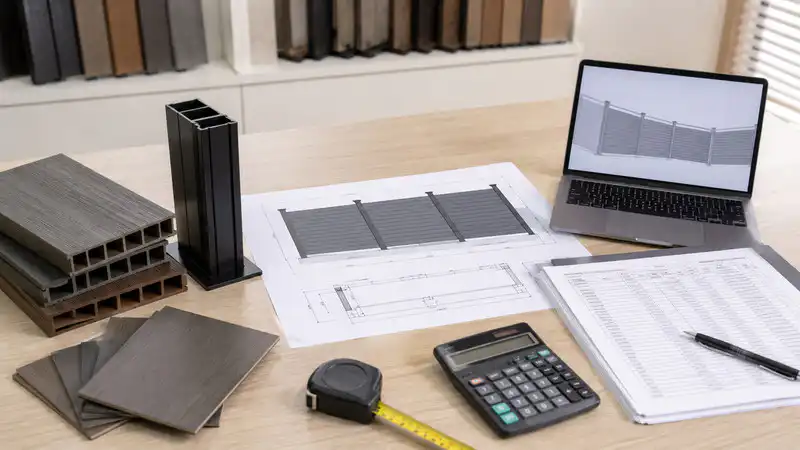
This means you do not need to source boards from one supplier and posts from another supplier. You can get a more complete system, which makes project planning easier.
Why Installation Cost Can Be Lower
Installation cost is another important part of the total project cost.
Our system is designed to support DIY installation and contractor installation. Because the boards slide into the aluminium post channels, the process is easier to understand.
We can provide technical guidance and installation videos, so customers do not need too much extra installation support.
For B2B buyers, this can help reduce:
- Installation confusion
- Accessory mismatch
- On-site adjustment time
- Extra labour pressure
- After-sales communication
If your customer can install the system more easily, the total project cost becomes more controllable.
Why Maintenance Cost Is Lower
The value of a composite material fence is not only the first purchase price.
You should also consider the maintenance cost after installation.
Composite boards do not usually need regular painting or staining. Aluminium posts with powder coating also help reduce long-term maintenance pressure.
This is important for:
- Rental properties
- Housing developments
- Commercial boundaries
- Coastal projects
- Garden privacy projects
- Long fence runs
A low-maintenance fence can help your customer save time and reduce future repair pressure.
So when you compare different fencing options, do not only compare panel price. You should also consider installation convenience and long-term maintenance cost.
How to Choose the Right Composite Material Fence for Your Project
Before you request a quotation, you can prepare the following information.
Project Checklist
- What is the total fence length?
- What fence height do you need?
- Do you prefer panel price or cost per meter?
- Is the project located in a coastal, open, windy, snowy, or commercial area?
- Do you need 70x70mm or 80x80mm aluminium posts?
- What board colour do you prefer?
- Do you need 3D Embossed or Co-extrusion surface?
- Do you need matching gates?
- Do you need installation videos or technical drawings?
- Do you need container-load supply or project-based supply?
This information helps us recommend the right composite fence panels, aluminium posts, accessories, and quotation method.
Where Composite Fencing Works Best
A composite material fence is suitable for many project types, especially when you want privacy, timber-look design, and low maintenance.
Common applications include:
- Residential garden boundaries
- Backyard privacy fencing
- Housing development projects
- Coastal residential projects
- Commercial screening
- School and campus boundaries
- Light commercial property boundaries
- Rental property fencing
- Long-distance boundary fencing
- Projects that need low maintenance and a wood-look finish
For coastal areas, open areas, high-wind sites, snowy climates, and commercial projects, we recommend using aluminium posts as the standard post solution.
This gives the fence better long-term structure and reduces the deformation risk that may happen with composite posts over time.
JZH Fence Composite Fencing Supply for B2B Projects
JZH Fence supplies composite fence panels, aluminium posts, gates, accessories, and complete fencing systems for B2B buyers.
We support:
- Wholesalers
- Contractors
- Builders
- Property developers
- Fencing distributors
- Project buyers
You can source the boards, posts, caps, rails, fixings, and accessories together. This helps you reduce matching problems and makes your project easier to manage.
We can also support:
- Custom colours
- Black aluminium posts
- 70x70mm and 80x80mm aluminium post options
- 1.4mm wall thickness
- Electrostatic powder coating
- Technical guidance
- Installation videos
- Project quotation
- Export packaging
For B2B projects, our goal is not only to supply panels. We help you build a more complete and easier-to-install fencing system.
Frequently Asked Questions(FAQ)
1. How long does a composite material fence last?
There is no single service-life figure for every composite fence. Performance depends on the board formulation, surface treatment, UV exposure, climate, post system, installation quality and maintenance conditions. A properly specified system with suitable composite boards, stable aluminium posts, correct expansion gaps and compatible accessories will generally perform more reliably than a system selected only by panel price.
2. Does composite fencing expand and contract?
Yes. Composite fencing boards can expand and contract as temperature and moisture conditions change. Installers should follow the supplier’s recommended expansion gaps, post spacing and fixing method. Boards should not be forced tightly between posts without sufficient movement allowance. Correct installation helps reduce bowing, pressure between boards, uneven fence lines and other problems caused by seasonal temperature changes.
3. Is composite fencing better than traditional timber fencing?
Composite fencing is usually more suitable when a project requires a timber-look appearance with less painting, staining and routine maintenance. Timber offers a natural material appearance but may require more protection against moisture, insects, cracking and warping. The better choice depends on the project budget, appearance requirements, climate, maintenance plan and expected service conditions.
4. Can composite fencing be used in coastal or high-wind areas?
Composite fencing can be used in coastal and exposed locations, but the complete system must be reviewed rather than the boards alone. Full-privacy panels can receive significant wind pressure, so post size, wall thickness, footing design, panel height and spacing should match the site conditions. Powder-coated aluminium posts are often considered for exposed projects because they provide structural rigidity and corrosion resistance, subject to project-specific confirmation.
5. What information is needed for an accurate composite fence quotation?
Buyers should provide the total fence length, required height, board profile, colour, surface finish, project location, gate quantity and site conditions. The supplier should also know whether the project is coastal, windy, snowy, flat or sloped. Confirm whether the quotation must include aluminium posts, rails, caps, fixings, gates, spare boards, export packing, installation drawings and freight to the destination port.
Choose Composite Fence Panels with the Right Aluminium Post System
A composite material fence is a good choice when you want a timber-look fence with lower maintenance than traditional wood.
But the board is only one part of the system. For long-term outdoor use, the post matters.
From our project experience, aluminium posts are more suitable than composite posts for coastal areas, open areas, high-wind sites, snowy climates, commercial projects, gate areas, and long fence runs.
Our common aluminium post options include 70x70mm and 80x80mm, with 1.4mm wall thickness, black electrostatic powder coating, and low-maintenance performance.
If you are comparing prices, you can ask us for both panel price and cost per meter. We can also help you match the right aluminium posts, accessories, installation guidance, and project supply plan.
Looking for a reliable composite material fence supplier for your next project?
JZH Fence supplies composite fence panels, black powder-coated aluminium posts, gates, accessories, and complete fencing systems for wholesalers, contractors, builders, and project buyers. You can request both panel price and cost per meter quotation, depending on how you plan your project.
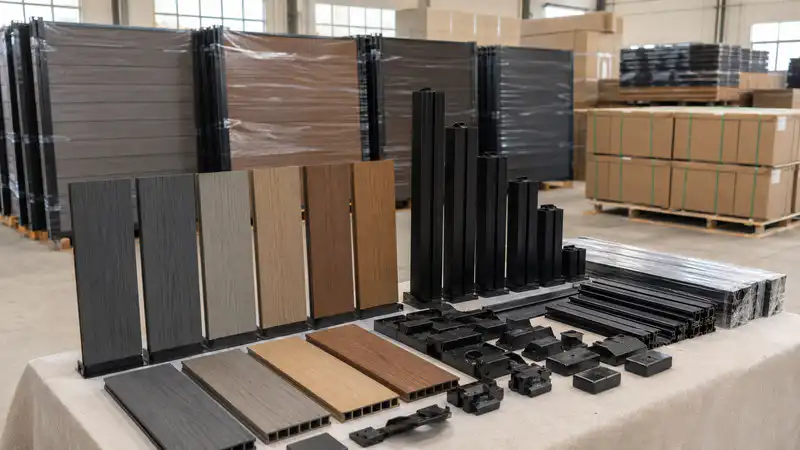
Contact us to get:
- Composite fence panel price
- Cost per meter quotation
- 70x70mm and 80x80mm aluminium post specifications
- Colour samples
- Installation drawings
- Installation videos
- Project supply support
Get a quote today or request free samples to check the board colour, surface texture, and aluminium post system before placing your order.