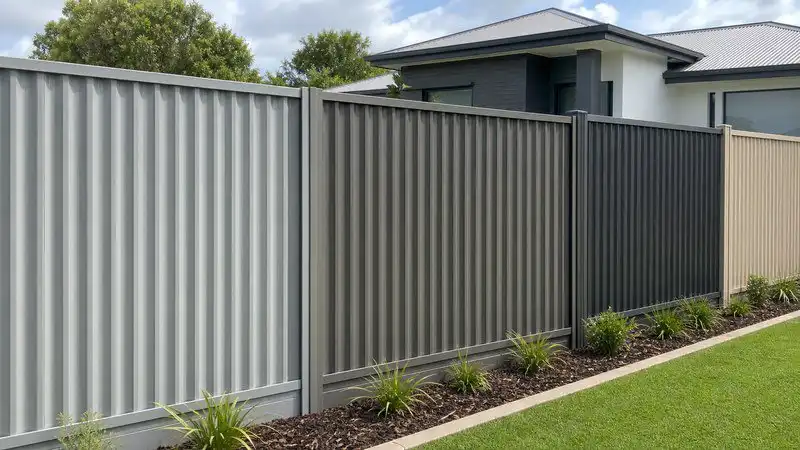
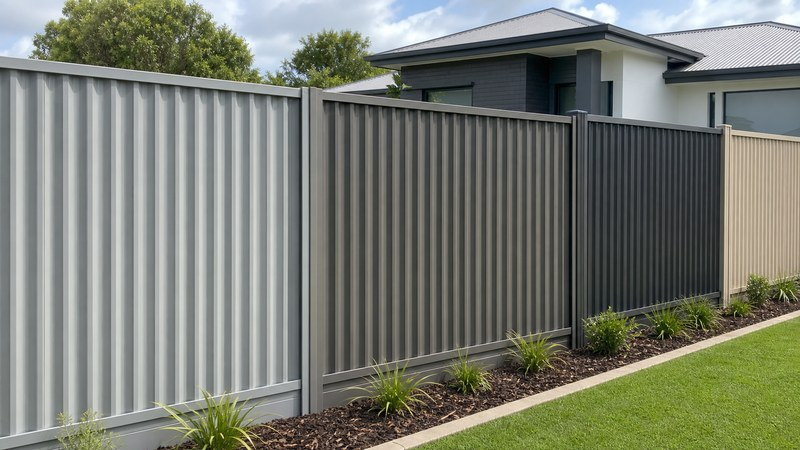
Choosing the right colorbond fence colours is not only about making a fence look good. The colour you choose can affect heat comfort, visual space, maintenance, project consistency, and future replacement planning. For B2B buyers, contractors, and project managers, this decision becomes even more important when hundreds of metres of fencing need to match across one residential estate, commercial site, industrial park, or coastal project.
This guide explains common colorbond fencing colours, colorbond paint colours, and modern colorbond fence designs from a practical project perspective. You will also learn how to choose between light and dark colours, how to reduce colour difference in bulk orders, and how JZH Fence supports colorbond-style steel fence projects with sample confirmation, coating options, and export packaging.
COLORBOND® is a registered trademark of BlueScope Steel Limited. JZH Fence supplies Colorbond-style steel fencing systems, not genuine COLORBOND® steel unless otherwise confirmed.
What Are Colorbond Fence Colours?
Colorbond fence colours usually refer to the colour options buyers search for when choosing pre-painted steel fencing, especially in Australian-style fencing projects. These colours are often inspired by roofing, wall cladding, gates, garden design, and modern outdoor spaces.
For B2B projects, colour is not only a design choice. A buyer may need the same colour across fence panels, posts, rails, gates, caps, and accessories. If the project has several construction phases, the buyer may also need matching panels months or years later.
That is why JZH Fence usually discusses colour as part of the complete colorbond steel fence specification. The final recommendation may include panel colour, steel grade, coating type, gloss level, packaging, and future replacement planning.
In short, a good fence colour should answer five questions:
- Does it match the building style?
- Does it suit the climate?
- Will it feel comfortable in daily use?
- Will it be easy to maintain?
- Can it be repeated for future orders?
Why Your Fence Colour Choice Matters
Fence colour changes how a project feels.
A dark boundary can make a site look modern, strong, and secure. This is why colours such as Monument, Woodland Grey, Ironstone, black, and dark grey are often used around warehouses, logistics yards, industrial parks, and commercial security boundaries.
A light or mid-light boundary can make a space feel brighter and more open. Colours such as Surfmist, Shale Grey, Dune, Classic Cream, and Pale Eucalypt are often better for pool areas, small gardens, patios, and residential boundaries.
Colour also affects heat absorption. In strong sunlight, darker colours usually become hotter than lighter colours. If the fence is close to a pool deck, children’s play area, patio, or walkway, this difference can affect the comfort of the outdoor space.
Australian energy guidance also notes that lighter colours reflect heat while darker colours absorb it, which is why light or mid-light fence colours are often more comfortable in exposed outdoor areas.
Maintenance is another point. Dark colours can hide light dust, small marks, and vehicle splash marks better. Light colours can look clean and fresh, but they may show mud spots or grey dust more easily.
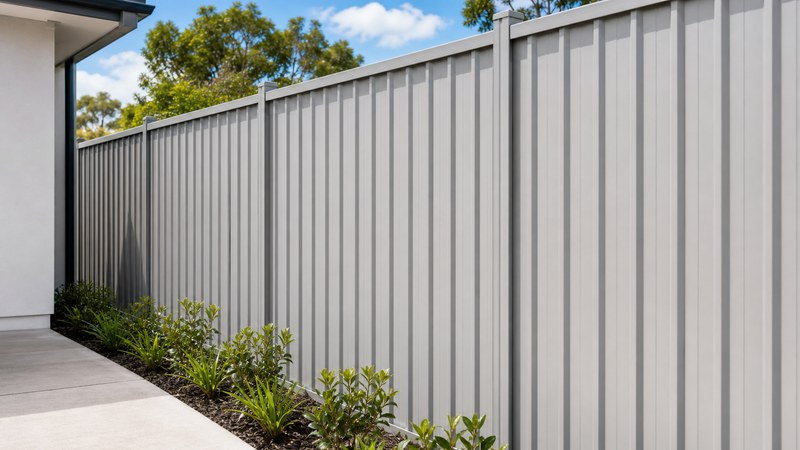
For large B2B projects, colour also affects future replacement. Standard colours are usually easier to repeat. Custom colours can create a more unique design, but they need better sample control and colour records.
Light vs Dark Fence Colours
| Colour Type | Main Advantages | Possible Issues | Best For |
|---|---|---|---|
| Light colours | Cooler surface, brighter space, softer look | Easier to show dust and mud | Pools, patios, small yards, hot regions |
| Mid-light colours | Balanced appearance, easy to match | Still needs regular cleaning | Residential estates, commercial buildings |
| Dark colours | Modern, secure, strong boundary, hides dirt better | Absorbs more heat in strong sun | Warehouses, logistics yards, industrial sites |
| Custom colours | Matches brand or architectural design | Higher colour control and reorder risk | Branded projects, premium developments |
Factory Experience: How We Recommend Colours Based on Site Conditions
From our project experience, colour selection should start with the site condition.
If the project is in a strong sunlight area, we usually suggest light or mid-light colours first. Colours such as Shale Grey, Surfmist, Dune, Classic Cream, and Pale Eucalypt absorb less heat than very dark colours. They are more suitable for outdoor areas where people often stay or pass by.
For example, if the fence is close to a swimming pool, garden, children’s activity area, or residential patio, a lighter colour can help the space feel more open and comfortable.
For small courtyards, a very dark fence may make the area feel smaller or more enclosed. A softer colour can reduce that heavy feeling and make the boundary less visually aggressive.
However, dark colours still have clear advantages. For industrial parks, warehouses, logistics yards, and security-focused sites, colours such as Monument, Woodland Grey, Ironstone, black, or dark grey are often more practical. They hide light dirt better and create a stronger sense of boundary and security.
For coastal projects, colour is only one part of the decision. You should also check the steel grade and coating system.
For outdoor steel structures in Australia, corrosion protection requirements can vary by exposure condition, so coastal projects should consider coating and material specification early in the design stage.
In harsh outdoor environments, options such as G550 steel, HDP coating, and AM100 anti-corrosion protection may be considered to improve long-term outdoor performance.
A simple rule is:
- Strong sunlight, poolside, small yards, residential gardens: choose light or mid-light colours.
- Industrial parks, warehouses, security boundaries: choose dark grey, black, Monument, or Woodland Grey.
- Coastal projects: consider colour together with steel grade and coating system.
- Phased projects or future replacement needs: choose standard colours when possible.
Popular Colorbond Fencing Colours for Modern Projects
Popular colorbond fencing colours usually fall into three groups: dark modern colours, soft neutral colours, and natural landscape colours.
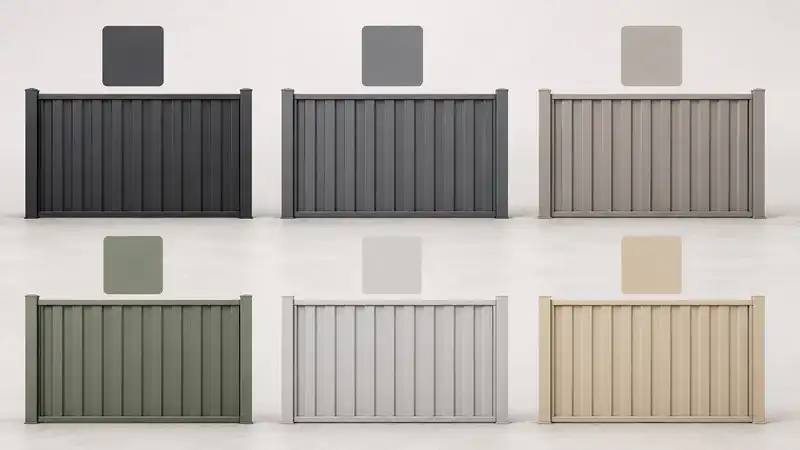
Each group works better for different project environments. A colour that looks excellent on an industrial warehouse may feel too heavy around a small pool area. A colour that looks fresh in a coastal home may show dirt too easily in a busy logistics yard.
Based on our project communication, the commonly recommended colours include Monument, Woodland Grey, Domain, Eucalypt, Surfmist, and Dune.
Popular Colour Groups
| Colour Group | Common Colour Examples | Best For |
|---|---|---|
| Dark modern colours | Monument, Woodland Grey, Ironstone, black, dark grey | Industrial parks, warehouses, security boundaries |
| Soft neutral colours | Dune, Domain, Shale Grey, Classic Cream | Residential estates, villas, commercial buildings |
| Light colours | Surfmist, light grey, off-white tones | Pool areas, hot regions, small courtyards |
| Natural colours | Eucalypt, Pale Eucalypt, green-grey tones | Parks, schools, farms, landscaped projects |
Colorbond Fence Colours Australia: What Buyers Usually Choose
When buyers search for colorbond fence colours Australia, they usually want colours that suit strong sunlight, coastal conditions, modern housing estates, and outdoor living spaces.
Australian-style projects often use colours that match roofing, cladding, paving, landscaping, and outdoor entertainment areas. That is why colours such as Monument, Woodland Grey, Dune, Surfmist, and Eucalypt are often considered.
For hot and exposed areas, light and mid-light colours are usually more comfortable. For warehouses, industrial parks, and security boundaries, darker colours are often more practical because they hide dirt better and create a stronger visual boundary.
For coastal projects, buyers should not only ask which colour looks better. They should also ask which coating system and steel specification are suitable for the environment. Salt air, strong UV, and long-term outdoor exposure can affect the performance of the fence system.
Monument: Bold, Modern, and Security-Focused
Monument is one of the most popular dark colours for modern fencing. It gives the fence a bold, architectural appearance and works well with black window frames, concrete driveways, steel buildings, and light-coloured walls.
For commercial and industrial projects, Monument is often a practical option because it hides light dust and minor surface marks better than very light colours. It also creates a strong visual boundary, which is useful for security fencing.
Monument is suitable for:
- Warehouses
- Logistics yards
- Industrial parks
- Commercial boundaries
- Modern residential projects
- Security-focused sites
The main point to consider is heat. In exposed sunlight, Monument can become hotter than lighter colours. If the fence is near a pool, patio, or children’s activity area, compare it with a lighter colour before making the final decision.
Project Example: Monument Colour Fence in Canberra
In one Canberra residential boundary project, the customer selected a Monument-style dark grey steel fence for a long fence line beside a new house construction area. The site had an open outdoor environment, exposed ground, construction fencing nearby, and a visible level difference along the boundary.
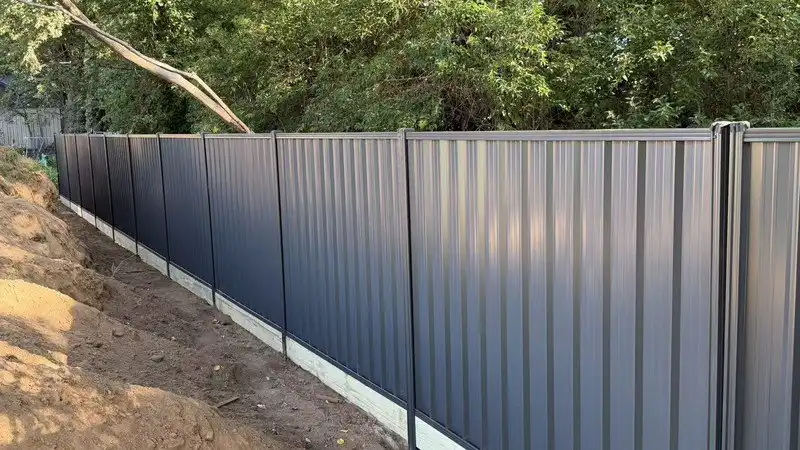
For this type of project, Monument was a practical choice because the dark grey colour created a clean and modern boundary while hiding dust, soil marks, and minor construction-site stains better than very light colours. The colour also matched well with the neutral building materials and helped the fence look stable across a long straight run.
Another important detail in this project was the lower timber plinth. Because the ground level was uneven, the plinth helped close the gap under the steel panels and created a cleaner base line. This made the fence more suitable for a developing residential site where soil movement, weeds, and level differences needed to be managed.
This case shows why Monument is not only suitable for industrial or security fencing. It can also work well for Australian residential projects, especially where the buyer wants a modern colour, a strong boundary line, and better visual tolerance in outdoor site conditions.
Woodland Grey: Natural, Stable, and Widely Used
Woodland Grey is a deep grey with a natural undertone. Compared with Monument, it feels softer and more connected to outdoor landscapes.
This colour works well in residential, rural, and commercial projects. It is a good choice when the fence needs to look stable but not too harsh.
Woodland Grey is suitable for:
- Residential boundaries
- Rural properties
- Garden fences
- Commercial perimeters
- Landscaped sites
- Projects with trees, grass, or natural surroundings
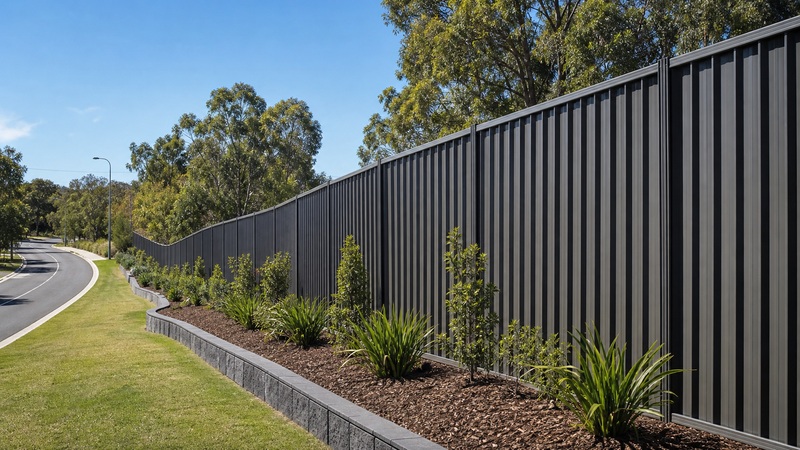
For buyers who want a dark fence but feel Monument is too bold, Woodland Grey can be a safer option.
Domain: Soft Neutral for Residential Boundaries
Domain is a softer neutral colour. It is suitable for buyers who want a clean boundary without making the fence too dark or too bright.
This colour works well in housing estates, private yards, and residential developments where the fence needs to coordinate with different house styles.
Domain is suitable for:
- Suburban homes
- Residential estates
- Garden boundaries
- Shared residential fencing
- Projects with warm wall colours or neutral paving
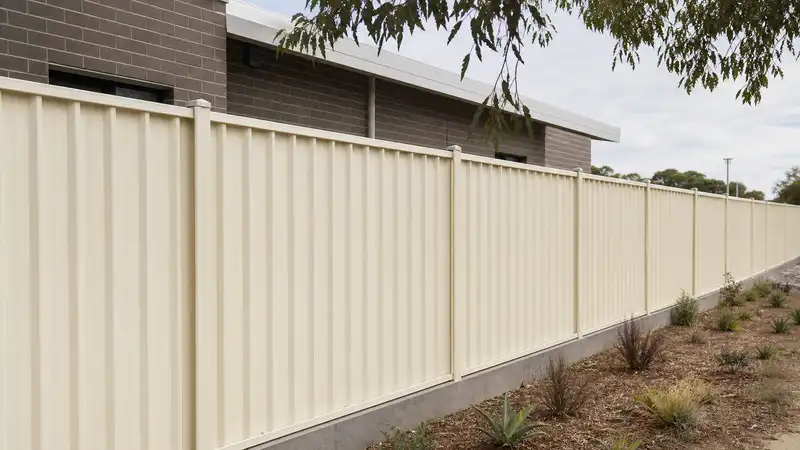
For developers, Domain can be easier to use across multiple homes because it does not strongly clash with different facades.
Eucalypt: Natural Green for Landscaped Projects
Eucalypt or Pale Eucalypt is a natural green tone. It works well when the fence should blend into the landscape instead of standing out.
This colour is especially useful for sites with trees, lawns, garden beds, or rural surroundings. It gives the boundary a softer and more natural appearance.
Eucalypt is suitable for:
- Parks
- Schools
- Rural properties
- Farms
- Resorts
- Large gardens
- Landscaped residential projects
If the project needs a quiet, natural, and less intrusive fence colour, Eucalypt is a strong option.
Project Example: Eucalypt Colour Fence in Perth
In one Perth residential boundary project, the customer selected an Eucalypt-style green steel fence for a side boundary beside a brick house and garden walkway. The site had strong sunlight, natural grass, trees, and warm brick walls, so a very dark fence may have looked too heavy in this narrow outdoor space.
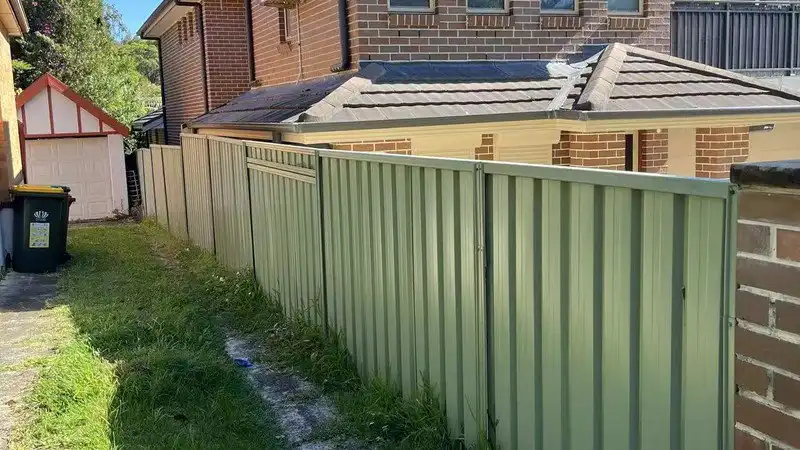
Eucalypt worked well in this project because the soft green tone blended naturally with the surrounding lawn, plants, and garden environment. Compared with dark grey or black, this colour made the side passage feel lighter and less enclosed, while still providing privacy and a clean boundary line.
The colour also matched the traditional residential setting better than a strong modern tone. With the brick house, tiled roof, garden path, and green outdoor space, Eucalypt created a softer and more natural appearance. This makes it a practical option for Perth homes, landscaped residential boundaries, and projects where the fence should blend into the environment instead of becoming the main visual focus.
This case shows why Eucalypt is often suitable for residential gardens, side boundaries, schools, parks, and landscaped projects. When the site has grass, trees, planting areas, or warm brick architecture, an Eucalypt-style fence can create a more balanced and comfortable outdoor feeling.
Surfmist: Light, Clean, and Suitable for Hot Areas
Surfmist is a very light colour that creates a clean and bright appearance. It is often used in coastal-style homes, pool areas, and hot regions.
Because it is a light colour, Surfmist absorbs less heat than darker colours. It can help small spaces feel more open and less enclosed.
Surfmist is suitable for:
- Pool fences
- Coastal-style homes
- Hot and exposed areas
- Small courtyards
- Residential boundaries
- Light-coloured buildings
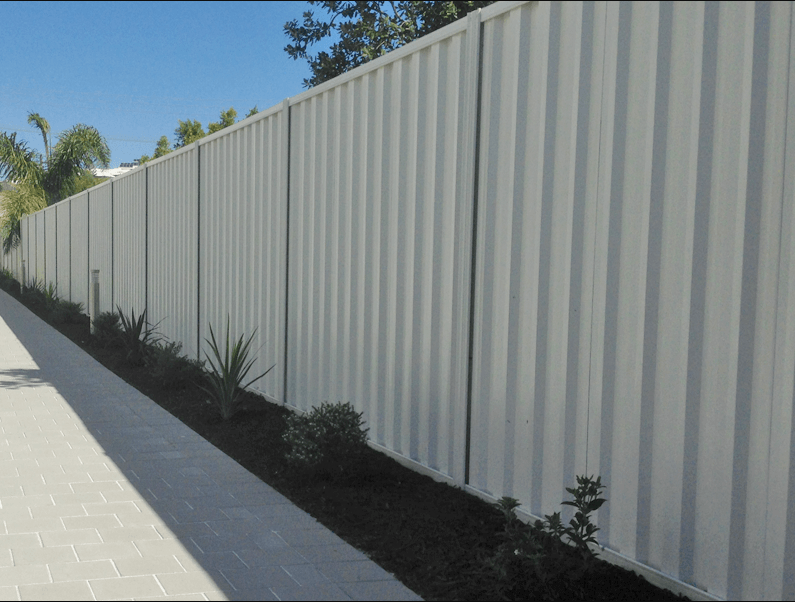
The main point to remember is maintenance. Very light colours can show dust, soil, and mud spots more easily, so regular cleaning may be needed.
Dune: Warm Neutral for Modern Homes and Estates
Dune is a warm neutral colour between grey and beige. It is softer than pure grey and less bright than white.
This makes it suitable for many modern residential and commercial projects. It can match brick, render, stone, concrete, and light-coloured cladding.
Dune is suitable for:
- Housing estates
- Modern homes
- Commercial gardens
- Boundary fencing
- Projects with warm paving or light walls
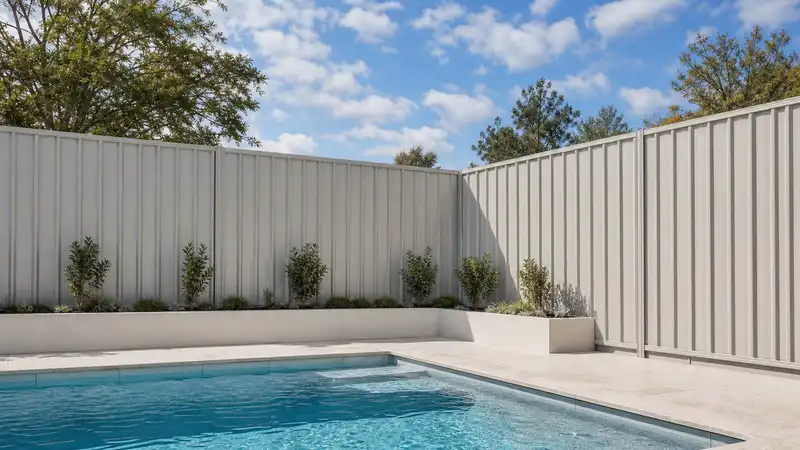
For buyers who want a balanced colour that is not too dark and not too light, Dune is often a safe and practical choice.
Colorbond Paint Colours vs Fence Colours: Are They the Same?
Many customers search for colorbond paint colours when they actually mean steel fence panel colours, powder-coated fence colours, or pre-painted steel colour references.
In production, paint colour and finished fence colour are not always the same thing. A colour on a screen, a paint chart, or a website image may look different from a finished steel fence panel.
Several factors can affect the final appearance:
- Coating type
- Gloss level
- Steel surface texture
- Sunlight direction
- Viewing angle
- Camera and screen display
- Production batch
For B2B orders, we recommend confirming the colour with a physical sample or a clear RAL colour code before mass production.
If a customer only provides a picture, it should be treated as a starting point, not the final colour standard. The safer process is to match the picture to a close RAL colour, prepare a sample, and confirm it before bulk production.
Modern Colorbond Fence Designs and Colour Matching Ideas
Modern colorbond fence designs are not only about panel shape. Colour matching also plays a major role.
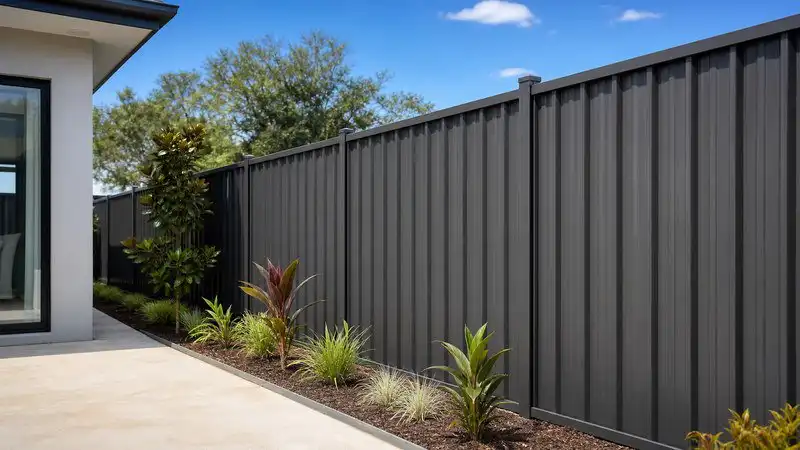
A dark charcoal fence can create a bold architectural boundary. A soft neutral fence can make a garden or pool area feel more open. A natural green tone can help the fence blend into the surrounding landscape.
For safer and more accurate wording, B2B suppliers may describe these as modern colorbond-style fence designs.
Common Colour Matching Directions
| Design Direction | Recommended Colours | Suitable Projects |
|---|---|---|
| Modern contrast | Monument, Ironstone, black | Modern homes, commercial buildings |
| Soft matching | Dune, Domain, Shale Grey | Residential estates, villas |
| Bright and open | Surfmist, Classic Cream | Pools, patios, small yards |
| Natural blending | Eucalypt, Woodland Grey | Parks, farms, landscaped areas |
If the building already has black window frames, dark roof lines, or steel structures, a dark fence can create a modern and consistent look.
If the site has light walls, warm paving, or a small courtyard, a soft neutral colour may be more comfortable.
If the project is surrounded by trees, grass, or rural land, Eucalypt or Woodland Grey can help the fence feel less intrusive.
Deep Colour vs Light Colour: Which One Should You Choose?
Many buyers do not start by asking for a specific colour name. They first ask whether they should choose a deep colour or a light colour.
The answer depends on the site.
If the project is in a hot area, close to a pool, or inside a small courtyard, a lighter colour is usually more comfortable. It makes the space feel bigger and reduces the feeling of heat around the fence.
If the project is an industrial site, warehouse, logistics yard, or commercial security boundary, a darker colour may be more suitable. It looks stronger, hides dirt better, and gives the site a more secure appearance.
Colour Selection by Project Condition
| Project Condition | Recommended Colour Direction | Why |
|---|---|---|
| Strong sunlight | Light or mid-light colours | Less heat absorption |
| Poolside area | Surfmist, Shale Grey, Dune, Classic Cream | Brighter and softer outdoor feeling |
| Small courtyard | Light or mid-light colours | Makes space feel larger |
| Industrial park | Monument, Woodland Grey, Ironstone, black | Strong boundary and easier dirt hiding |
| Warehouse or logistics yard | Dark grey or black | Handles dust and vehicle marks better |
| Security boundary | Dark colours | Stronger visual barrier |
| Coastal project | Light or neutral colours + suitable coating | Better comfort and corrosion planning |
| Phased construction | Standard colours | Easier future replacement |
Understanding Colour Charts and Samples
A colour chart is useful, but it should not be the only decision tool.
Digital colour charts, website images, and phone photos can all look different depending on the screen, lighting, camera, and background. A colour that looks warm on one screen may look colder on another.
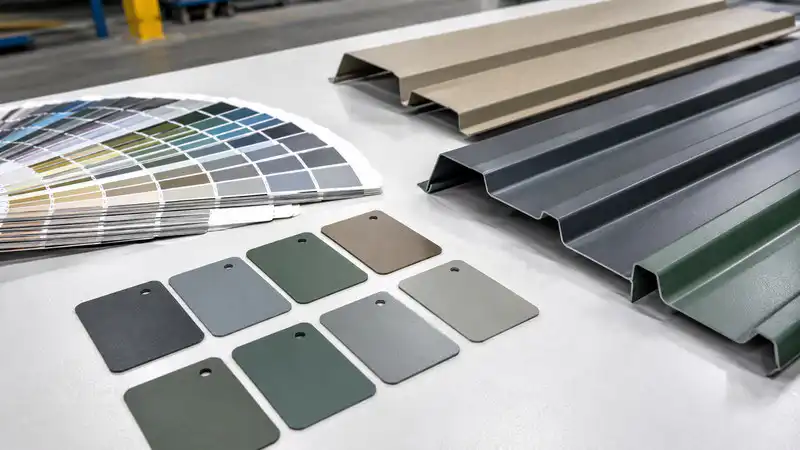
For factory production, the most reliable colour references are:
- Physical samples
- Clear RAL colour codes
- Approved colour swatches
- Confirmed coating samples
If the buyer only has a photo, the colour should be matched and confirmed before mass production. This step is especially important for custom colours, matt finishes, dark colours, and metallic colours.
For large projects, sample confirmation is not a small detail. It can prevent expensive rework, shipment disputes, and installation delays.
Finish Options for Colorbond-Style Steel Fencing
Colour is not the only surface decision. The finish also changes how the fence looks.
Classic Finish
Classic finish is the most common choice for fencing. It offers a clean and practical surface for residential, commercial, and industrial projects.
It is suitable for long fence runs because it looks consistent and is usually more cost-effective for bulk orders.
Matt Finish
Matt finish gives the fence a softer and more premium appearance. It reduces strong reflection and works well in modern architectural projects.
However, matt surfaces may require more careful handling because changes in gloss can be more visible.
Metallic Finish
Metallic finish has a stronger visual effect. It may be used for feature areas or special architectural projects.
For large fence runs, metallic colours need careful sample confirmation because different viewing angles and batches may create visible differences.
For dark colours, matt finishes, and metallic finishes, packaging and inspection become more important. Scratches, rubbing marks, or gloss differences can be easier to notice than on standard colours.
How to Choose the Right Colorbond-Style Fence Colour
You can choose a better fence colour by following a simple process.
Step 1: Check the Site Environment
First, look at the project location.
Ask these questions:
- Is the site exposed to strong sunlight?
- Is the fence near a pool, patio, or play area?
- Is the space small or large?
- Is the site near the coast?
- Is it a residential, commercial, or industrial project?
If the site is hot and people will stay near the fence, choose a lighter colour. If the site is industrial or security-focused, a darker colour may be more practical.
Step 2: Match the Surrounding Building
Next, check the fixed building elements.
Look at:
- Roof colour
- Window frame colour
- Wall cladding
- Driveway material
- Paving
- Garden style
- Gate colour
The fence should support the whole design, not fight against it.
Step 3: Decide Between Matching and Contrast
A matching colour creates a calm and unified look. This is good for residential estates and projects where the fence should blend in.
A contrasting colour creates a stronger design statement. This is useful for modern homes, commercial sites, or security boundaries.
For example, a light wall with a Monument-style fence creates a bold modern contrast. A warm wall with a Dune-style fence feels softer and more natural.
Step 4: Think About Future Replacement
If the project may need future replacement panels, choose a standard colour when possible.
This matters for:
- Residential estates
- Schools
- Government projects
- Industrial parks
- Phased developments
- Long-term property management
Custom colours can look excellent, but they may create more work when the buyer needs extra panels years later.
Step 5: Confirm with Samples
Do not confirm colour only from a screen.
Before bulk production, check a physical sample or approved colour swatch. View the sample in natural light and compare it with the building material.
For large projects, this small step can prevent expensive mistakes.
Fence Colours for Different Project Types
Different fence projects need different colour strategies.
Residential Boundary Fence
For residential boundaries, softer colours are often better. Dune, Domain, Surfmist, and Woodland Grey are practical options.
They can match different house styles and avoid making the boundary feel too heavy.
Pool Fence
For pool areas, lighter colours are usually more comfortable. Surfmist, Shale Grey, Dune, and Classic Cream can make the space feel cleaner and brighter.
They also reduce the heavy feeling that dark colours may create in a small pool area.
Industrial Fence
For industrial fences, darker colours are common. Monument, Ironstone, black, and dark grey create a stronger and more professional boundary.
They are also more forgiving when the site has dust, vehicles, loading areas, or equipment movement.
Security Fence
Security fencing often uses darker colours because they create a stronger visual barrier. Monument, Woodland Grey, and Ironstone are practical options.
These colours work well with gates, steel posts, access control systems, and commercial buildings.
Rural Fence
For rural or landscaped sites, natural colours are better. Eucalypt, Woodland Grey, and other earthy tones can help the fence blend into the environment.
Coastal Fence
For coastal projects, light or neutral colours can help with heat comfort and visual freshness. But the coating system is just as important as colour.
You should consider the full specification, including steel grade, coating, and corrosion protection.
For harsh environments, salt spray or coating performance test can help buyers evaluate the corrosion resistance of coated metal products before large-scale use.
Custom Colour Solutions and B2B Support from JZH Fence
For B2B projects, colour selection often goes beyond standard colours.
Some customers need a colour to match their brand, architectural design, roofing, cladding, gates, or existing fence system. In these cases, JZH Fence can support colour matching based on project requirements.
Customers may provide:
- RAL colour codes
- Pantone references
- Physical samples
- Colour chart screenshots
- Product photos
- Existing panel samples
For better accuracy, we recommend physical samples or clear RAL colour codes. Photos and HEX values can help at the early stage, but they should not be used as the final production standard.
JZH Fence can help with sample confirmation, coating selection, panel matching, and packaging planning for bulk colorbond-style steel fence orders.
Factory Experience: Avoiding Colour Difference in Bulk Fence Orders
For bulk colorbond-style fence orders, colour consistency matters more than a single perfect sample.
Before production, the customer should confirm the colour reference. For custom colours, deep colours, matt colours, or metallic colours, sample confirmation is especially important.
A practical process is:
- Customer provides colour reference.
- Factory matches the colour with a coating sample.
- Customer confirms the sample.
- Bulk production is arranged.
- Finished products are inspected before shipment.
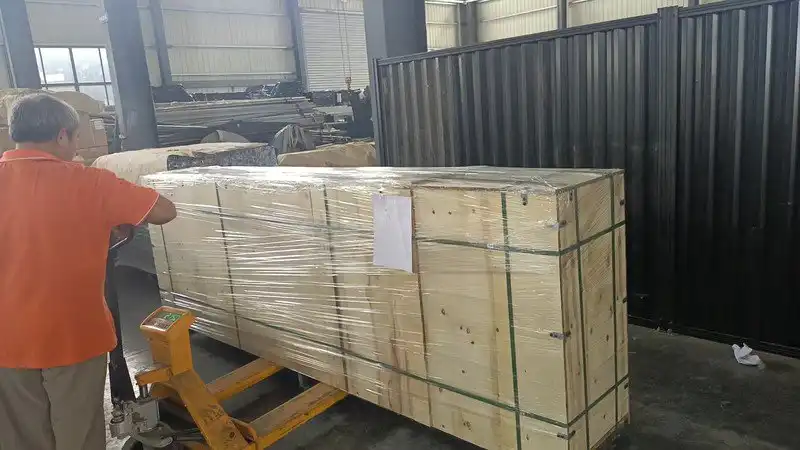
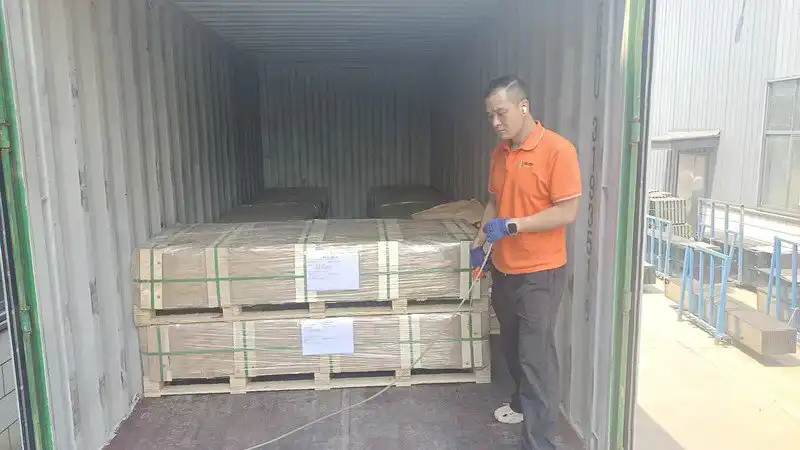
After production, our inspection team checks the finished panels to reduce the risk of visible colour difference, coating problems, or surface defects.
This step is important because even if the colour is correct before production, handling, coating issues, or surface damage may still affect the final appearance.
For phased projects, we also suggest keeping clear colour records. These may include RAL code, coating type, gloss level, sample photos, approved sample, and production batch information.
If the customer plans to order again after several months, these records help reduce the risk of colour mismatch.
For large residential estates, schools, commercial parks, government projects, and industrial sites, we also suggest buying a small number of spare panels, posts, and rails with the first order. This can make future repair or replacement easier.
Packaging is also part of colour protection.
During long-distance shipping, panels may rub against each other if they are not packed correctly. This can cause scratches, corner damage, coating marks, or pressure marks.
For colour-coated fence panels, packaging should focus on:
- Protecting the panel surface
- Separating panels properly
- Protecting corners and edges
- Keeping pallets stable
- Reducing movement during transport
- Avoiding moisture damage
For dark colours, matt colours, and premium custom colours, packaging needs more attention because surface defects are easier to see.
Good packaging does not only protect the product. It also helps the customer pass site inspection and reduce installation delays.
Common Mistakes When Choosing Fence Colours
Mistake 1: Choosing a Dark Colour for a Small, Hot Courtyard
A dark fence can look beautiful, but in a small and hot courtyard it may feel heavy. It may also absorb more heat during the day.
For this type of space, a lighter colour is often safer.
Mistake 2: Choosing a Custom Colour Without Sample Confirmation
Pictures and screen colours are not reliable enough for production. A custom colour should be confirmed with a sample before bulk production.
This is especially important for B2B buyers because colour mistakes can affect hundreds of panels.
Mistake 3: Ignoring Future Replacement
If a project may need more panels in the future, a standard colour is usually easier to manage.
Custom colours may create MOQ pressure or colour difference risk when the buyer reorders years later.
Mistake 4: Only Considering Colour, Not Coating
For coastal or harsh outdoor environments, colour alone is not enough.
You also need to consider the steel grade, coating system, corrosion protection, and installation environment.
Mistake 5: Not Protecting Dark or Matt Panels During Shipping
Dark and matt panels may show scratches more clearly. If packaging is too simple, the product may arrive with visible surface marks.
For export orders, packaging should be planned together with the colour and finish.
Conclusion: Choose a Fence Colour That Fits the Site, Not Just the Style
Choosing colorbond fence colours is not only about personal preference. The right colour should match the climate, project type, building style, maintenance plan, and future replacement needs.
For strong sunlight, poolside areas, small yards, and residential gardens, light or mid-light colours are often more comfortable. For industrial parks, warehouses, logistics yards, and security boundaries, darker colours such as Monument, Woodland Grey, Ironstone, black, or dark grey are often more practical.
For coastal projects, remember that colour is only one part of the specification. Steel grade, coating system, and anti-corrosion protection should also be considered.
JZH Fence supplies colorbond-style steel fence panels, posts, rails, gates, and matching accessories for international B2B projects. We can support standard colours, custom colour matching, sample confirmation, bulk order production, and export packaging.
If you are planning a residential estate, industrial park, pool boundary, commercial site, or phased fencing project, contact JZH Fence to request a quote, colour sample, or product catalogue.
Frequently Asked Questions (FAQ)
Q1:What are the most popular Colorbond fence colours?
Popular options include Monument, Woodland Grey, Surfmist, Dune, Shale Grey, Classic Cream, and Pale Eucalypt. Dark colours are often used for commercial and security boundaries, while light colours are common for pools, patios, and hot outdoor areas.
Q2:Can JZH Fence match Colorbond-style colours for bulk orders?
Yes. JZH Fence can match Colorbond-style fence colours based on samples, RAL colours, coating requirements, and project specifications. For bulk orders, we recommend confirming samples before production to keep colour consistency.
Q3:Should I choose a dark or light fence colour?
Dark colours look modern, hide dust better, and suit warehouses, industrial parks, and security boundaries. Light colours reflect more heat and make spaces feel brighter, so they are better for pools, patios, residential projects, and hot regions.
Get a Project-Based Fence Quotation from JZH Fence
If you are comparing Colorbond-style metal fencing and timber fencing for a residential development, commercial boundary, wholesale supply, or project-based order, JZH Fence can help you build a cost-optimized specification.
JZH Fence supplies metal fence panels, posts, rails, caps, gates, and accessories for B2B projects across Australia, North America, Europe, and other markets. Depending on your market and site environment, we can discuss project-based options such as G550 steel, HDP coating, AM100 anti-corrosion protection, standard colours, standard sizes, and bulk packaging.
Contact JZH Fence to get a project quotation, request a catalogue, or discuss the best fence configuration for your market.