Choosing the right WPC fence requires more than comparing colours and unit prices. Before placing an order, you need to understand the board structure, surface technology, supporting posts, material documents, installation method, and shipping options. As an experienced WPC fence factory, JZH Fence has found that physical samples and clear technical information often help buyers identify differences that cannot be seen in product photographs. This guide explains how to evaluate WPC fencing, compare traditional and co-extrusion products, and source a complete system with fewer purchasing risks.
What Is a WPC Fence?
A WPC fence is a fencing system made from wood plastic composite material. The material normally combines wood fibres or wood flour with plastic polymers and functional additives.
The finished boards provide a wood-like appearance while offering better resistance to moisture, insects, and decay than untreated natural timber.
WPC fencing is commonly used for:
- Residential privacy boundaries
- Villas and townhouse developments
- Apartment communities
- Gardens and landscaped areas
- Commercial property boundaries
- Public parks
- Light-duty perimeter projects
For B2B buyers, WPC fences provide a balance between appearance, maintenance requirements, and repeatable factory production.
Unlike natural timber fencing, WPC boards do not normally require regular painting, staining, or sealing. Compared with aluminium privacy fencing, WPC can also provide a warmer and more natural appearance. For a broader material comparison, see our guide to composite, wood, and metal fencing.
However, not all WPC products use the same material formula, internal structure, or surface technology. Before comparing quotations, you should confirm exactly what each supplier is offering.
WPC Fence Panels vs WPC Fence Boards
The terms WPC fence panels and WPC fence boards are often used interchangeably, but they do not always describe the same product.
A WPC fence board is an individual composite plank used to form the fence surface.
A complete WPC fence panel or fencing system may include:
- WPC infill boards
- Aluminium or steel posts
- Top and bottom rails
- Post caps
- Base plates
- Fixing brackets
- Screws and fasteners
- Corner posts
- End posts
- Gate components
This difference matters when you compare quotations.
One supplier may quote only the WPC boards. Another supplier may quote a complete system containing boards, posts, rails, caps, and installation accessories.
Before comparing two prices, confirm that both quotations cover the same bill of materials.
Why Are More Contractors Choosing WPC Fencing?
Contractors, distributors, and project buyers often choose WPC fencing for the following reasons:
- Lower routine maintenance
- No regular painting or staining
- Resistance to moisture and insects
- Smooth and splinter-free surfaces
- Consistent colour and texture
- Full-privacy designs
- Horizontal and vertical installation options
- Compatibility with aluminium or steel posts
- Multiple colours and woodgrain finishes
- Repeatable dimensions for bulk orders
For wholesalers, the relatively consistent appearance of factory-produced boards can make stock planning and product display easier.
For contractors, a modular fencing system can reduce installation uncertainty when the boards, posts, rails, and accessories are correctly configured before shipment.
What Is WPC Made Of?
WPC material normally contains:
- Wood flour or recycled wood fibres
- HDPE, PE, or another plastic polymer
- Colour masterbatch
- UV stabilisers
- Antioxidants
- Coupling agents
- Processing additives
- Anti-mildew additives
- Weather-resistant additives
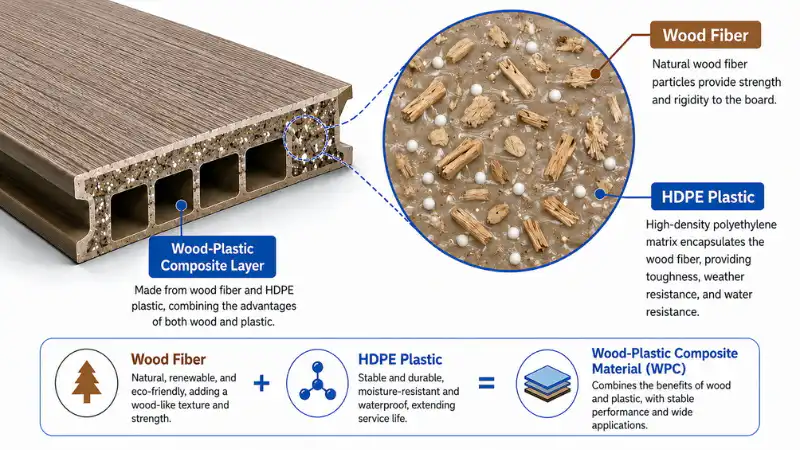
The exact material ratio depends on the product formula, required performance, extrusion process, and target market.
You should be cautious when a supplier claims that every WPC product uses one universal material ratio. Different board structures and performance requirements may use different formulations.
When evaluating a supplier, ask whether the factory can provide:
- A general material description
- Relevant test documents
- Chemical-composition-related information
- Product-specific specifications
- Samples from the proposed production type
These documents can help you assess the product more accurately than website photographs alone.
cted according to the project rather than a simple “hollow versus solid” label.
Traditional WPC Fence vs Co-extrusion WPC Fence
The difference between traditional and co-extrusion products is one of the most important points when comparing WPC fences.
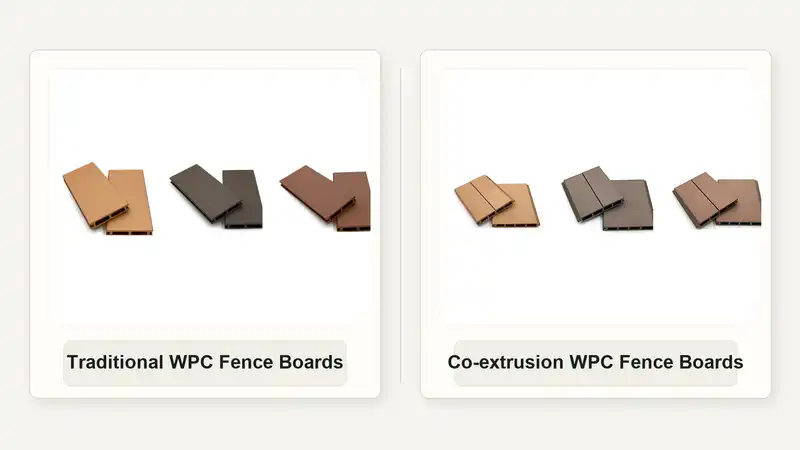
Based on JZH Fence’s current product classification, a hollow board without a co-extruded protective layer is a first-generation WPC product.
It can be described in English as a traditional WPC fence.
A hollow board with a co-extruded outer protective layer is considered a second-generation product.
It is described as a co-extrusion WPC fence.
What Is a Traditional WPC Fence?
A traditional WPC fence is produced through a standard extrusion process without a separate co-extruded surface layer.
The exposed surface is formed from the core WPC material.
Its performance depends on:
- Core material formula
- UV stabilisers
- Colour pigments
- Production quality
- Surface brushing or embossing
- Outdoor exposure conditions
Traditional WPC fencing can be suitable for standard residential, garden, and budget-controlled projects.
It can still provide reliable performance when the board formula, thickness, supporting structure, and installation method suit the application.
What Is a Co-extrusion WPC Fence?
A co-extrusion WPC fence has an additional protective layer applied around the core during extrusion.
This outer layer is designed to improve the surface performance of the board.
Depending on the product structure, the co-extruded layer may provide:
- Better stain resistance
- Easier cleaning
- Improved surface protection
- More stable colour appearance
- Better resistance to outdoor exposure
- A more defined woodgrain finish
Co-extrusion products normally have a higher price because they require additional materials and a more complex production process.
Traditional and Co-extrusion WPC Fence Comparison
| Comparison point | Traditional WPC fence | Co-extrusion WPC fence |
|---|---|---|
| Product generation | First generation | Second generation |
| Common JZH structure | Hollow uncapped board | Hollow co-extruded board |
| Surface structure | Core material forms the surface | Separate protective layer |
| Stain resistance | Depends on formula and finish | Generally easier to clean |
| Colour retention | Depends on formula and exposure | Usually better protected |
| Surface texture | Brushed or embossed core | Protective layer with texture |
| Typical price level | More economical | Higher |
| Suitable projects | Standard and budget-controlled projects | Projects prioritising long-term appearance |
Our Practical Experience: Do Not Compare Hollow Boards by Shape Alone
In actual customer communication, some buyers initially assume that all hollow WPC boards are the same product.
This can lead to inaccurate comparisons.
A hollow traditional board and a hollow co-extrusion board may have a similar internal shape, but they use different surface technologies and belong to different product generations.
Before accepting a quotation, ask:
- Is the board traditional or co-extruded?
- Does it have a separate protective layer?
- Is the quotation based on the same board as the sample?
- What surface texture is included?
- How will the colour be confirmed?
- Which test documents are available?
You should not compare two hollow boards only by their width, thickness, or product photographs.
The surface technology can affect the price, cleaning requirements, stain resistance, and long-term appearance.
What Are the Main Benefits of WPC Fences?
Lower Maintenance Requirements
Natural timber may require periodic painting, staining, coating, or sealing.
WPC fencing normally needs less routine maintenance.
Common cleaning methods may include:
- Clean water
- A soft brush
- Mild detergent
- Periodic removal of leaves and dirt
Co-extrusion boards are generally easier to clean because their protective layer reduces direct exposure of the core material.
However, low maintenance does not mean no maintenance. Dirt and organic debris should still be removed, especially in humid or shaded environments.
Moisture, Rot, and Insect Resistance
WPC does not behave in exactly the same way as untreated natural timber.
USDA Forest Service research notes that outdoor WPC products are still exposed to moisture, mould, decay, and weathering, so performance should be evaluated according to the material and application.
It offers better resistance to common problems such as:
- Rot
- Splitting
- Wood-boring insects
- Moisture absorption
- Frequent repainting
This makes WPC suitable for residential boundaries, gardens, and humid outdoor applications.
However, the complete fence system must also be evaluated.
A moisture-resistant board cannot compensate for:
- Weak posts
- Incorrect installation
- Poor drainage
- Inadequate fasteners
- Excessive post spacing
- Missing expansion gaps
Privacy and Appearance
WPC is frequently selected for privacy fencing because tongue-and-groove or overlapping boards can reduce visible gaps.
Available design options may include:
- Full-privacy panels
- Semi-privacy panels
- Horizontal boards
- Vertical boards
- Brushed surfaces
- Embossed woodgrain
- 3D wood textures
- Two-tone designs
- Contrasting aluminium posts
Common colour directions include:
- Teak
- Cedar
- Walnut
- Coffee
- Grey
- Charcoal
- Black
- Natural wood tones
For distributors, colour planning should be based on local architecture, climate, stock turnover, and customer preferences.
How to Read WPC Fence Reviews Before Buying
Many buyers search for WPC fence reviews before contacting a factory.
Reviews can provide useful information, but you need to understand what product the reviewer actually purchased.
A review of a first-generation traditional WPC fence should not automatically be applied to a second-generation co-extrusion system.
When reading WPC fence reviews, check whether the reviewer mentions:
- Traditional or co-extrusion boards
- Hollow or solid profiles
- Board wall thickness
- Post material
- Fence height
- Post spacing
- Installation method
- Local climate
- Length of outdoor use
- Cleaning and maintenance
A negative review caused by incorrect installation does not necessarily mean the WPC material itself is unsuitable.
Similarly, a positive review from a sheltered residential garden may not prove that the same configuration is suitable for an exposed coastal or high-wind project.
Reliable WPC fence reviews should include the product structure, installation conditions, and period of use.
Typical WPC Fence Panel Specifications
Common Heights
Common WPC fence heights may include:
- 1.2 metres
- 1.5 metres
- 1.8 metres
- 2.0 metres
- 2.4 metres for selected projects
The final height should be checked against:
- Local planning requirements
- Privacy requirements
- Wind exposure
- Foundation conditions
- Post strength
- Gate design
Common Panel Widths
Common panel widths may include:
- 1.5 metres
- 1.8 metres
- 2.0 metres
A wider panel can reduce the number of posts, but it may increase the load on the boards, rails, and supporting structure.
Exposed sites may require shorter post centres.
Common Board Profiles
Available options may include:
- Hollow traditional WPC boards
- Hollow co-extrusion boards
- Solid WPC boards
- Tongue-and-groove boards
- Brushed surfaces
- Embossed surfaces
- 3D woodgrain surfaces
Before confirming a model, request a sectional drawing or physical sample.
Check:
- Overall width
- Overall thickness
- Wall thickness
- Internal chamber design
- Connection profile
- Surface layer
- Actual colour
Post and Frame Options
WPC boards are commonly combined with metal posts because the post system provides the main structural support.
Options may include:
- Powder-coated aluminium posts
- Galvanised steel posts
- Flanged posts for concrete surfaces
- Extended posts for in-ground installation
- Corner posts
- End posts
- Intermediate posts
- Top and bottom rails
Aluminium posts are often chosen when corrosion resistance and appearance are important.
Steel posts may be suitable when the project requires a different balance between strength, cost, and fabrication.
How to Evaluate WPC Fence Quality
Inspect the Board Structure
Check the board section for:
- Consistent wall thickness
- Even internal chambers
- Straight edges
- Clean connections
- No obvious voids
- No serious deformation
- No major cracks
- A visible protective layer when applicable
For hollow boards, compare the chamber design and wall thickness.
For co-extrusion products, check whether the surface layer appears consistent.
Inspect the Surface and Colour
Surface inspection should include:
- Colour uniformity
- Woodgrain definition
- Brushing consistency
- Surface scratches
- Edge finishing
- Differences between samples
- Batch colour-control method
Digital photographs are useful for preliminary selection, but screen settings and lighting may change the way colours appear.
A physical sample is more reliable.
Check Material and Chemical Information
Depending on the project, ask the WPC fence factory to provide:
- General material descriptions
- Polymer information
- Wood fibre information
- REACH-related documents
- Chemical-composition-related reports
- Product specifications
The supplier should answer according to existing evidence.
Exact material percentages should not be invented when they have not been verified.
Evaluate the Complete System
A good board may still perform poorly if the supporting structure is unsuitable.
Confirm:
- Post dimensions
- Post wall thickness
- Rail dimensions
- Base plates
- Fixing brackets
- Fasteners
- Post caps
- Corner connections
- Gate frames
- Spare accessories
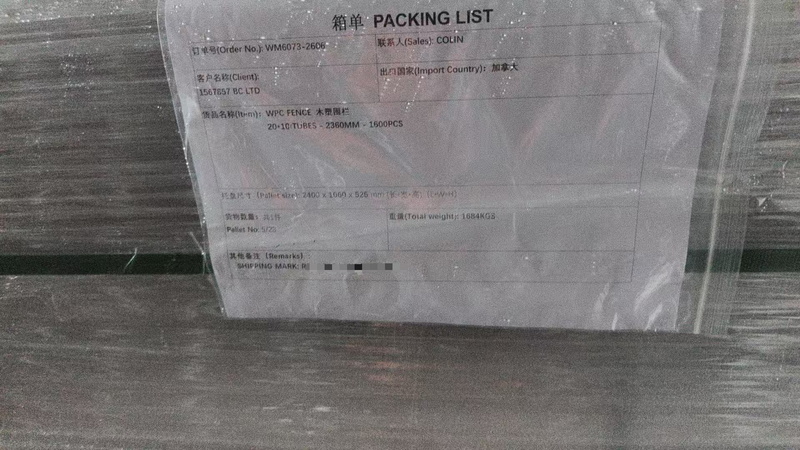
Ask for a complete packing list before production.
Inside a WPC Fence Factory
A professional WPC fence factory should control more than the appearance of the finished board.
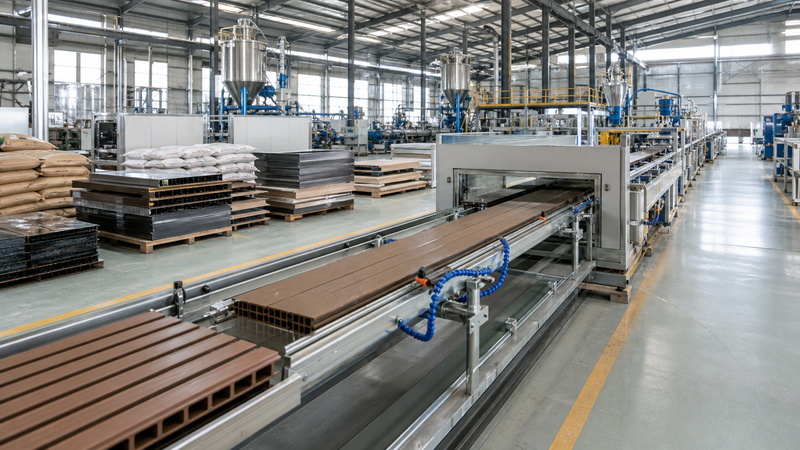
The manufacturing process normally includes:
- Raw material preparation
- Formula mixing
- Material drying
- Extrusion or co-extrusion
- Cooling and calibration
- Surface treatment
- Cutting
- Dimensional inspection
- Colour inspection
- Packaging
Traditional WPC Extrusion
For traditional WPC boards, the mixed material is extruded through a mould.
The board may then receive:
- Brushing
- Sanding
- Embossing
- Woodgrain treatment
- Cooling and calibration
Because there is no separate protective layer, the stability of the core formula and extrusion process is especially important.
Co-extrusion Production
For co-extrusion products, the core and outer protective material are processed together.
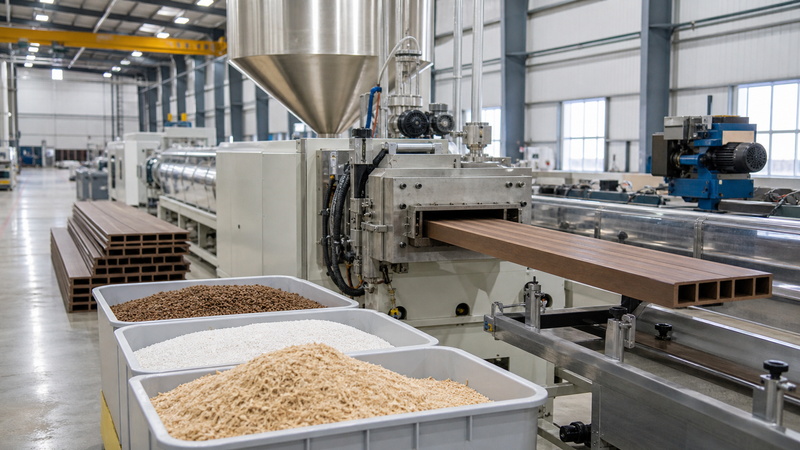
The factory needs to control:
- Core extrusion
- Surface-layer thickness
- Adhesion between layers
- Colour consistency
- Surface texture
- Cooling speed
- Final dimensions
A cross-section sample can help buyers understand the difference between traditional and co-extrusion boards.
What Does “WPC Factory Fence” Mean?
Some overseas buyers use the search phrase WPC factory fence when looking for fencing supplied directly by a manufacturer.
The phrase usually reflects an intention to find:
- Factory-direct pricing
- Custom colours
- Custom board profiles
- Bulk production
- Private-label packaging
- Complete fence systems
- Export documentation
- Samples and technical support
When comparing a WPC factory fence offer, you should confirm whether the supplier operates the extrusion process or only purchases boards from another factory.
You should also check whether the supplier can manufacture or coordinate the complete system, including posts, rails, gates, and accessories.
WPC Fence Applications
Residential Privacy Projects
WPC fencing can be used for:
- Backyards
- Villa boundaries
- Townhouse developments
- Apartment communities
- Garden partitions
- Outdoor living areas
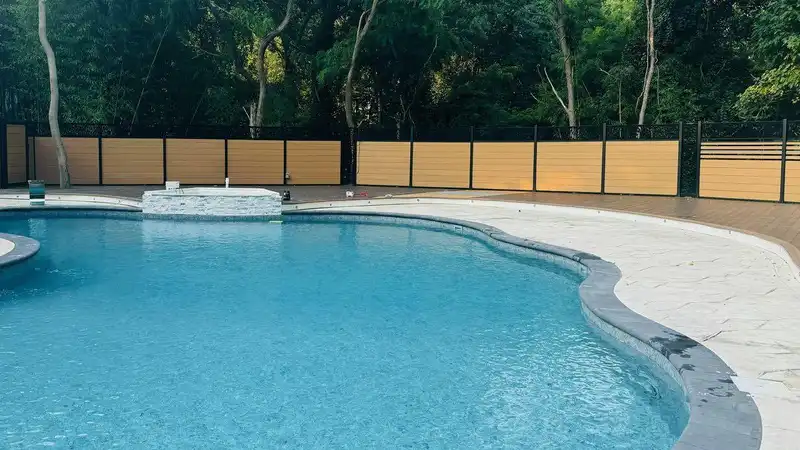
Grey, charcoal, coffee, and wood colours are often combined with dark aluminium posts to create a modern appearance.
Commercial and Public Projects
WPC fencing may also be used around:
- Office landscapes
- Schools
- Parks
- Healthcare facilities
- Hospitality projects
- Commercial courtyards
- Light-duty property boundaries
Commercial buyers may focus on:
- Repeatable dimensions
- Replaceable boards
- Low maintenance
- Colour consistency
- Installation speed
- Test documents
- Spare parts
Australian Coastal Project Experience
JZH Fence has supplied WPC fencing for a project in an Australian coastal city.
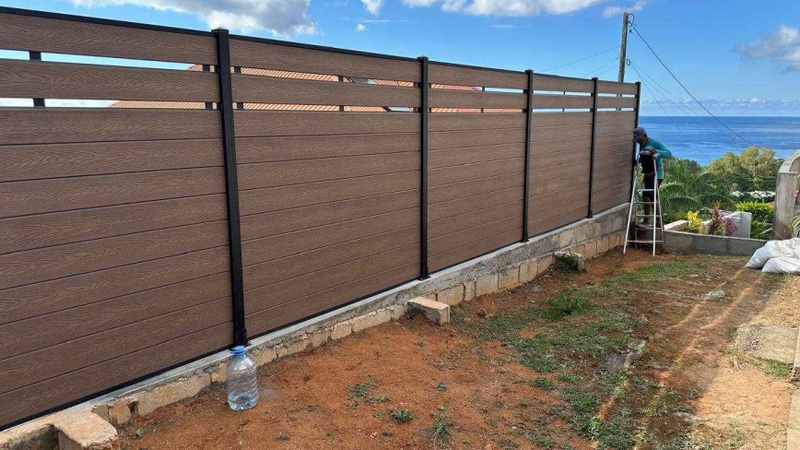
The exact city, project size, board model, colour, and project results should be confirmed with the responsible sales colleague before publication.
For this coastal application, the customer needed to consider more than the panel colour and price.
Long-term moisture exposure should also be considered because WPC absorbs moisture more slowly than solid wood, but moisture can still affect its strength, stiffness, and durability over time.
Important evaluation points included:
- Board structure
- Surface technology
- Material information
- Supporting posts
- Installation method
- Colour confirmation
- Available test documents
Physical samples, colour cards, installation guidance, and material documents helped the buyer evaluate the system before confirming the project.
This experience shows why the project environment should be discussed before the final product is selected.
What Helps B2B Buyers Confirm a WPC Fence Order?
Physical Samples Are Usually the Most Effective
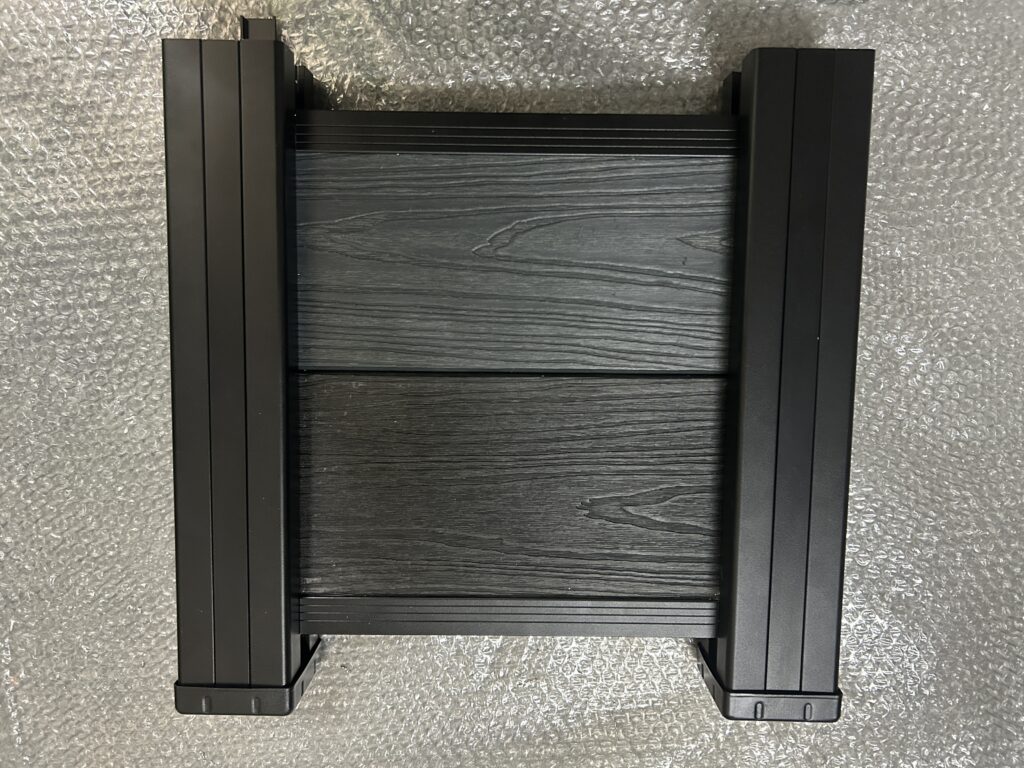
Based on our customer follow-up experience, sending physical samples is often the most effective way to help buyers confirm a product.
A sample allows you to inspect:
- Actual colour
- Surface texture
- Board thickness
- Internal chamber structure
- Cut-edge quality
- Connection design
- Traditional or co-extrusion structure
- Protective surface layer
Product photographs are useful, but they cannot fully show the internal profile or surface feel.
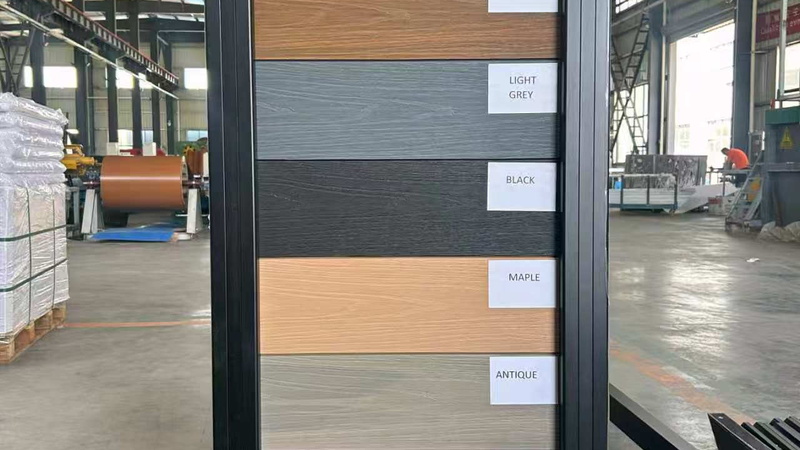
Colour Cards Help Buyers Compare Options
A colour card can help you:
- Compare several colours
- Match the fence with a building exterior
- Select stock colours
- Present options to project owners
- Confirm a design direction
For mass production, the final colour should still be checked against an approved physical sample.
REACH Test Reports Support Product Evaluation
JZH Fence can provide available REACH test reports for relevant materials or products.
Before using a report for your project, check:
- Which product was tested
- Which material was tested
- The report date
- The test scope
- Whether it applies to the requested model
One report should not automatically be treated as covering every product formula or model.
Installation Videos Reduce Uncertainty
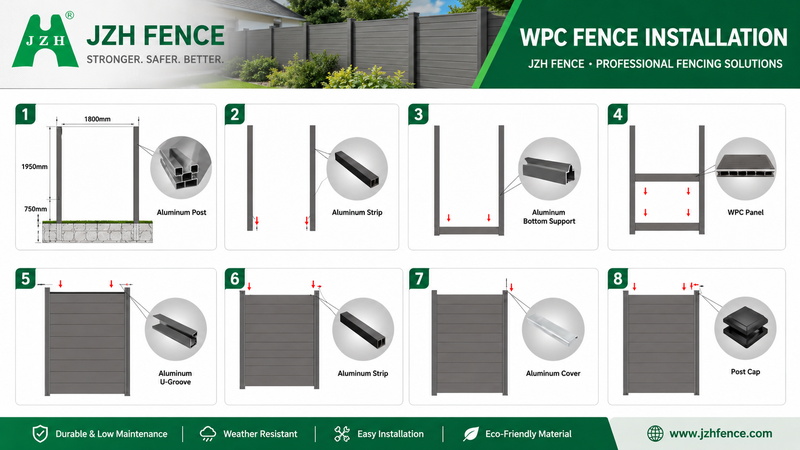
WPC fence installation videos can help buyers understand:
- Post positioning
- Base-plate fixing
- In-ground installation
- Rail connection
- Board insertion
- Expansion gaps
- Corner treatment
- Post-cap installation
- Gate connection
Distributors can also use these videos to train local installation teams.
How Are Samples and Orders Shipped?
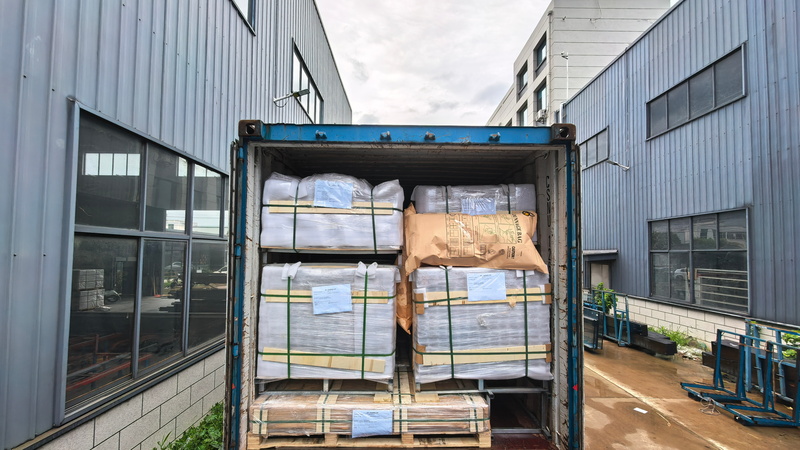
JZH Fence can arrange:
- Courier delivery
- Air freight
- Sea freight
Courier Delivery
Courier services are usually suitable for:
- Small board samples
- Colour cards
- Small accessories
- Compact sample sets
Courier shipping is fast and convenient, but the unit cost may be relatively high.
Air Freight
Air freight may be used for:
- Larger samples
- Urgent display materials
- Trial-installation products
- Small quantities of boards and accessories
It is faster than sea freight but more expensive.
Sea Freight
Sea freight is normally used for:
- Bulk WPC fence panels
- Full-length boards
- Posts
- Gates
- Large accessory quantities
- Container orders
| Shipping method | Suitable for | Speed | Cost characteristic |
|---|---|---|---|
| Courier | Small samples and colour cards | Fastest | Convenient for small parcels |
| Air freight | Larger or urgent samples | Fast | Higher cost |
| Sea freight | Bulk fencing systems | Slower | Suitable for large orders |
How to Source WPC Fencing from a China Factory
Step 1: Send the Project Information
Provide:
- Total length
- Fence height
- Number of corners
- Gate quantity
- Gate dimensions
- Installation surface
- Destination country
- Preferred colour
- Required texture
- Drawings or site photographs
Step 2: Confirm the Product Generation
Clearly confirm whether you need:
- Traditional WPC fence
- Co-extrusion WPC fence
- Hollow boards
- Solid boards
- Full-privacy panels
- Semi-privacy panels
Ask the supplier to state the board structure in the quotation.
Step 3: Request Samples and Documents
Consider requesting:
- Physical board samples
- Board cross sections
- Colour cards
- REACH reports
- Installation videos
- Product specifications
- Material information
- Accessory lists
Step 4: Confirm the Complete Material List
The quotation should state whether it includes:
- WPC boards
- Posts
- Top rails
- Bottom rails
- Post caps
- Base plates
- Brackets
- Screws
- Corner posts
- Gates
- Spare parts
Step 5: Confirm the Installation Conditions
Tell the factory whether the posts will be:
- Embedded in concrete
- Fixed with base plates
- Installed on a retaining wall
- Installed on sloping ground
- Connected to an existing structure
Step 6: Confirm Production and Delivery Conditions
Before paying a deposit, confirm:
- Product model
- Colour
- Surface texture
- Board length
- Post type
- Quantity
- Packaging
- Lead-time range
- Shipping method
- Export documents
Common Mistakes When Buying WPC Fences
- Treating traditional and co-extrusion products as identical
- Comparing only the price of the boards
- Ignoring posts, rails, and accessories
- Ordering without a physical sample
- Failing to check the board cross section
- Ignoring installation conditions
- Not confirming the approved colour
- Failing to review material documents
- Comparing quotations with different specifications
- Selecting the wrong shipping method
Frequently Asked Questions About WPC Fencing
1. What is the difference between traditional and co-extrusion WPC fencing?
Traditional WPC fencing is a first-generation product without a separate protective surface layer, while co-extrusion WPC fencing is a second-generation product with an additional outer layer.
The co-extrusion layer can improve stain resistance, surface protection, colour stability, and ease of cleaning. Buyers should confirm the product generation before comparing quotations.
2. Is a hollow WPC fence board lower quality than a solid board?
No. A hollow WPC fence board is not automatically a lower-quality product.
Its performance depends on the wall thickness, internal chamber design, material formula, post spacing, rail structure, fence height, and installation method. Hollow boards can be suitable for many residential and commercial privacy projects.
3. Should I request a WPC fence sample before placing a bulk order?
Yes. A physical sample is one of the most effective ways to verify a WPC fence before ordering.
It allows you to check the actual colour, woodgrain, board thickness, internal structure, connection design, cut edge, and co-extruded surface layer. Colour cards and digital images should support the sample rather than replace it.
4. What documents should a WPC fence factory provide?
A WPC fence factory should provide the documents that are available and relevant to the requested product.
These may include product specifications, colour cards, installation videos, REACH test reports, material information, board drawings, packing lists, and accessory lists. Buyers should confirm that each report applies to the correct product or tested material.
5. Can WPC fences be installed in coastal areas?
Yes, WPC fences can be considered for coastal areas, but the complete system must be evaluated.
The buyer should review the board formula, traditional or co-extrusion surface, post material, fasteners, installation method, humidity, wind exposure, and local salt conditions. A coastal project should not be configured only according to the panel colour and price.
Conclusion
Choosing a WPC fence requires more than selecting a colour and requesting the lowest quotation.
You should first confirm whether the product is traditional or co-extruded. You should then evaluate the board structure, surface layer, material information, posts, rails, installation conditions, samples, test documents, and shipping method.
When reading WPC fence reviews, check whether the reviewer is discussing the same board generation, profile, supporting structure, and climate as your project.
When comparing a WPC factory fence offer, confirm whether the supplier can provide a complete system rather than boards alone.
Based on JZH Fence’s customer communication experience, physical samples are often the most effective way to confirm WPC fencing. Colour cards, available REACH reports, installation videos, and material-related information can provide additional support during your purchasing process.
Request WPC Fence Samples and a Project Quotation
JZH Fence supplies traditional and co-extrusion WPC fences for overseas distributors, wholesalers, contractors, and project buyers.
Send us your required height, total length, preferred colour, installation method, and destination.
Our team can help you:
- Compare traditional and co-extrusion boards
- Review the supporting post system
- Prepare physical samples and colour cards
- Provide available REACH documents
- Share installation videos
- Prepare a complete material list
- Compare courier, air, and sea shipping options
Request a WPC fence sample or contact JZH Fence for a project quotation today.