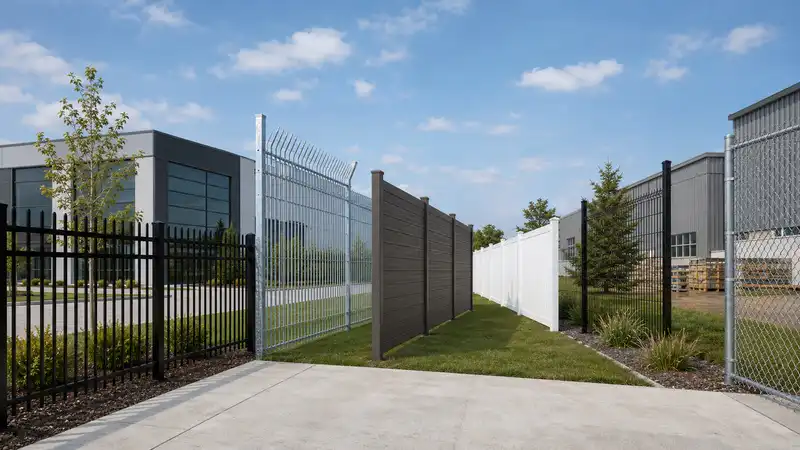
Choosing a fence based only on its purchase price can create expensive maintenance problems later. The right low maintenance fence options can reduce repainting, corrosion repairs, board replacement, and project callbacks over the fence’s service life. However, no material is completely maintenance-free, and the best choice depends on your climate, security requirements, installation method, and expected service period. This guide compares six practical materials and explains the small specification details that often determine long-term performance.
Fast Answer: What Is a Low Maintenance Fence?
A low maintenance fence is a fencing system that does not require frequent painting, staining, sealing, or replacement of damaged boards.
Routine work is normally limited to:
- Washing away dust, salt, mud, or organic buildup
- Inspecting posts, fasteners, hinges, and locks
- Clearing vegetation around the fence line
- Repairing scratches, cuts, or damaged coatings
- Replacing individual accessories when necessary
A maintenance free fence is a useful marketing phrase, but it should not be interpreted literally. Every outdoor fence is exposed to moisture, sunlight, wind, ground movement, and physical impact.
The realistic goal is therefore not zero maintenance. It is to select a system that keeps maintenance predictable, infrequent, and easy to manage.
Why Low Maintenance Matters to Project Buyers
For a single residential fence, a small repair may not appear significant. For a housing development, industrial facility, school, farm, or logistics park, the same repair repeated across hundreds of panels can become a major operational expense.
Low-maintenance fencing can help you:
- Reduce contractor callbacks
- Control annual maintenance budgets
- Minimize repainting and surface treatment
- Replace individual parts instead of complete fence lines
- Keep security perimeters operational
- Improve cost predictability over the project life
The initial fence price therefore tells you only part of the story. You also need to consider the cost of inspections, cleaning, coating repairs, hardware replacement, labor, and eventual replacement.
Quick Comparison of Low Maintenance Fence Options
| Fence material | Main advantage | Routine maintenance | Common applications |
|---|---|---|---|
| Vinyl or PVC | Does not rust or require painting | Washing and connection checks | Residential privacy and decorative boundaries |
| Aluminum | Lightweight and naturally corrosion-resistant | Cleaning and hardware inspection | Pools, communities and coastal residential projects |
| Galvanized steel | High structural strength | Inspecting coatings, welds and cut edges | Commercial, industrial and security fencing |
| Chain link | Simple structure and replaceable components | Tension and vegetation checks | Schools, warehouses, sports facilities and yards |
| WPC or composite | No staining or traditional wood treatment | Washing and structural inspection | Privacy fences and residential developments |
| Welded mesh | Strength with open visibility | Coating and fixing inspection | Commercial parks, schools and public infrastructure |
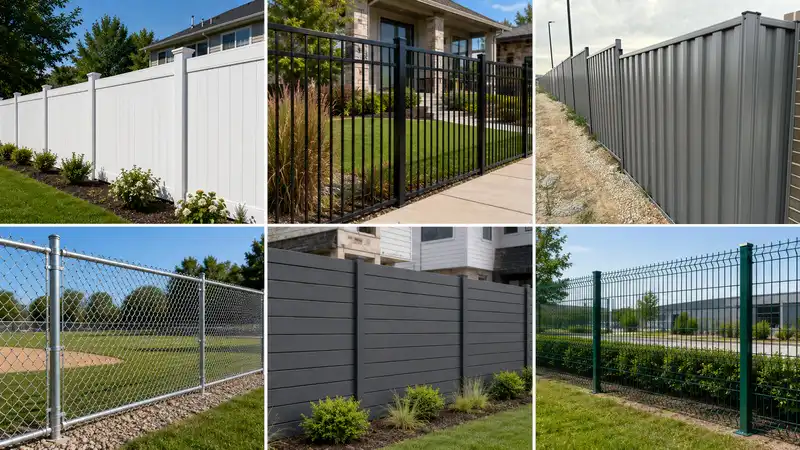
This table is only a starting point. A material that performs well in a dry inland site may need a different coating, post, or fastener specification in a coastal environment.
How to Evaluate Low Maintenance Fence Materials
Before comparing product prices, evaluate the conditions that will affect the fence after installation.
1. Corrosion Resistance
For metal fencing, corrosion protection is not limited to the visible face of the panel.
You also need to inspect:
- Welds
- Cut edges
- Drilled holes
- Base plates
- Fasteners
- Hinges
- Locks
- Post-to-foundation connections
Steel fencing may use hot-dip galvanizing, zinc-rich coatings, powder coating, or a combination of protective layers. ASTM A123/A123M covers requirements for zinc coatings applied through hot-dip galvanizing to iron and steel products.

A coating specification should match the actual project environment. ISO 12944-2 classifies the main environments to which steel structures may be exposed, while ISO 12944-3 addresses design considerations intended to reduce premature corrosion and coating degradation.
This matters because the term “powder-coated steel” alone does not explain:
- How the steel was prepared
- Whether it was galvanized first
- How welds were protected
- What coating thickness was applied
- Whether cut edges require repair
- Which environment the system was designed for
For a project quotation, ask the supplier to describe the complete corrosion-protection system rather than naming only the final surface finish.
2. UV Stability
Strong sunlight can affect the appearance and physical performance of plastic, composite, and coated materials.
Possible problems include:
- Surface fading
- Loss of gloss
- Uneven color between production batches
- Brittleness in low-quality plastic components
- Higher surface temperatures on dark colors
- Premature aging of exposed accessories
For PVC or WPC fencing, ask how the product is protected against ultraviolet exposure. For powder-coated aluminum or steel, confirm the powder type, pretreatment process, color, and intended exterior application.
You should also request physical color samples when appearance consistency matters across multiple project phases.
3. Moisture and Drainage
Moisture-related problems are not always caused by the fence material itself.
They can result from:
- Water collecting around post bases
- Soil remaining in contact with rails or boards
- Open post tops allowing water to enter
- Poor drainage on sloped sites
- Organic debris holding moisture against the coating
- Irrigation systems spraying the same area every day
A corrosion-resistant panel can still develop localized problems when water remains trapped around connections or damaged surfaces.
Drainage should therefore be considered during both product design and installation planning.
4. Strength and Impact Resistance
The lowest-maintenance material is not necessarily the best choice if it cannot withstand the project’s physical demands.
Ask the following questions:
- Is the fence decorative, protective, or security-related?
- What height is required?
- Will it be exposed to strong wind?
- Could vehicles, animals, equipment, or people strike it?
- Does the project include heavy or frequently operated gates?
- Is anti-climb performance required?
- Does the fence need to comply with a local safety standard?
Aluminum may be a practical choice for residential, pool, and light commercial applications. Steel is often more appropriate when you need higher impact resistance, taller panels, anti-climb configurations, or heavier gate systems.
5. Posts, Fasteners, and Accessories
A fence should be evaluated as a complete system.
A durable panel combined with unsuitable screws, light-duty hinges, or poorly protected posts will not remain low maintenance for long.
Your specification should cover:
- Panel material
- Post material and wall thickness
- Rail dimensions
- Fastener type
- Hinge capacity
- Lock material
- Base plate design
- Post caps
- Coating repair method
- Replacement accessory availability
The weakest component often determines the first maintenance problem.
JZH Fence Experience 1: Choose the Environment Before Choosing the Material
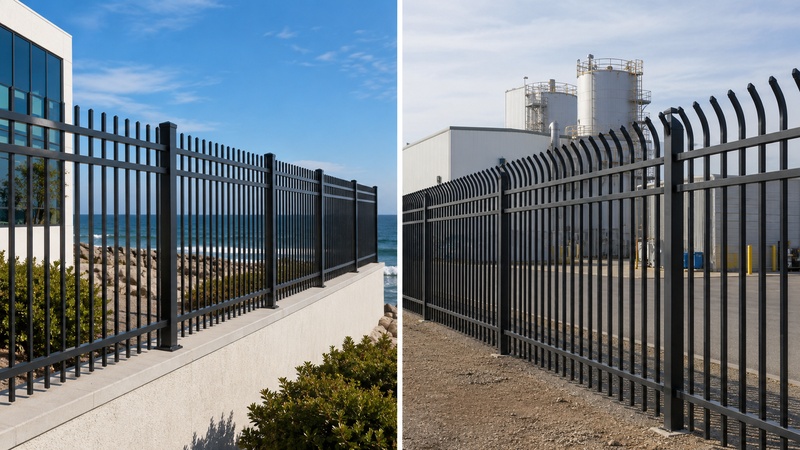
One of the most common mistakes in early project discussions is selecting a material before the supplier understands the installation environment.
A customer may initially request a particular fence because:
- It was used on a previous project
- It has the preferred appearance
- It appears to have a lower unit price
- The customer is familiar with the material
- A local competitor offers a similar design
However, a specification used successfully in an inland project may not be suitable for a coastal, high-humidity, high-UV, or high-wind location.
Questions We Ask Before Recommending a Fence
Before confirming the material and coating, the project team should ask:
- In which country and city will the fence be installed?
- Is the project close to the coast?
- What are the humidity and rainfall conditions?
- Is the fence exposed to strong sunlight?
- What fence height is required?
- Is the site exposed to strong wind?
- How long is the fence expected to remain in service?
- What are the ground and drainage conditions?
- Is the fence decorative, residential, commercial, or security-related?
- Which local standards or approval requirements apply?
These questions help separate a suitable long-term solution from a product that simply matches the customer’s initial description.
How the Recommendation May Change
For a residential, pool, or public-space project in a corrosion-prone environment, the evaluation may favor:
- Powder-coated aluminum privacy fence panels
- Corrosion-resistant fasteners
- Compatible hinges and gate accessories
- Post and drainage details designed for wet conditions
Aluminum alloys are widely used partly because suitable alloys can provide a useful combination of strength, workability, and corrosion resistance. However, alloy selection still affects performance, so “aluminum” should not be treated as one uniform specification.
For a commercial or security perimeter, changing completely from steel to aluminum may not be appropriate. The better solution may be to retain the strength of steel while improving:
- Galvanizing
- Surface preparation
- Powder coating
- Weld protection
- Cut-edge treatment
- Fastener corrosion resistance
- Post and foundation drainage
For formal publication, JZH Fence can add a verified project example here after the business team confirms the location, original customer request, final specification, and actual project feedback.
Ⅰ. Vinyl or PVC Fencing
Vinyl fencing is commonly considered a low-maintenance alternative to traditional painted wood.
It does not require staining, sealing, or routine repainting. Cleaning is generally limited to water and a mild detergent when dirt, algae, or environmental residue becomes visible.
Where Vinyl Fencing Works Well
Vinyl or PVC systems are commonly considered for:
- Residential privacy fences
- Community boundaries
- Decorative picket fences
- Garden divisions
- Post-and-rail applications
- Low-impact outdoor areas
The material can provide a consistent appearance across large residential developments, especially where the buyer wants privacy without ongoing wood treatment.
What You Still Need to Check
Vinyl quality can vary substantially. Your quotation should confirm:
- Whether virgin or recycled material is used
- UV-stabilization requirements
- Panel and rail dimensions
- Internal reinforcement
- Post spacing
- Thermal expansion gaps
- Gate reinforcement
- Performance in cold or high-temperature conditions
Dark colors may absorb more heat, while long fence runs require sufficient allowance for expansion and contraction.
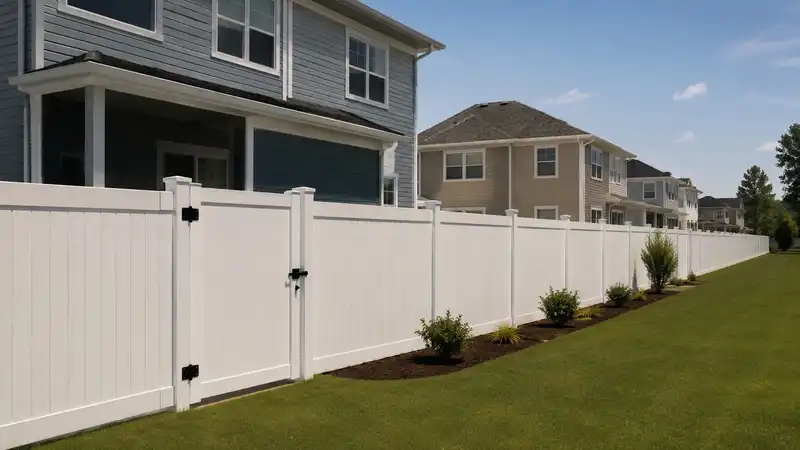
Vinyl can be low maintenance, but poor post spacing or insufficient reinforcement may create structural issues that cleaning alone cannot solve.
Ⅱ. Aluminum Fencing
Aluminum fencing combines low weight, corrosion resistance, and a clean architectural appearance.
It is frequently used for:
- Pool enclosures
- Residential boundaries
- Apartment communities
- Public gardens
- Coastal housing
- Light commercial properties
- Decorative gates
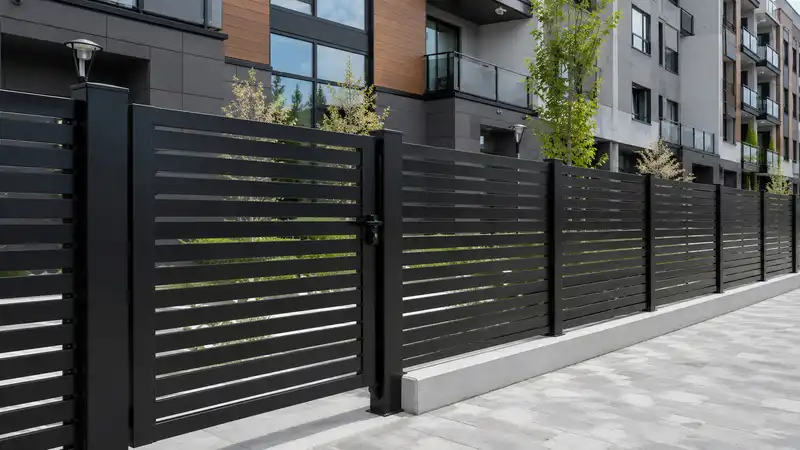
Unlike carbon steel, aluminum does not form red rust. A suitable powder-coated finish can also provide the required color and improve exterior appearance.
What to Specify
For project purchasing, do not request only “black aluminum fence.”
Confirm:
- Aluminum alloy and temper
- Profile dimensions
- Wall thickness
- Post size
- Rail construction
- Welding or mechanical assembly method
- Surface pretreatment
- Powder-coating requirements
- Gate frame reinforcement
- Fastener and hinge material
The light weight of aluminum can simplify handling and installation, but thin profiles or insufficient gate reinforcement may bend under wind, impact, or repeated operation.
When Aluminum May Not Be the Best Choice
Aluminum is not automatically suitable for every perimeter.
A high-security site may require:
- Greater impact resistance
- Anti-climb panel geometry
- Taller posts
- Heavier gates
- More substantial foundations
- Steel reinforcement or an alternative steel system
The correct decision depends on the required balance between corrosion resistance, appearance, weight, strength, and price.
Ⅲ. Colorbond-Style Steel Fencing
Colorbond-style steel fencing is a popular low maintenance fencing solution for residential, commercial, and boundary projects where durability, privacy, and a clean appearance are important.
Compared with traditional timber fencing, steel fence panels do not require regular painting, staining, or replacement caused by rot and insect damage. With the right coating system and installation details, a well-designed steel fence can provide long-term performance with minimal routine maintenance.
Why Colorbond-Style Steel Fence Is Low Maintenance
A complete colorbond-style steel fence system usually includes:
- Pre-painted steel fence panels
- Galvanized steel substrate
- Steel posts and rails
- Corrosion-resistant fasteners
- Protective surface coating
The low maintenance advantage comes from the complete system design, not only the fence panel.
Compared with timber fences, steel fencing can help reduce:
- Regular repainting
- Staining and sealing
- Wood replacement
- Damage caused by moisture and insects
Where Colorbond-Style Steel Fencing Works Best
Residential Boundary Projects
Suitable for:
- New housing developments
- Privacy fencing
- Side and rear boundaries
Key benefits include:
- Modern appearance
- Excellent privacy
- Consistent color finish
- Easy cleaning
Commercial and Industrial Projects
Suitable for:
- Warehouses
- Factories
- Logistics facilities
- Commercial properties
For these applications, buyers usually focus on:
- Long-term durability
- Reliable supply
- Consistent product quality
- Easy replacement of components
Key Specifications to Check Before Buying
When sourcing colorbond-style steel fencing, do not only compare panel prices.
Important factors include:
Steel and Coating System
Confirm:
- Steel thickness and strength
- Surface coating type
- Corrosion protection method
- Cut-edge protection
The coating system has a major impact on long-term appearance and maintenance requirements.
Posts, Rails and Fixings
A low maintenance fence depends on the whole system.
Pay attention to:
- Post size
- Rail structure
- Fastener quality
- Gate reinforcement
- Drainage around posts
Many maintenance issues start from weak connections, damaged coatings, or poor installation details rather than the main panel itself.
Common Maintenance Problems to Avoid
Even a colorbond-style steel fence requires correct installation.
Common issues include:
- Untreated cut edges after installation
- Low-quality fasteners
- Water accumulation around posts
- Scratches during transportation or installation
Selecting the Right Steel Fence System
A durable steel fence requires:
Quality steel + protective coating + correct installation + suitable accessories
During project discussions, customers often focus on:
- Fence height
- Color
- Appearance
- Price
However, long-term performance also depends on:
- Project location
- Climate conditions
- Coastal exposure
- Wind environment
- Installation requirements
For example, a steel fence specification suitable for an inland project may need additional corrosion protection when installed in coastal areas.
The best solution is not always the lowest-cost option. A professional supplier should help evaluate the complete system, including panels, posts, rails, coatings, and accessories.
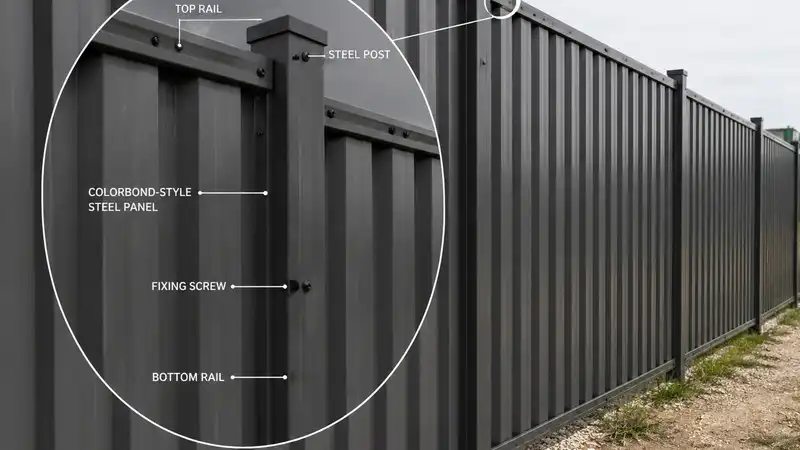
The Details That Require Attention
For powder coating over galvanized steel, surface preparation is especially important. ASTM D7803 addresses the preparation of hot-dip galvanized iron and steel surfaces for powder coating.
Ⅳ. Chain Link Fencing
Chain link remains one of the most practical fencing options when security, visibility, speed of installation, and budget all matter.
A complete system includes:
- Chain link mesh
- Line posts
- Terminal posts
- Top rails
- Tension wire
- Tension bars
- Clamps and fittings
- Gates and hardware
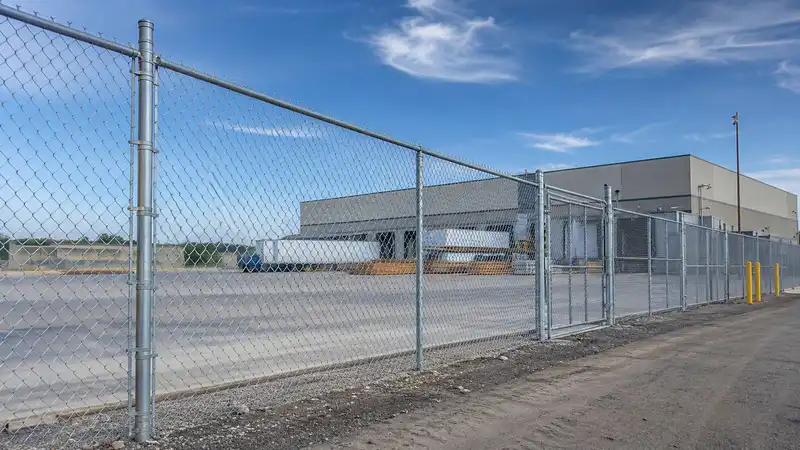
Galvanized mesh can be used in its metallic finish, while PVC-coated chain link is commonly supplied in colors such as black or green.
Typical Applications
Chain link is widely considered for:
- Schools
- Sports fields
- Factories
- Storage yards
- Logistics facilities
- Farms
- Equipment enclosures
- General commercial boundaries
Routine Maintenance
The system normally requires periodic checks rather than surface repainting.
Inspect:
- Mesh tension
- Leaning posts
- Loose fittings
- Gate alignment
- Damaged coating
- Vegetation growing through the mesh
- Soil buildup around the bottom wire
One advantage is that damaged mesh, fittings, or posts can often be replaced locally without removing the complete perimeter.
Ⅴ. WPC/Composite Fencing
WPC/composite fencing are designed to offer a wood-like appearance without the staining, sealing, and rot treatment associated with traditional timber.
These products are often used for:
- Residential privacy fences
- Community developments
- Garden boundaries
- Landscape projects
- Light commercial privacy screens
- Distributor product ranges
Why WPC Can Be Low Maintenance
WPC boards generally do not require conventional wood paint or stain.
Routine maintenance usually involves:
- Washing dust and mud from the surface
- Cleaning stains before they become difficult to remove
- Inspecting posts and rails
- Checking board movement
- Confirming that drainage openings remain clear
Not All WPC Boards Are the Same
Your supplier should explain whether the product is:
- Traditional first-generation WPC
- Co-extruded WPC
- Hollow or solid
- Reinforced or unreinforced
- Designed for full-height privacy fencing
- Suitable for the project’s UV and temperature conditions
Traditional WPC can be practical for price-sensitive projects, but its surface may be more vulnerable to staining, scratching, fading, and outdoor aging.
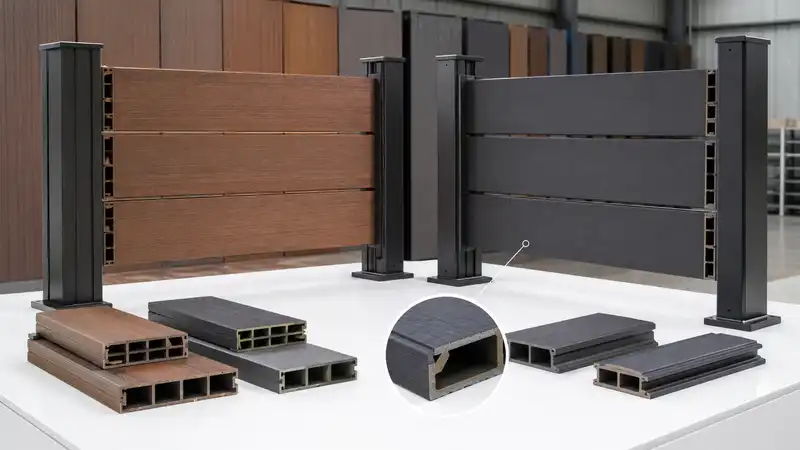
Co-extruded WPC uses an external protective layer intended to improve resistance to:
- UV exposure
- Fading
- Stains
- Surface scratches
- Moisture
- General weathering
For a more detailed explanation of boards, aluminum posts, pricing, and installation, read our composite material fence guide.
For long-term residential privacy programs or distributor ranges, co-extruded boards may provide a stronger value proposition when appearance retention is important.
Installation Requirements
WPC boards expand and contract with temperature changes. The system therefore requires:
- Correct end gaps
- Suitable board engagement
- Stable posts
- Adequate rail or frame support
- Drainage below the boards
- Compatible gates and accessories
A visually attractive board cannot compensate for an unstable post or incorrectly designed frame.
Ⅵ. Welded Mesh, Farm, and Temporary Fencing
Some low-maintenance fence systems are designed for specialized applications rather than residential privacy.
Welded Mesh Fencing
Welded mesh panels provide visibility, strength, and a clean perimeter line.
They are commonly considered for:
- Commercial parks
- Schools
- Public facilities
- Warehouses
- Transport infrastructure
- Utility compounds
Maintenance should focus on:
- Welded intersections
- Panel clips
- Post connections
- Damaged coatings
- Ground clearance
- Gate hardware
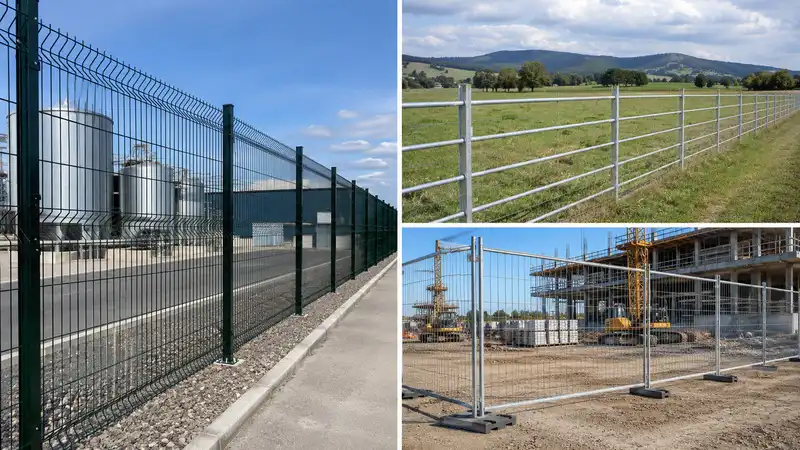
Farm and Field Fencing
Agricultural fencing may use galvanized wire, hinge-joint mesh, fixed-knot mesh, or livestock panels.
Its maintenance requirements are influenced by:
- Animal pressure
- Vegetation growth
- Wire tension
- Ground movement
- Post stability
- Damage from machinery
A well-designed field fence should allow you to tension or repair a localized section without rebuilding the entire boundary.
Temporary Fencing
Temporary steel fence panels are repeatedly handled, transported, stacked, installed, and removed.
The main maintenance risks are therefore different:
- Bent frames
- Damaged welds
- Coating abrasion
- Broken clamps
- Cracked bases
- Poor stacking
- Missing accessories
For reusable temporary fencing, packaging and handling instructions are part of the maintenance strategy.
Which Low Maintenance Fence Fits Your Environment?
| Project environment | Materials to evaluate | Main specification focus |
|---|---|---|
| Coastal or high-humidity site | Aluminum or steel with enhanced corrosion protection | Coating, welds, cut edges and fasteners |
| Strong UV exposure | UV-stabilized PVC, co-extruded WPC or exterior-grade powder coating | Fading, aging and color consistency |
| Commercial security perimeter | Galvanized and powder-coated steel or welded mesh | Strength, anti-climb design, posts and gates |
| Pool area | Aluminum or another locally compliant system | Gate operation, gaps and local safety requirements |
| Agricultural boundary | Galvanized wire or livestock mesh | Tension, posts, vegetation and animal pressure |
| Temporary construction site | Reusable galvanized steel panels | Handling, bases, clamps and frame deformation |
| Residential privacy project | WPC, PVC or aluminum privacy fence | UV stability, expansion, post spacing and drainage |
This comparison shows why there is no single “best” maintenance free fence for every project.
The best system is the one that matches your site conditions, application, expected service period, and maintenance capacity.
Designing a Fence System That Stays Low Maintenance
Material selection is only the first step. Design, packaging, installation, and inspection also affect long-term performance.
Keep Fence Components Away from Standing Water
Where possible:
- Avoid creating pockets that retain water around posts
- Keep boards and horizontal rails away from permanent soil contact
- Provide drainage around low areas
- Use suitable caps on hollow posts
- Consider runoff on sloped sites
- Prevent irrigation systems from constantly spraying vulnerable connections
Use Compatible, Corrosion-Resistant Fasteners
Do not assume that all galvanized or stainless fasteners provide the same performance.
The correct choice depends on:
- Fence material
- Environmental exposure
- Structural load
- Contact between different metals
- Installation method
- Local specifications
Fastener details should be included in the quotation and packing list rather than left entirely to the installer.
Protect Welds, Holes, and Cut Edges
On-site cutting and drilling can expose the base metal beneath the original coating.
The installation guide should explain:
- How to clean the area
- Which repair material to use
- How much surface should be covered
- Whether drying time is required
- When the repair should be inspected
Prevent Damage During Packing and Installation
A protective coating can be damaged before the fence is installed.
Packaging should consider:
- Panel separators
- Protective film
- Corner guards
- Hardware boxes
- Strap pressure
- Gate-frame support
- Clear pallet labels
- Safe unloading instructions
The installer should inspect the products after unloading and repair significant coating damage before final handover.
JZH Fence Experience 2: Small Details Can Create Large Maintenance Problems
When a coated metal fence develops localized corrosion, the failure may not begin on the main face of the panel.
It often begins at a weaker location such as:
- An untreated cut edge
- A scratched connection
- A welded joint
- A low-grade screw
- A post base exposed to standing water
- A rail touching wet soil
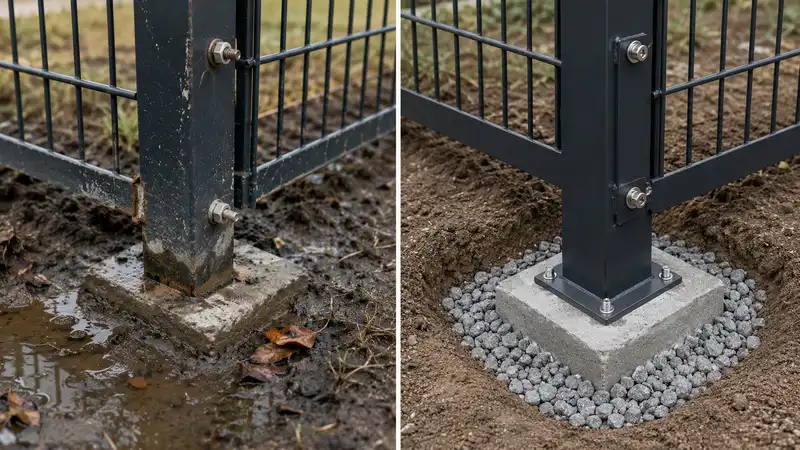
For example, a galvanized or powder-coated fence may be installed correctly in most respects, but the installer cuts several rails on site and does not repair the exposed edges.
After prolonged exposure, those small areas can require attention before the rest of the fence.
The customer may then need to:
- Replace screws earlier than expected
- Remove local rust
- Apply repair coating
- Rework a post connection
- Spend additional labor during project handover
The solution is not simply to specify a thicker panel.
A better approach is to define the vulnerable details before production and installation:
- Repair cut edges, installation damage, and modified welds using an agreed method. For applicable hot-dip galvanized products, buyers can refer to ASTM A780/A780M for practices covering the repair of damaged or uncoated galvanized areas.
- Match fasteners to the environment.
- Prevent water from collecting around posts.
- Keep coated components away from permanent soil contact.
- Repair shipping and installation scratches.
- Confirm material compatibility in coastal or chemical environments.
- Include these requirements in drawings and installation instructions.
Low maintenance is a system outcome. It depends on the panel, posts, coating, fasteners, drainage, packing, and installation working together.
This section should be updated with a verified JZH Fence project or after-sales example once the business team confirms the product type, location, cause, corrective action, and final result.
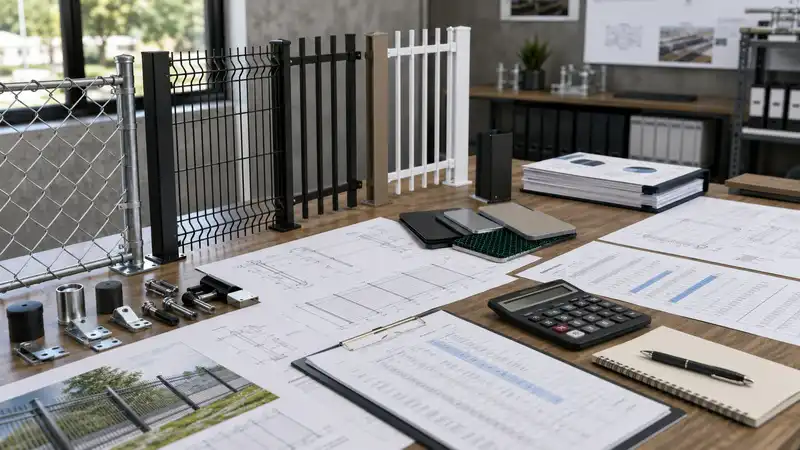
Compare Total Ownership Cost, Not Only Fence Price
A low initial quotation can be attractive, but the lowest purchase price does not always produce the lowest long-term cost.
If you are comparing metal fencing materials, see our wrought iron vs. aluminum fence cost guide for a more focused cost comparison.
A practical evaluation should include:
Total ownership cost = material + shipping + installation + routine maintenance + repairs + replacement
Costs That Buyers Often Miss
- Surface treatment
- Repainting or staining
- Replacement boards
- Hardware replacement
- Post repairs
- Gate realignment
- Labor and equipment
- Site access
- Security downtime
- Disposal of damaged components
A better coating, stronger post, or corrosion-resistant fastener may increase the original quotation. However, it can also reduce future labor, complaints, and replacement work.
For developers, contractors, and distributors, this is especially important because one specification decision may be repeated across many properties or future orders.
Low Maintenance Fence Specification Checklist
Before requesting a quotation, provide the supplier with:
- Project country and city
- Distance from the coast
- Fence application
- Total length
- Required height
- Number and size of gates
- Ground conditions
- Wind exposure
- Color requirements
- Required service period
- Applicable standards
- Drawings or layout plans
Ask the supplier to confirm:
- What is the base material?
- What alloy or steel grade is used?
- How is the surface protected?
- Are welds treated before coating?
- How are cut edges repaired?
- What fasteners are included?
- What post sizes are recommended?
- How are gates reinforced?
- Is an installation drawing available?
- How is coating damage repaired?
- How are panels protected during shipping?
- Are replacement accessories available?
A detailed specification makes different quotations easier to compare and reduces misunderstandings after the order is placed.
Frequently Asked Questions
1、What Type of Fence Requires the Least Maintenance?
Aluminum, vinyl, WPC, galvanized steel, and coated mesh can all provide low-maintenance performance.
The best choice depends on your climate and application. Aluminum may be suitable where corrosion resistance and appearance are priorities. Steel may be better where strength and security matter. WPC or vinyl may suit residential privacy projects that would otherwise use timber.
Do not select a material until you have also compared the posts, fasteners, coating, gate system, and installation requirements.
2、Is Any Fence Completely Maintenance-Free?
No outdoor fence is completely maintenance-free.
Even a corrosion-resistant system needs occasional washing, visual inspection, vegetation control, and hardware checks. Scratches, impact damage, loose fasteners, or drainage problems should be corrected before they become larger repairs.
A responsible supplier should explain the expected maintenance rather than promising zero work.
3、Is Aluminum or Steel Fencing Lower Maintenance?
Aluminum generally provides an advantage in corrosion-prone environments because it does not form red rust. It is often considered for pools, residential properties, and coastal applications.
Steel offers greater strength for many commercial and security projects. With suitable galvanizing, surface preparation, powder coating, and detail protection, steel can also be a practical low-maintenance solution.
The correct choice depends on whether corrosion resistance, structural strength, security, weight, or price is the main priority.
4、What Is the Best Low Maintenance Fence for Coastal Areas?
Coastal projects require more than a general material recommendation.
You should evaluate:
- Salt exposure
- Humidity
- Distance from the shoreline
- Cleaning frequency
- Alloy or steel grade
- Coating system
- Weld protection
- Fastener material
- Gate hardware
- Drainage
Powder-coated aluminum may be suitable for many residential and pool projects. Commercial or security sites may still require steel, but the galvanizing, coating, fasteners, and repair methods should be selected for the actual exposure conditions.
5、Which Installation Mistakes Increase Fence Maintenance?
Common problems include:
- Leaving cut edges untreated
- Using fasteners with insufficient corrosion resistance
- Allowing water to collect around posts
- Installing boards directly against soil
- Ignoring scratches in the coating
- Using insufficient expansion gaps
- Setting posts too far apart
- Failing to reinforce large gates
- Allowing vegetation to cover the bottom of the fence
These issues can shorten service intervals even when the main fence material is durable.
Final Thoughts
The best low maintenance fence is not simply the product with the strongest marketing claim or the lowest initial quotation.
It is a complete system designed around:
- Your project environment
- Required strength
- Surface protection
- Posts and fasteners
- Gate operation
- Drainage
- Installation quality
- Long-term replacement needs
When comparing low maintenance fence options, begin with the project conditions and expected use. Then compare the full specification rather than only the panel price.
This approach helps you reduce maintenance, avoid preventable repairs, and build a perimeter with more predictable long-term costs.
Specify a Low Maintenance Fence for Your Project
JZH Fence supplies project-based fencing solutions for distributors, contractors, developers, and commercial buyers.
Our product range includes aluminum fencing, WPC and composite fencing, colorbond steel systems, garrison fencing, welded mesh panels, chain link fencing, gates, posts, and related accessories.
Send us your:
- Project drawings
- Installation location
- Required fence height
- Total quantity
- Gate schedule
- Environmental conditions
- Surface and color requirements
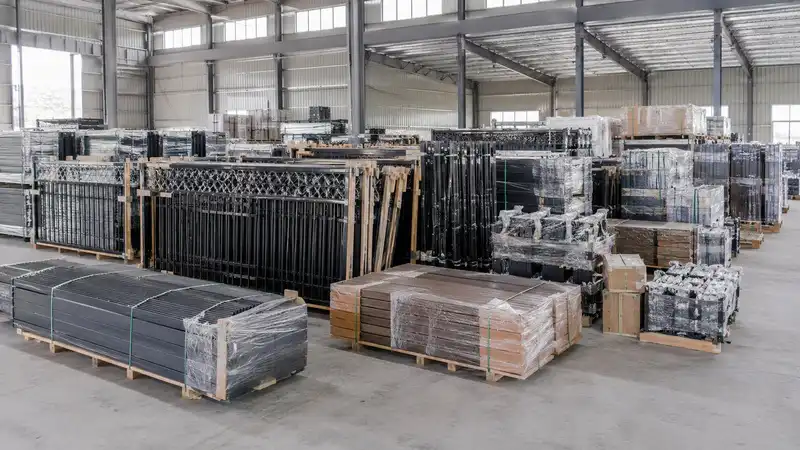
Our team can review the information and help you compare practical material, coating, post, and accessory configurations.
Contact JZH Fence to request a quotation, product catalog, or project sample.