
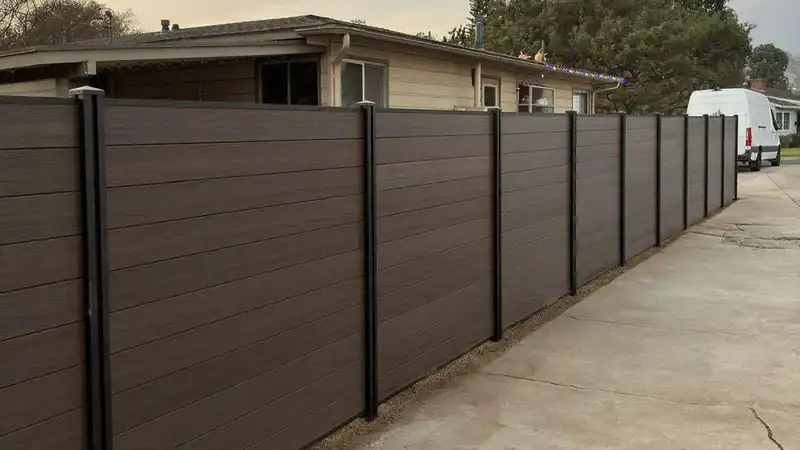
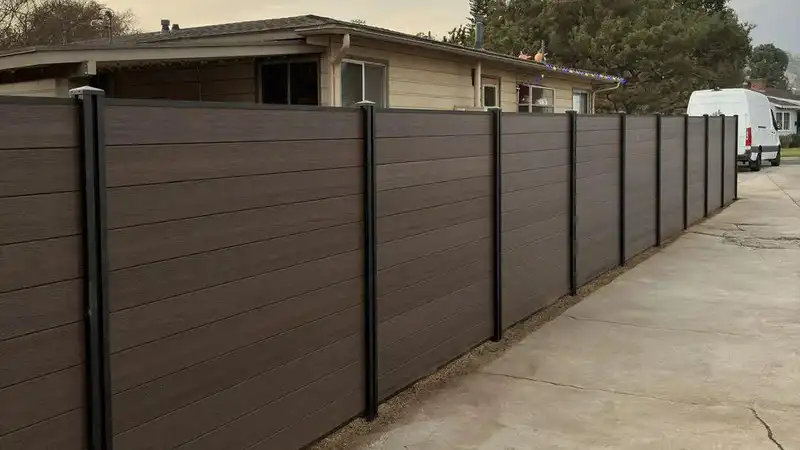
Composite fence panels are not only individual WPC boards. For distributors, importers, contractors, and project buyers, they should be evaluated as a complete fencing system, including boards, posts, rails, caps, gates, hardware, accessories, packing, and installation details.
This composite fence panels buying guide is written for distributors, contractors, importers, and project buyers who need to source composite fencing from Chinese manufacturers for bulk orders or project supply. Instead of focusing on general homeowner advice, this guide explains the key purchasing points B2B buyers should check before placing an order, including panel specifications, post systems, accessories, MOQ, packing methods, container loading, lead time, and supplier support.
In this guide, you will learn how to check:
- Composite fence panel sizes, thickness, colours, and surface finishes
- Post systems, rails, caps, screws, gates, and other accessories
- MOQ, sample orders, production lead time, and repeat order planning
- Export packing, pallet protection, labeling, and container loading
- Supplier quotation details that affect the final landed cost
What Distributors Should Confirm Before Buying Composite Fence Panels
A composite fence panel order should be reviewed as a complete system, not as a single board price. Before comparing quotations, distributors should confirm what is included in the supplier’s system.
A complete composite fence panel system may include:
- WPC fence boards
- Aluminum posts
- Top and bottom rails
- Post caps
- Finishing trims
- Gate frames
- Hinges and locks
- Screws and installation accessories
- Export packing
- Spare parts for after-sales support
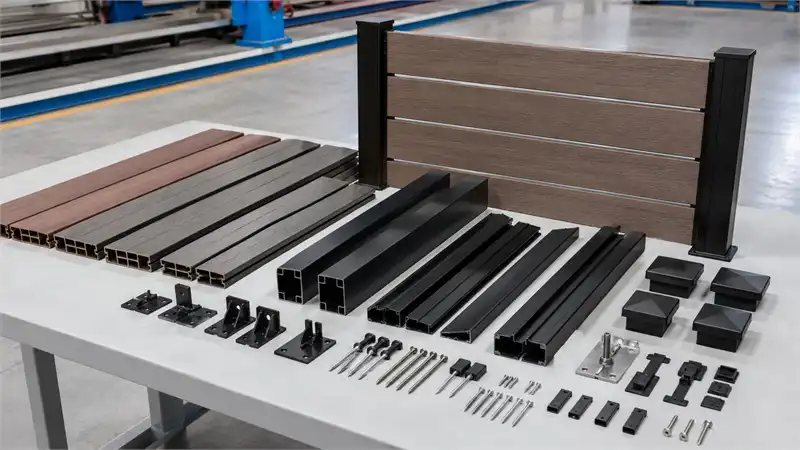
For B2B buyers, the key question is whether all components match each other. A low board price may still create problems if the post channels, rails, gate frames, or accessories are not suitable for the required fence height and project conditions.
Before confirming a bulk order, buyers should request board samples, post drawings, installation photos, packing details, loading quantity, and a spare parts list. These documents help reduce mismatched accessories, installation delays, and after-sales claims.
Key Material Checks Before Placing a Composite Fence Panel Order
Distributors do not need a long technical explanation of WPC production in every buying guide. The more important task is to confirm whether the material specification matches the target market and selling position.
Before ordering, buyers should ask the supplier to confirm:
- Whether the board is first-generation WPC or second-generation co-extruded WPC
- Whether the board is hollow or solid
- Board wall thickness and internal rib structure
- Surface finish and color code
- Whether UV stabilisers are included
- Whether the surface has a co-extruded protective layer
- Product drawings and cross-section details
- Available test reports or weathering information
- Approved physical samples before mass production
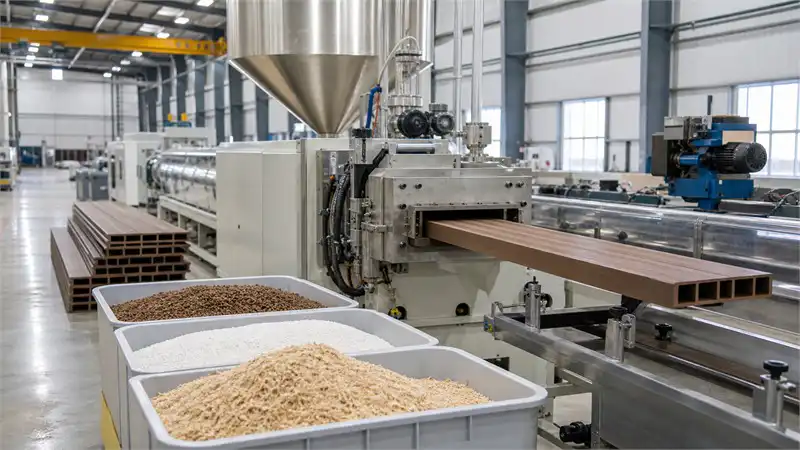
For a full explanation of composite material structure, buyers can refer to our Composite Material Fence Guide. This article focuses on purchasing checks for distributors and project buyers.
First-Generation vs Second-Generation WPC Fence Panels
One of the first decisions for distributors is whether to buy first-generation WPC panels or second-generation co-extruded WPC panels. The right choice depends on the buyer’s target market, price level, warranty risk, and expected service life.
First-generation WPC fence panels usually have a lower initial cost and can be suitable for entry-level product ranges, temporary screening, trial orders, and price-sensitive wholesale programs.
Second-generation co-extruded WPC fence panels include an additional protective surface layer around the WPC core. This makes them more suitable for long-term residential privacy fencing, high-UV markets, and distributors who want to reduce after-sales risk.
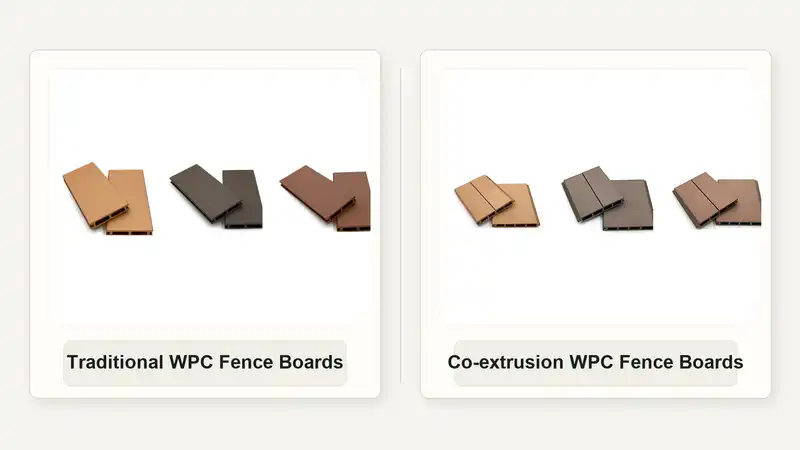
| Item | First-Generation WPC | Second-Generation Co-Extruded WPC |
|---|---|---|
| Initial cost | Lower | Higher |
| Surface protection | Basic WPC surface | Protective co-extruded layer |
| UV resistance | Moderate | Better for long-term outdoor exposure |
| Stain resistance | Moderate | Easier to clean |
| Scratch resistance | Basic | Better daily surface protection |
| Best for | Budget projects, temporary screening, trial orders | Residential privacy fencing, premium ranges, high-UV markets |
| B2B risk | Lower purchase cost but higher long-term complaint risk | Higher cost but stronger long-term product positioning |
How to Match WPC Generation with the Buyer’s Sales Plan
From our experience with U.S. buyers, we do not automatically recommend the highest-priced WPC fence. We first ask about the customer’s budget, target selling price, expected service period, customer group, and repeat-order plan.
For customers with a limited budget, first-generation PE- or HDPE-based WPC can be a practical option. It offers the main benefits of composite fencing while keeping the initial purchasing cost lower.
For distributors targeting long-term residential privacy fence sales, second-generation co-extruded WPC is usually the stronger product. Residential customers often expect the fence to maintain a clean and stable appearance for many years. Distributors also need to consider customer complaints, replacement costs, warranty risk, brand reputation, and repeat purchasing.
The objective is not to choose the most expensive product. The objective is to balance initial investment, market positioning, expected service life, and after-sales risk.
Buying Lesson 1: Why a High-UV Australian Project Used Co-Extruded WPC
In one Australian project exposed to intense sunlight and high UV levels, the buyer needed more than basic privacy. The fence panels also needed to maintain stable color, a clean surface, and better resistance to common stains and daily scratches.
A second-generation co-extruded WPC system was selected because the project placed greater importance on long-term surface performance. The co-extruded layer helps reduce direct exposure of the WPC core to UV radiation, moisture, dirt, and everyday abrasion.
Based on project feedback and follow-up observation, the panels maintained a stable appearance without obvious fading. The surface also continued to show good resistance to common stains and everyday scratches, with no obvious signs of premature surface ageing.
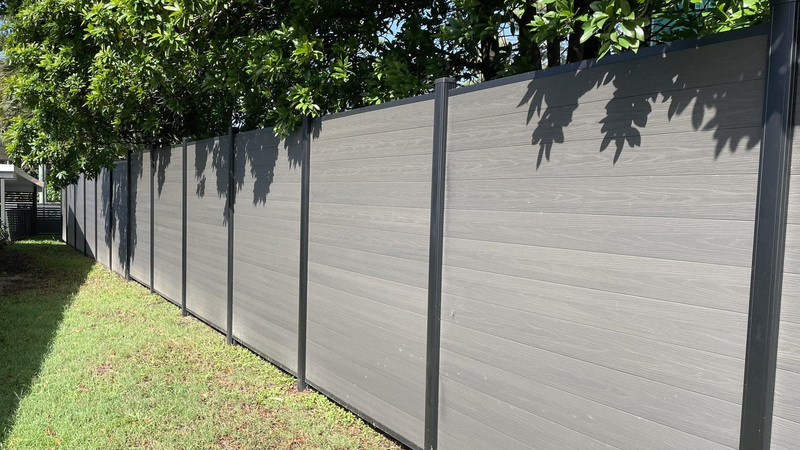
For buyers in Australia, the southern United States, and other high-UV markets, this case shows why the surface layer should be checked before ordering. Buyers should confirm whether the board is first-generation or co-extruded, how thick the protective layer is, whether UV stabilisers are included, and whether long-term project photos or samples are available.
6 ft vs 8 ft Composite Fence Panels: What Buyers Should Check
A 6 ft composite privacy fence is common in the U.S. residential market. It is often used for backyards, property boundaries, townhouses, HOA-managed communities, apartment landscaping, and poolside privacy areas.
Some projects require 8 ft composite fence panels for higher privacy, visual screening, commercial boundaries, or equipment screening. However, buyers should not simply add more boards to a standard 6 ft system.
An 8 ft fence usually requires a project-specific review of:
- Aluminum post profile
- Post wall thickness
- Post spacing
- Above-ground post height
- Underground embedment depth
- Rail strength
- Internal reinforcement
- Concrete footing size
- Wind exposure
- Soil conditions
- Gate frame strength
- Hinge and lock capacity
In most cases, the requested height does not need to change. The more important adjustment is the supporting system: posts, rails, gates, footings, and accessories.
Buying Lesson 2: Why Taller Composite Fence Projects Need System Review
For a 6 ft WPC privacy fence, many buyers focus mainly on board color, board profile, and total fence length. For an 8 ft composite fence project, this is not enough.
As fence height increases, the wind-exposed area also increases. This places more load on the aluminum posts, rails, gate frames, hinges, locks, and concrete footings. If a buyer simply adds more WPC boards to a standard 6 ft structure, the project may face post movement, gate sagging, incorrect openings, or installation delays.
Before quoting an 8 ft system, we normally review the post profile, post wall thickness, post spacing, embedment depth, rail configuration, gate width, and footing size. Gate systems should be reviewed separately because a gate is a moving component and creates additional load on the hardware.
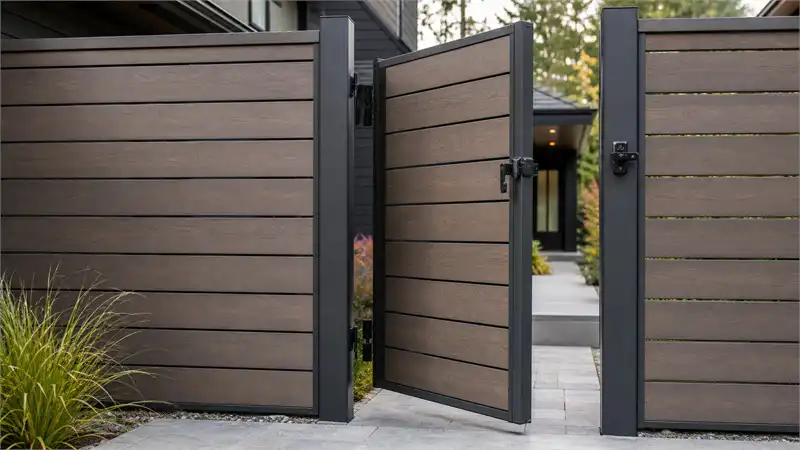
For distributors, this review helps reduce replacement-part shipments, installation complaints, and after-sales cost.
Post and Accessory Matching for Bulk Orders
Composite fence panels need suitable posts and accessories to become a reliable fencing system. A distributor should not compare board price without checking the support structure.
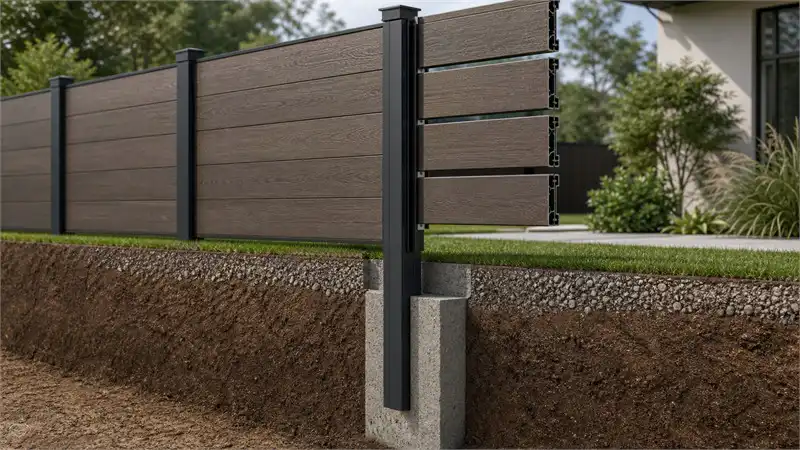
JZH Fence normally uses aluminum posts in new WPC fence systems. Aluminum posts are lightweight, corrosion-resistant, and easier to ship internationally than concrete posts. Concrete is normally used for the footing that secures the aluminum post, rather than as the standard post material.
Before confirming an order, buyers should check:
- Aluminum post size
- Post channel width
- Post wall thickness
- Surface coating or color
- Compatibility with WPC board thickness
- Top and bottom rail matching
- Cap and trim matching
- Screw and fastener quality
- Gate frame specification
- Hinge and lock capacity
- Spare accessory ratio
A complete system review is especially important when the order includes both fence panels and matching gates.
Sample Approval Checklist Before Bulk Orders
Before placing a container order, distributors should approve a physical sample and confirm the full system details.
The sample review should include:
- Board color and surface texture
- Board thickness and cross-section
- Hollow chamber or solid structure
- Co-extruded layer quality
- Board weight
- Tongue-and-groove fit
- Post channel size
- Rail and trim compatibility
- Cap and accessory matching
- Screw and fastener quality
- Gate frame sample or drawing
- Installation drawing
- Packing method
- Labeling requirements
A sample should not be approved only by photos. For repeat orders, distributors should keep one approved physical sample and record the product code, color code, surface finish, and production specification.
Complete-System Cost vs Board Price
Two suppliers may offer a similar composite board price, but the complete system cost can be very different.
A complete WPC fence system may include:
- Composite fence boards
- Aluminum posts
- Top and bottom rails
- Post caps
- Finishing trims
- Gate frames
- Hinges
- Locks
- Mounting accessories
- Export packing
- Freight
- Spare parts
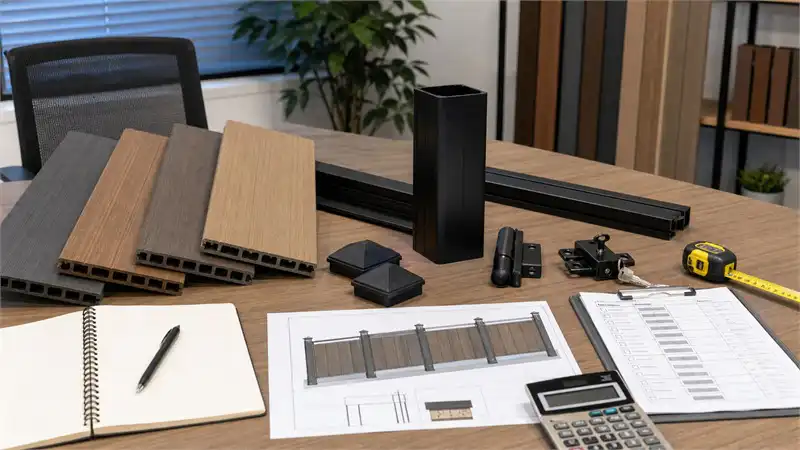
Buyers should compare the cost of the complete fencing system, not only the price of each composite board.
Important cost factors include post dimensions, post wall thickness, rail quantities, gate-frame specifications, hinge and lock quality, packing method, spare components, and shipping volume.
A lower board price may not reduce the total project cost if the system requires extra accessories, replacement parts, or on-site adjustments.
Packing, Loading, and Damage Control for Importers
For international distributors, packing quality affects delivery condition and after-sales cost. Composite fence boards have decorative surfaces, so they should be protected from scratches, edge damage, and pressure marks during loading and unloading.
Before confirming the order, buyers should ask for:
- Packing photos
- Carton or pallet dimensions
- Quantity per package
- Total loading quantity
- Gross weight and net weight
- Protection for board edges
- Separation between boards and metal parts
- Accessory box details
- Labeling and SKU information
- Spare parts ratio
- Loading plan for mixed orders
Good packing is especially important when WPC boards, aluminum posts, rails, gates, and hardware are shipped together. Metal parts should not rub directly against decorative WPC surfaces during transport.
Installation Points That Affect Long-Term Performance
Composite fence panels should be installed with enough attention to post alignment, footing depth, rail position, and thermal expansion allowance.
Typical installation steps may include:
- Confirm the fence line
- Mark the aluminum post positions
- Excavate footing holes
- Position and align the aluminum posts
- Secure posts with concrete footings
- Install bottom rails
- Insert or stack WPC boards
- Install top rails
- Add post caps and finishing trims
- Install gates and hardware
- Check gate clear opening
- Complete final inspection
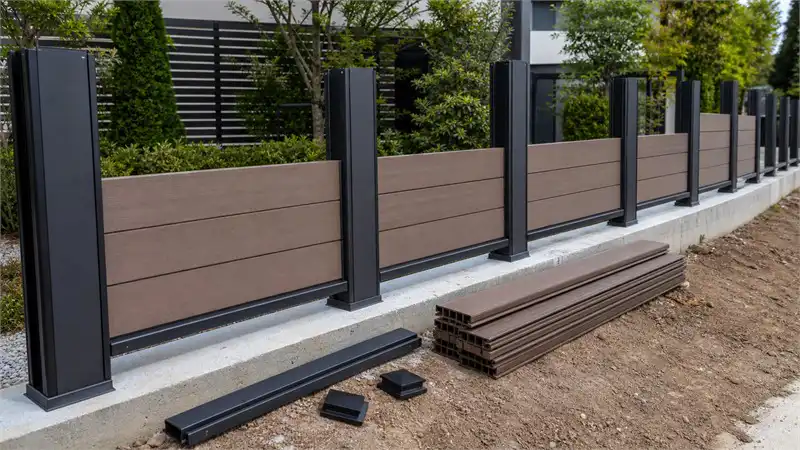
WPC materials expand and contract with temperature changes. Installation should allow for board-end expansion gaps, movement inside the post channels, drainage at the bottom, and access for future replacement where necessary.
Common installation mistakes include post spacing that is too wide, footings that are too shallow, no thermal expansion gap, boards installed directly against the ground, and 6 ft post systems used for 8 ft fences.
When Composite Fence Panels Are the Better B2B Option
Composite fence panels are most suitable when the buyer needs a privacy-focused fencing system with a wood-like appearance and lower maintenance than timber.
Compared with timber fencing, composite panels reduce the need for regular painting, staining, and rot treatment. Compared with open metal or chain-link fencing, composite panels provide stronger privacy and visual screening.
For distributors, the decision should not be based only on material preference. It should be based on the target customer group, required privacy level, expected service life, local climate, installation method, and after-sales risk.
Questions to Ask Before Ordering Composite Fence Panels
Before requesting a quotation, buyers should prepare the following information:
- Which country and region is the project located in?
- Is the project residential, commercial, or temporary?
- Is the fence 6 ft or 8 ft high?
- Is local zoning or HOA approval required?
- Does the buyer need first-generation or second-generation WPC?
- Is the site exposed to strong UV?
- Is long-term color stability a priority?
- What aluminum post system will be used?
- What is the required post spacing?
- Is the site exposed to strong wind?
- What are the soil and ground conditions?
- How many gates are required?
- Does the gate size refer to the gate leaf or clear opening?
- Is the buyer prioritizing initial cost or repeat orders?
- Are samples, drawings, and a bill of materials required?
- What is the destination port or delivery address?
- Are there any packing, labeling, or branding requirements?
The more complete this information is, the more accurate the quotation will be.
Frequently Asked Questions About Composite Fence Panels
1. What is the difference between first-generation and second-generation WPC fence panels?
First-generation WPC fence panels normally use a PE- or HDPE-based wood-plastic composite structure without a complete co-extruded protective cap. They provide better resistance to rot and insects than timber while keeping the initial purchase cost relatively low.
Second-generation WPC fence panels add a protective co-extruded surface around the composite core. This layer helps improve UV resistance, stain resistance, scratch resistance, and long-term surface appearance.
First-generation WPC is often suitable for budget-focused projects, temporary screening, trial orders, and price-sensitive wholesale markets. Second-generation co-extruded WPC is generally more suitable for long-term residential privacy fencing and distributors building a higher-value product range.
2. Do 8 ft composite fence panels need stronger posts than 6 ft panels?
Yes. An 8 ft WPC privacy fence creates a larger wind-exposed area than a 6 ft fence, increasing the loads placed on the posts, rails, connections, and concrete footings.
Buyers should not simply add more composite boards to a standard 6 ft structure. An 8 ft system normally requires a project-specific review of aluminum post profile, post wall thickness, post spacing, embedment depth, rail strength, internal reinforcement, footing dimensions, local wind exposure, and ground conditions.
Tall WPC gates should also be reviewed separately because their weight places additional loads on the gate posts, hinges, frame, and hardware.
3. Can composite fence panels be installed between existing concrete posts?
In some retrofit projects, existing concrete posts with suitable slots can sometimes be retained by adding compatible channels or rail adaptors. Before proceeding, buyers should confirm the distance between posts, post condition, slot width, WPC board thickness, expansion allowance, and rail compatibility.
For new JZH Fence WPC systems, we normally use powder-coated aluminum posts secured in concrete footings rather than using concrete posts as the standard structural component.
4. Do composite fence panels fade or scratch in strong sunlight?
All outdoor materials may experience some surface change after prolonged weather exposure. First-generation WPC boards are generally more likely to show visible fading, staining, or surface ageing over time.
Second-generation co-extruded WPC boards include an additional protective surface layer that helps reduce direct exposure to UV radiation, moisture, stains, and everyday abrasion.
However, UV-resistant does not mean permanently fade-free, and scratch-resistant does not mean scratch-proof. Performance depends on material formula, surface cap, color, installation, climate, handling, and maintenance.
5. What information is needed for an accurate composite fencing quotation?
To prepare an accurate quotation, the supplier needs more than the total fence length.
Buyers should provide project country and location, total fence length, required fence height, number and size of gates, required clear gate openings, preferred WPC generation, board color, surface finish, aluminum post system, site wind exposure, ground conditions, installation method, destination port, and packing requirements.
The quotation should include the complete WPC fence system, including boards, aluminum posts, rails, trims, gates, hardware, accessories, packing, and freight, not only the unit price of each composite board.
Conclusion: Choose Composite Fence Panels as a Complete System
Composite fence panels should be evaluated as a complete fencing system. For distributors and project buyers, the best choice depends on WPC generation, fence height, post strength, gate configuration, packing quality, target market, and after-sales risk.
First-generation PE- or HDPE-based WPC can be suitable for budget-focused and temporary projects. Second-generation co-extruded WPC is more suitable for long-term residential sales, premium product ranges, and high-UV markets.
A 6 ft WPC fence is common in the U.S. residential market, while an 8 ft WPC fence requires a new structural review. Buyers should compare the full system cost instead of only checking the board price.
JZH Fence supports international distributors, contractors, and project buyers with composite fence panel systems, aluminum posts, matching gates, accessories, export packing, and project-based quotations.
To prepare an accurate quote, please send your target fence height, total length, project location, preferred WPC generation, color, post type, gate quantity, destination port, and any packing or branding requirements. Our team can help you compare system options before sample approval or bulk ordering.