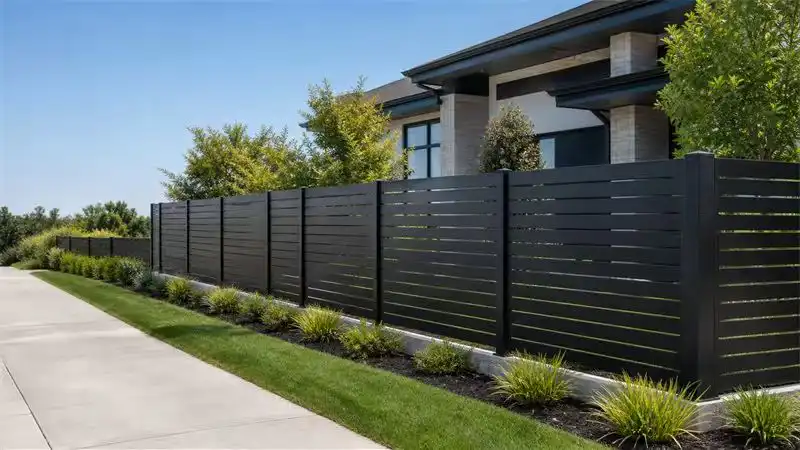
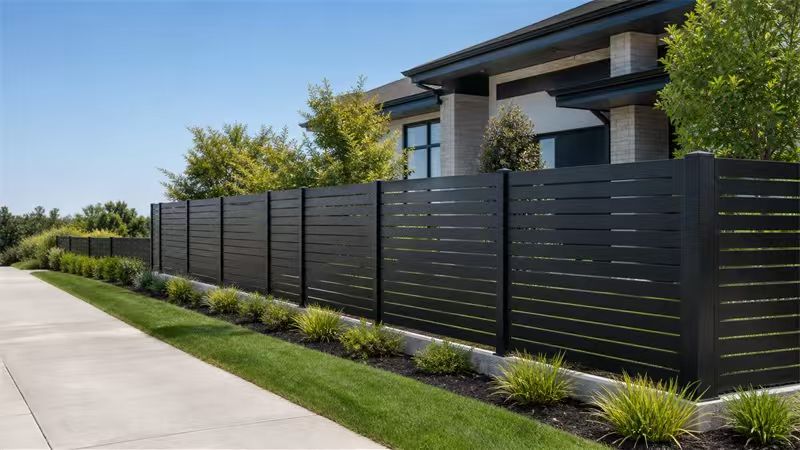
A modular fence is built from factory-made components such as posts, panels, rails, channels, brackets and hardware. Instead of fabricating every section on site, contractors assemble standardized fence modules according to the project layout.
For B2B buyers, this matters because fencing projects are increasingly affected by labor costs, tight construction schedules, installation accuracy and long-term maintenance. A modular fencing system helps contractors, wholesalers and project buyers achieve faster installation, cleaner appearance, easier replacement and more predictable project delivery.
It is important to understand that modular fencing is a system, not a single material. An aluminum fence, WPC fence, Colorbond fence, steel fence, welded mesh fence or chain link fence can all be part of a modular or modular-style fencing solution when supplied with standardized posts, panels, fittings and installation hardware.
JZH Fence supplies modular fencing solutions for global B2B projects, including residential privacy fencing, rooftop terrace screens, coastal boundary fencing, warehouse security fencing, logistics yard fencing, industrial fencing and large-area perimeter projects.
What Is a Modular Fence System?
A modular fence system uses pre-designed components that are manufactured to standard sizes and assembled on site. Common components include posts, rails, panels, brackets, clamps, channels, caps and fasteners.
Instead of cutting, welding or adjusting every fence section individually, installers can repeat the same process from one bay to the next. This makes the installation easier to control and helps keep the fence line consistent across long project boundaries.
A modular fence may include:
- Aluminum modular fence panels
- WPC modular privacy fence panels
- Colorbond fence systems
- Steel modular fencing
- Garrison fence panels
- Welded mesh fence panels
- Chain link fence systems
- Laser cut aluminum screens
The key point is not only the material. The key point is whether the fence is supplied as a repeatable system with standardized parts.
How Modular Fencing Differs from Traditional Fencing
Traditional fencing often depends heavily on site cutting, manual adjustment and installer experience. This can work for small custom projects, but it may create problems for larger commercial or B2B orders where consistency matters.
By comparison, modular fencing offers several advantages:
- Faster installation with standardized components
- Cleaner and more consistent appearance
- Easier replacement of damaged panels
- Better control of project cost and delivery schedule
- More suitable for bulk orders and repeated project use
- Easier packing, labeling and installation-zone planning
For contractors and wholesalers, modular fencing is not only a design choice. It is also a project-management tool.
Modular Fencing Materials and Where They Work Best
Different materials perform differently in different project environments. A coastal site, rooftop terrace, warehouse boundary and residential privacy project should not always use the same fence material.
The right modular fence should be selected according to project location, wind exposure, corrosion risk, security level, privacy requirement, maintenance expectation and budget.
Aluminum Modular Fence: Lightweight, Corrosion-Resistant and Modern
An aluminum fence can absolutely be a modular fence when it uses factory-made posts, panels, rails, brackets and hardware for on-site assembly.
Aluminum modular fencing is especially suitable for projects that need a clean appearance, strong corrosion resistance and low maintenance. It is commonly used for modern residential projects, commercial landscapes, pool areas, coastal properties and rooftop terraces.
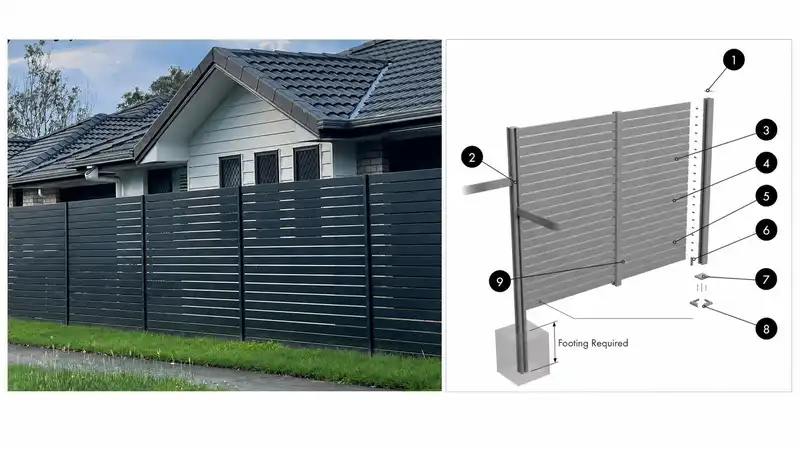
The main advantages of aluminum fence include:
- Does not rust
- Lightweight and easier to handle
- Strong corrosion resistance
- Low maintenance
- Clean architectural appearance
- Suitable for powder-coated finishes
- Good for coastal and high-humidity environments
For coastal areas where salt air, humidity and wind are common concerns, aluminum fence is often a strong choice because it resists corrosion better than many conventional steel options and is lighter for transportation and installation.
Laser Cut Aluminum Screen for Rooftop Terraces and Architectural Spaces
For rooftop terraces, balconies, hotels, commercial outdoor areas and modern architectural projects, a laser cut screen can also be used as a modular fencing or screening solution.
Laser cut screens are commonly made from aluminum. The material meets aluminum alloy standards. They can be supplied as modular panels and installed with posts, frames or fixing systems. Compared with ordinary fence panels, they offer both privacy and decoration.
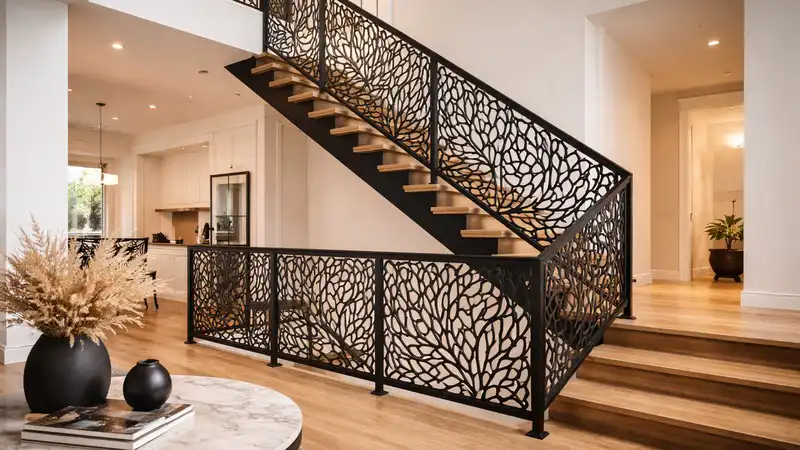
Laser cut aluminum screens are suitable for:
- Rooftop terraces
- Balcony privacy screens
- Hotel landscape projects
- Commercial outdoor spaces
- Decorative boundary screens
- Modern residential projects
For rooftop terrace projects, buyers should not choose screens by appearance alone. They should also confirm wind load requirements, fixing method, panel size, frame strength and opening rate. A beautiful screen still needs the right structure to perform safely outdoors.
WPC Modular Fence: Privacy, Low Maintenance and Natural Appearance
A WPC fence is a strong option for privacy-focused modular fencing. WPC panels are often used with steel or aluminum posts and channels to create a clean, solid fence line.
WPC modular fencing is suitable for:
- Residential privacy fencing
- Garden boundaries
- Villa and townhouse projects
- Community fencing
- Commercial landscape areas
- Noise and visual screening
WPC offers a warmer appearance than metal and requires less maintenance than traditional wood. It does not need regular painting or staining, making it attractive for buyers who want privacy and a natural-looking finish with easier long-term care.
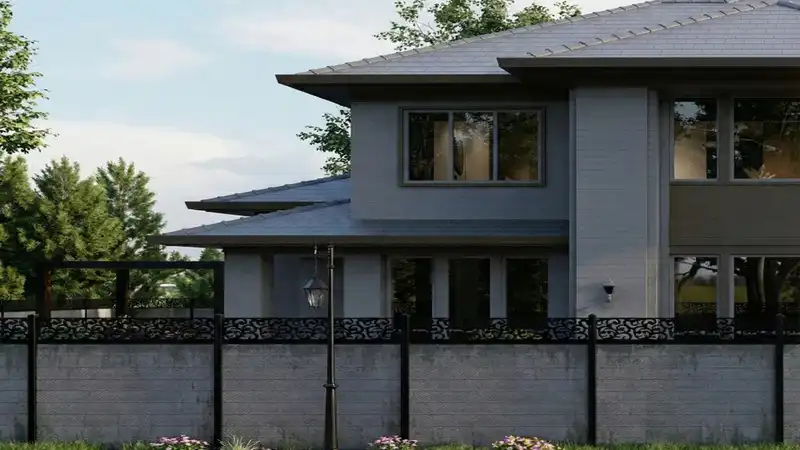
In coastal or humid areas, WPC can be considered as a low-maintenance option. However, when the project requires a lighter structure and stronger anti-rust performance, aluminum modular fencing may be more suitable.
Colorbond Fence as a Steel Modular Fencing Option
Colorbond fence can be included in steel-based modular fencing solutions. It is especially useful when the project requires privacy, weather resistance, a clean appearance and low maintenance.
Colorbond fencing is commonly used for:
- Warehouse boundaries
- Logistics yards
- Industrial sites
- Commercial properties
- Utility areas
- Residential privacy projects in selected markets
As a steel-based fence solution, Colorbond fencing can provide stronger privacy than open mesh systems. It is also practical for large boundary projects where appearance, durability and installation efficiency all matter.
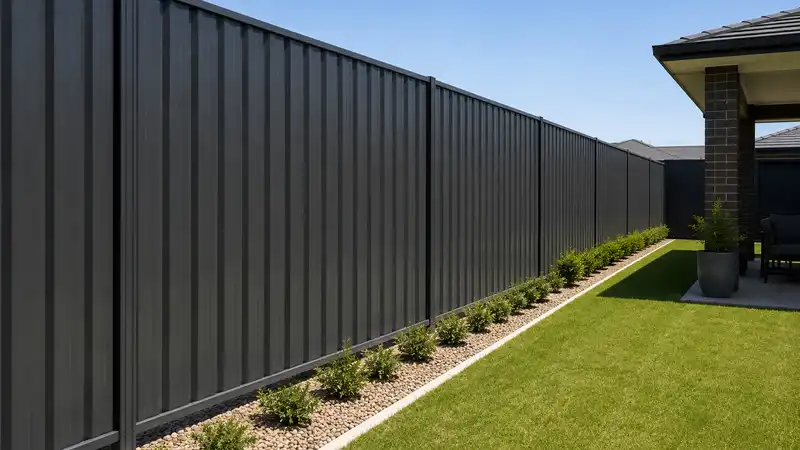
For B2B buyers, Colorbond fence can be considered when the project needs both a solid visual barrier and the practical benefits of a modular steel fencing system.
Garrison Fence, Welded Mesh Fence and Chain Link Fence for Security Projects
For warehouses, logistics parks, substations, industrial zones and public facilities, the main concern is often security rather than decoration. In these projects, open or semi-open steel fencing solutions are usually more suitable.
Common options include:
- Garrison fence
- Welded mesh fence
- Chain link fence
- Steel modular fencing
- Colorbond fence
A garrison fence is suitable for high-security perimeters where anti-climb performance, strength and visibility are important.
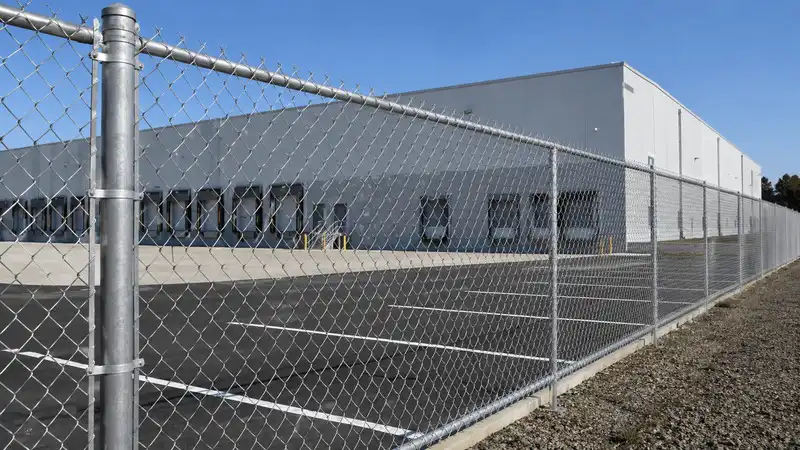
A welded mesh fence is suitable for projects that need a balance of strength, visibility and cost control.
A chain link fence is often used for large-area boundaries, farms, temporary security, sports areas and budget-sensitive projects. Buyers can also refer to chain-link fence fabric standards when comparing wire size, mesh size and coating requirements.
These products can be treated as modular-style fencing solutions when supplied with standardized posts, panels, rolls, clamps, brackets or fittings for repeatable installation.
How We Recommend Modular Fence Materials for B2B Projects
For B2B projects, material selection should start from site conditions rather than appearance alone.
From our project communication experience, coastal and high-humidity areas often require corrosion-resistant and low-maintenance materials. In these cases, aluminum fence, WPC fence and Colorbond fence are all practical options. Among them, aluminum fence has a stronger corrosion-resistance advantage because it does not rust, is lighter in weight and is easier to handle during transportation and installation.
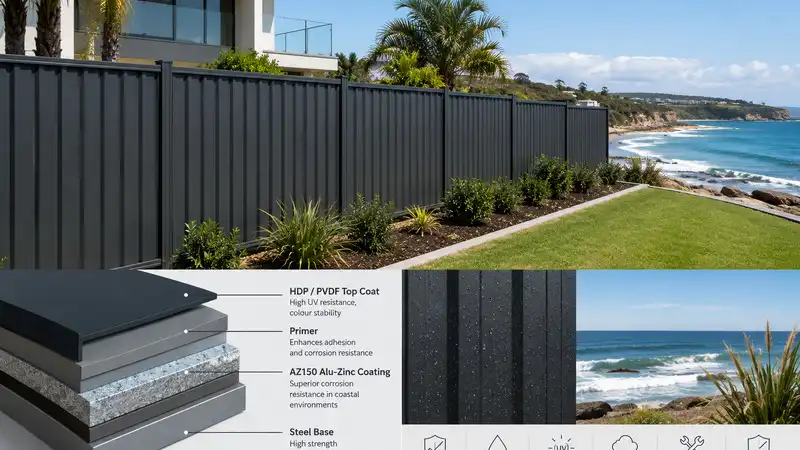
For rooftop terraces, hotels, commercial landscapes and modern residential spaces, laser cut aluminum screens can be used as modular panels for privacy and decoration. They combine design flexibility with the lightweight advantages of aluminum.
For warehouses, logistics parks, substations and industrial areas, steel-based modular fencing solutions such as garrison fence, Colorbond fence, welded mesh fence and chain link fence are usually more suitable. These products are better for impact resistance, security control and large-area perimeter protection.
Modular Fence Material Selection Guide
| Project Scenario | Recommended Fence Type | Main Reason |
|---|---|---|
| Coastal or windy area | Aluminum fence, WPC fence, Colorbond fence | Corrosion resistance and low maintenance |
| High-corrosion coastal site | Aluminum modular fence | Does not rust, lightweight and corrosion-resistant |
| Rooftop terrace | Laser cut aluminum screen | Privacy, decoration and lighter structure |
| Residential privacy | WPC fence, Colorbond fence, aluminum privacy fence | Privacy, appearance and easy maintenance |
| Warehouse or logistics park | Garrison fence, welded mesh fence, chain link fence | Security, impact resistance and cost control |
| Substation or industrial zone | Steel modular fencing, garrison fence, welded mesh fence | Stronger structure and higher security |
| Farm or large boundary | Chain link fence, welded mesh fence | Large-area coverage and practical cost |
Key Benefits of Modular Fencing for Contractors and Wholesalers
For contractors, wholesalers and project buyers, modular fencing offers benefits that go beyond appearance.
Faster and More Predictable Installation
Because modular fencing uses standardized components, the installation process is easier to repeat. Crews can follow the same steps for each section: set posts, install rails or channels, fix panels, secure hardware and complete caps or finishing parts.
This helps reduce site cutting, measuring errors and installation delays.
Consistent Appearance Across Large Projects
For commercial properties, residential developments, schools, parks, factories and logistics sites, consistency is important. Modular fencing helps keep post spacing, panel height, top lines and visual gaps more uniform across long fence runs.
This is especially useful for B2B projects where the fence must look professional across a large area.
Easier Repair and Replacement
If one panel is damaged, a modular fence system can often allow that section to be replaced without dismantling the entire fence line. This is valuable for warehouses, public areas, rental properties and industrial sites where maintenance speed matters.
Flexible Material Combinations
A single project may require different fencing solutions in different areas. For example:
- A garrison fence may be used for the outer security boundary.
- A Colorbond fence may be used for privacy or screening.
- A laser cut aluminum screen may be used for rooftop or decorative areas.
- A WPC fence may be used for residential privacy zones.
- An aluminum fence may be used in coastal or high-corrosion areas.
This flexibility is one of the biggest advantages of modular fencing for project buyers.
Modular Fence Installation and Project Planning
Although modular fencing is easier to install than many traditional fence systems, project planning is still important.
From our project communication experience, the biggest installation risk is often not the modular fence system itself, but incomplete site information before production.
For long fence runs, sloped ground, coastal wind exposure, rooftop terraces or phased delivery, contractors should confirm post spacing, footing depth, wind exposure, material selection and packing sequence before the order is finalized.
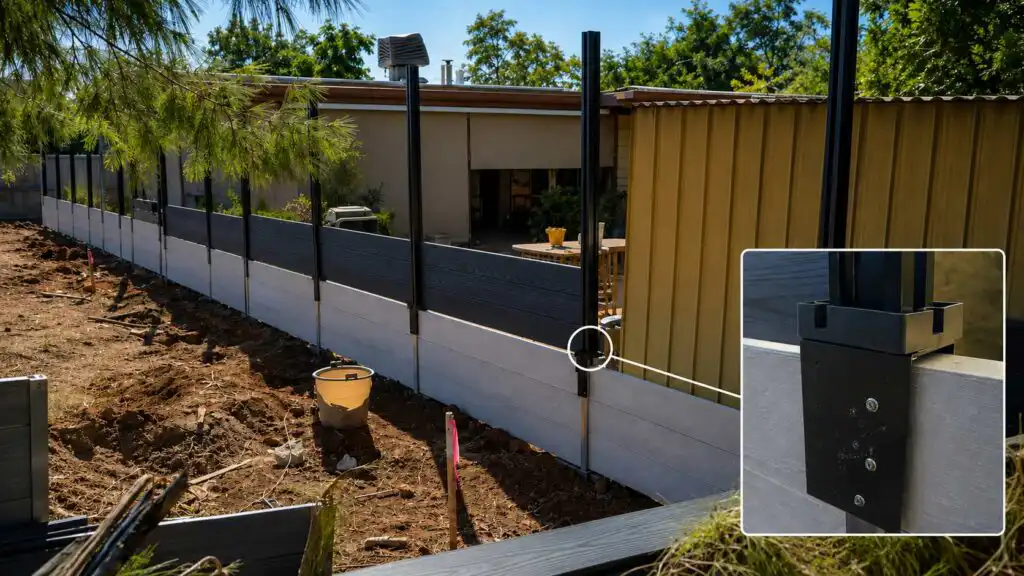
For example, coastal projects may need corrosion-resistant materials such as aluminum fence, WPC fence or Colorbond fence. Rooftop terrace projects may require lightweight laser cut aluminum screens with carefully reviewed fixing methods and wind-load considerations. Industrial sites may require steel modular fencing, garrison fence or welded mesh fence for better security and impact resistance.
When these details are reviewed early, modular panels can be grouped, labeled and packed by installation zone. This helps contractors reduce sorting time, avoid unnecessary cutting and improve site installation efficiency.
Pre-Planning Checklist for Modular Fencing Projects
Before ordering a modular fence system, buyers should confirm:
- Project location and climate
- Whether the site is coastal, windy or high-humidity
- Fence height and panel width
- Wind-load and local code requirements
- Post spacing and footing depth
- Required security level
- Required privacy level
- Preferred material: aluminum, WPC, Colorbond, steel, mesh or chain link
- Gate, corner and slope requirements
- Packing sequence by installation zone
- Installation drawings or guide requirements
A modular fence performs best when the supplier understands both the product and the site conditions.
Modular Fencing for Different Project Applications
Different projects need different modular fence solutions. Below are common B2B application scenarios.
Coastal and High-Wind Projects
For coastal areas, buyers should prioritize corrosion resistance and low maintenance. Suitable options include:
- Aluminum fence
- WPC fence
- Colorbond fence
Among these options, aluminum fence is especially strong for corrosion resistance because it does not rust and is lightweight. It is suitable for coastal residential projects, commercial properties, pool areas and seaside developments.
Rooftop Terrace and Architectural Projects
For rooftop terraces and architectural spaces, fencing is not only a boundary product. It may also need to provide privacy, decoration and design value.
Suitable options include:
- Laser cut aluminum screen
- Aluminum privacy panels
- Aluminum modular fence systems
For these projects, buyers should carefully check wind load, fixing methods, panel opening rate and roof structure compatibility.
Industrial and Security Projects
For warehouses, logistics parks, substations and industrial zones, security and strength are usually more important than decorative appearance.
Suitable options include:
- Steel modular fencing
- Garrison fence
- Colorbond fence
- Welded mesh fence
- Chain link fence
These options help control access, protect property boundaries and support large-area perimeter security.
Residential Privacy and Commercial Landscape Projects
For residential communities, villas, townhouses and commercial landscapes, buyers often need a balance of privacy, design and low maintenance.
Suitable options include:
- WPC modular fence
- Aluminum fence
- Colorbond fence
- Laser cut screen
WPC and Colorbond are useful for privacy. Aluminum is strong for corrosion resistance and clean modern appearance. Laser cut screens add decorative value for higher-end projects.
How to Choose the Right Modular Fence Supplier
Choosing a modular fence supplier is not only about price per meter. For B2B buyers, the supplier should help confirm the right material, structure, packing method and installation support.
A good modular fence supplier should be able to help with:
- Material selection for different environments
- Standard and custom panel sizes
- Post and footing recommendations
- Drawings or installation guides
- Packing by project zone
- OEM colors, profiles and finishes
- Replacement panel support
- Bulk order and export packing
JZH Fence supplies aluminum, WPC, Colorbond, steel, welded mesh, chain link, garrison and other fencing solutions for international B2B clients. Our team can help buyers match the fence system to the project environment, installation method and long-term maintenance requirements.
FAQ About Modular Fencing
1、Is aluminum fence a modular fence?
Yes. Aluminum fence can be a modular fence when it uses factory-made posts, panels, rails, brackets and hardware that are assembled on site.
2、Is Colorbond fence part of modular fencing?
Yes. Colorbond fence can be included as a steel-based modular fencing solution, especially for privacy, commercial boundary and industrial projects.
3、Are welded mesh fence and chain link fence modular fences?
They can be treated as modular-style fencing solutions when supplied with standardized posts, panels, fittings, rolls or pre-cut components for repeatable installation.
4、Which modular fence is best for coastal areas?
For coastal areas, aluminum fence, WPC fence and Colorbond fence are all suitable low-maintenance options. Aluminum fence is especially strong for corrosion resistance because it does not rust and is lightweight.
5、Which modular fence is best for warehouses or logistics parks?
For warehouses, logistics parks and industrial zones, garrison fence, Colorbond fence, welded mesh fence and chain link fence are usually more suitable because they offer stronger security, impact resistance and perimeter control.
Conclusion
Modular fencing is not limited to one material. It is a flexible fence system that can include aluminum fence, WPC fence, Colorbond fence, steel modular fencing, garrison fence, welded mesh fence and chain link fence, depending on the project environment and performance requirements.
For coastal and high-humidity areas, aluminum fence, WPC fence and Colorbond fence provide corrosion resistance and low maintenance. For rooftop terraces and architectural spaces, laser cut aluminum screens add privacy and design value. For warehouses, logistics parks, substations and industrial areas, steel modular fencing, garrison fence, welded mesh fence and chain link fence provide better security and impact resistance.
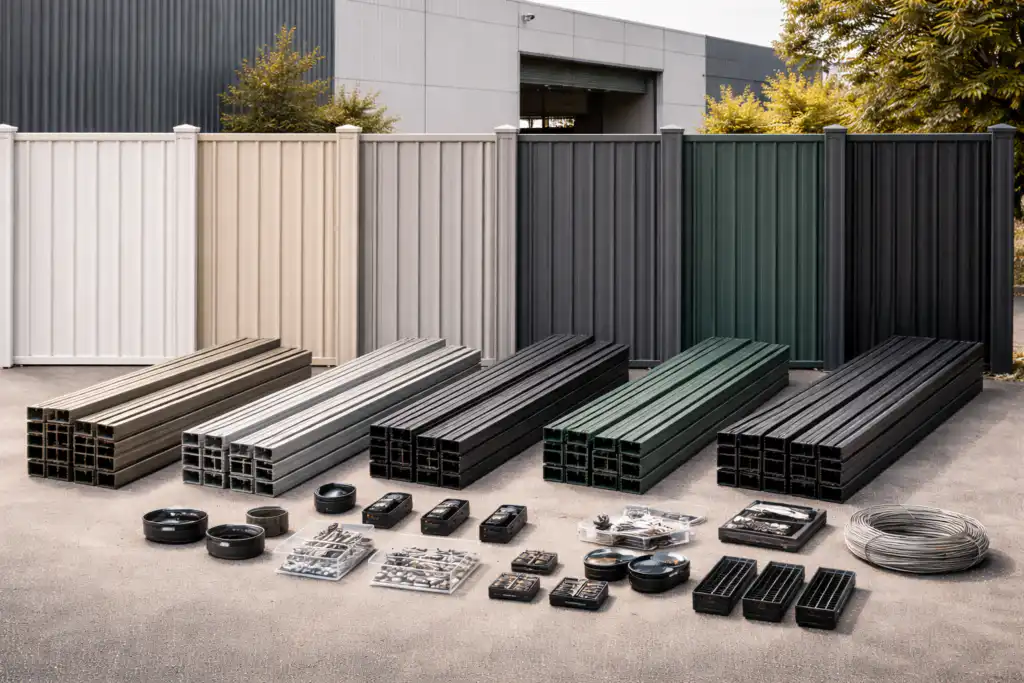
If you are sourcing modular fencing for coastal projects, rooftop terraces, residential privacy, warehouses, logistics parks or industrial boundaries, JZH Fence can help recommend suitable materials, panel structures, packing methods and project-ready fencing solutions.
Contact JZH Fence to request modular fence drawings, material recommendations, sample panels or a project quotation for your next fencing order.