
Queensland pool fence regulations are an important consideration when building, upgrading, or buying a property with a swimming pool. Whether you are a homeowner, builder, fencing contractor, or project buyer, choosing the right pool barrier involves more than selecting a fence style. You also need to understand the required height, permitted gaps, non-climbable zones, gate requirements, and installation conditions.
This guide explains the main Queensland pool safety requirements, common inspection issues, and practical considerations when selecting a pool fence. It also covers what to confirm before ordering aluminium pool fencing for a residential or commercial project. By understanding these requirements early, you can make better purchasing decisions and reduce the risk of costly changes during installation.
Quick Overview: What Queensland Pool Fence Regulations Require
Queensland requires regulated swimming pools to have compliant safety barriers. The requirements apply to new and existing pools, subject to the relevant legislation and exemptions.
The Queensland Building and Construction Commission (QBCC) provides official guidance on pool safety laws and requirements.
These figures are a starting point, not a complete compliance checklist. The correct measurement method, rail configuration, openings, boundary conditions, and gate design can affect whether a finished barrier complies. Always check the current requirements for your property or project.
For the official technical guidance, refer to the QBCC pool fence requirements.
Why Queensland Has Strict Pool Fence Regulations
Queensland’s warm climate encourages outdoor living, and swimming pools are common in residential properties, apartment complexes, hotels, and other accommodation facilities.
However, a swimming pool also creates a serious safety risk for young children. A compliant barrier helps restrict unsupervised access to the water, while proper supervision and safe behaviour remain essential.
Queensland introduced a more consistent statewide pool safety framework, with major changes taking effect from 1 December 2010 and a single statewide standard replacing the previous range of local standards in 2015.
A pool barrier should therefore be treated as a safety system rather than simply a boundary fence.
For property owners, that means maintaining the fence, checking the gate regularly, and keeping climbable objects away from the barrier. For contractors and project buyers, it means considering safety requirements before finalising product specifications.
The Legal Framework for Queensland Pool Fencing
Several laws and technical documents work together to establish Queensland’s pool safety requirements.
Building Act and Building Regulation
The Building Act 1975 and Building Regulation 2021 form part of Queensland’s legislative framework for building and pool safety.
These laws establish responsibilities for pool owners and the regulatory arrangements for inspections, registration, and certification.
Queensland Development Code MP 3.4
Queensland Development Code Mandatory Part 3.4 addresses swimming pool barriers.
It is particularly relevant when determining the technical requirements for a new pool barrier, replacing an existing fence, or modifying a barrier that does not comply.
Australian Standard AS 1926.1
The applicable Australian Standard provides technical requirements for pool safety barriers, including fence construction, openings, gates, and non-climbable zones.
The exact edition and its application should be confirmed against the current Queensland requirements rather than assumed from an older project drawing.
For official information, consult the Queensland Government’s pool laws and standards.
Which Pools Need a Compliant Pool Barrier?
Queensland’s pool safety laws cover many types of swimming pools and spas. Whether a specific installation requires a barrier depends on the applicable legal definition and any relevant exemption.
Residential Swimming Pools and Spas
In-ground pools, above-ground pools, and many residential spas fall within the regulated framework.
Owners should not assume that a small pool is exempt simply because it is located in a private backyard.
Portable and Inflatable Pools
Portable pools can also trigger safety requirements. Queensland’s official guidance identifies relevant factors such as water depth, capacity, and filtration equipment.
Before setting up a portable pool or spa, check the Queensland Government’s pool and spa requirements.
Pools at unit complexes, hotels, resorts, caravan parks, and other accommodation facilities may be subject to additional requirements.
Some class 3 accommodation buildings may use an approved pool safety management plan where permitted. Property managers should confirm which arrangements apply to their premises.
Core Technical Rules: Height, Gaps and Non-Climbable Zones
Understanding the basic dimensions is an important first step when planning a pool fence.
Minimum Fence Height
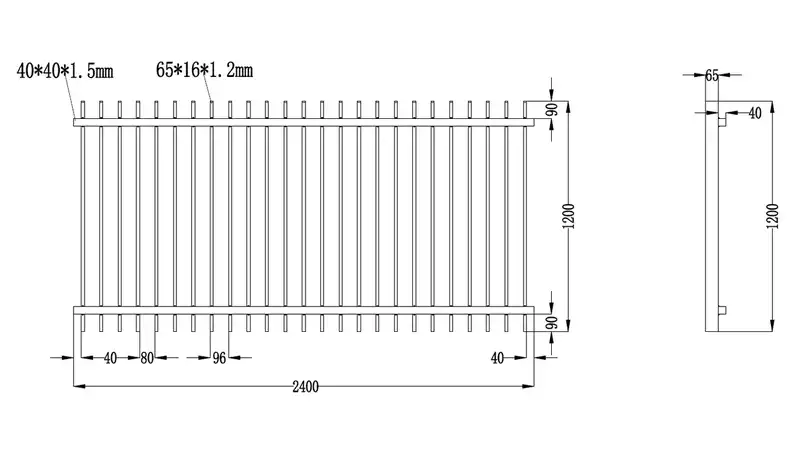
A pool barrier generally needs to be at least 1,200 mm high, measured from the relevant finished ground level to the top of the barrier.
The measurement becomes more complicated on sloping or stepped sites. The effective height must be maintained at the relevant measurement points, rather than relying only on the nominal height stated in a product catalogue.
For example, a panel described as 1,200 mm high may not provide the required finished barrier height if the installation position or surrounding ground level changes the effective measurement.
Maximum Gaps Under and Between Fence Panels
The maximum gap between the bottom of the barrier and the relevant finished ground level is generally 100 mm.
Openings between vertical elements must also meet the applicable requirements. The permitted spacing can depend on the arrangement of rails and the non-climbable zone.
For that reason, buyers should confirm actual clear openings on the technical drawing rather than relying on a product name or overall panel dimensions.
Maintaining the Non-Climbable Zone
The non-climbable zone, often referred to as the NCZ, is designed to prevent a child from using nearby rails or objects as footholds.
Relevant configurations commonly require a 900 mm clear zone. The exact measurement position and permitted fence arrangements should be checked against the applicable standard.
Potential problems include:
- Outdoor furniture or BBQs placed close to the barrier
- Garden beds that raise the effective ground level
- Horizontal rails that create footholds
- Retaining walls or steps that change the effective fence height
- Nearby structures that allow access over the barrier
The QBCC explains these requirements in its official pool fence guide.
What We Check Before Quoting an Australian Pool Fence
From our B2B fencing enquiry process at JZH Fence, we know that a product photograph alone rarely provides enough information to finalise a pool fence specification.
Buyers may initially focus on colour, appearance, panel dimensions, and price. However, we also need to understand the intended application and installation conditions before confirming a suitable configuration.
First, we confirm the required height and project location.
A height of 1.2 m is common in Australian pool fencing enquiries. We still recommend checking the applicable requirements for the particular project, including ground conditions and the finished barrier height.
Second, we confirm the installation surface.
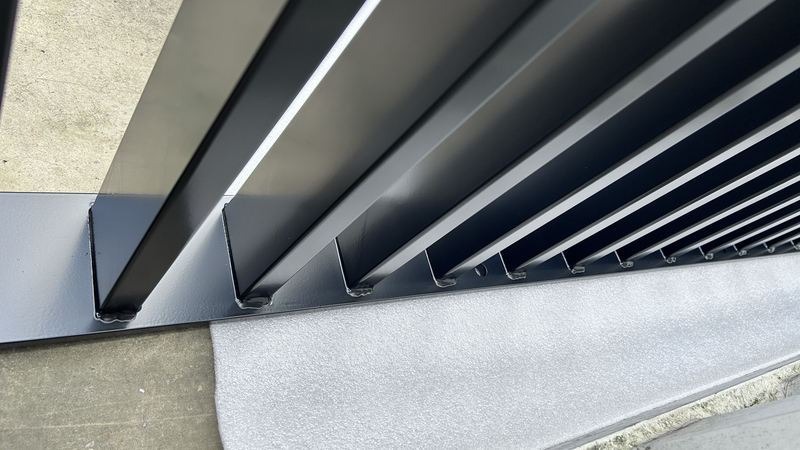
For a concrete installation, a base-plated post fixed with suitable anchors may be an option. For soil or landscaped areas, an embedded-post arrangement with a suitable concrete footing may be more appropriate.
These approaches involve different post configurations and installation preparations. Confirming the surface early helps buyers obtain a more complete quotation.
Third, we confirm the gate and hardware requirements.
A pool fence quotation should account for more than the panels and posts. The gate, hinges, latch, opening direction, and other relevant hardware must also be considered.
Our practical recommendation is to confirm the safety requirements, installation conditions, and gate configuration before finalising the product specification. This gives buyers a clearer basis for comparing quotations and reduces the likelihood of changing the configuration later.
Pool Gates, Latches and Hardware Requirements
A compliant pool barrier needs a gate that functions correctly as part of the complete safety system.
Self-Closing and Self-Latching Gates
Pool gates generally need to close automatically and securely latch in accordance with the applicable requirements.
A gate that works correctly when first installed may develop problems if hinges loosen, the post shifts, or the latch becomes misaligned.
Gate Opening Direction and Latch Position
The required gate arrangement should be confirmed against the applicable pool safety standard. Gate opening direction and latch positioning are important considerations during design and installation.
Do not assume that a standard garden gate can automatically be used as a compliant pool gate.
Hardware Selection and Maintenance
Outdoor gates are exposed to rain, humidity, pool chemicals, and, in coastal areas, salt-laden air.
When sourcing a pool fence system, confirm that the hinges, latches, screws, and other components are suitable for the intended environment.
Routine checks should confirm that the gate closes and latches correctly from the relevant open positions. Damaged or misaligned components should be addressed promptly.
Can Boundary Fences, Doors and Windows Form Part of a Pool Barrier?
In some situations, an existing boundary fence or building structure can form part of a pool barrier. However, it must meet the applicable requirements.
Boundary Fence Requirements
A dividing fence may be suitable if it meets the required height, opening, and non-climbability conditions.
The neighbouring side is particularly important. A fence that appears compliant from inside the pool area may still create a climbing risk if there are rails, retaining walls, or other footholds on the opposite side.
Before modifying a shared boundary fence, review the relevant requirements and communicate with the neighbour where necessary.
Doors and Windows Facing the Pool
Doors and windows that provide access to the pool area are subject to specific restrictions.
The correct solution depends on the building layout and the applicable rules. Do not assume that an ordinary external door or a window lock alone will satisfy pool barrier requirements.
Retaining Walls and Nearby Structures
Retaining walls, steps, sheds, and other nearby structures can affect the effective barrier height and climbing conditions.
For complicated sites, obtain advice from a licensed pool safety inspector or other appropriately qualified professional before confirming the final design.
Pool Registration and Pool Safety Certificates
Queensland requires regulated pools to be registered with the QBCC.
Registering a Pool With the QBCC
Owners can check the pool safety register and follow the official process to register an eligible pool or spa.
Use the QBCC pool registration service to check the requirements and registration process.
When Is a Pool Safety Certificate Needed?
A pool safety certificate may be required when selling or leasing a property with a pool. The applicable procedure depends on the transaction and property circumstances.
Shared pools can have different certificate arrangements from non-shared pools, so owners and property managers should confirm the rules for their specific situation.
What Happens When a Pool Fails an Inspection?
If a pool barrier does not comply, the licensed inspector may issue the relevant nonconformity notice and explain the required corrective action.
The owner should address the identified issues and follow the applicable process for reinspection or certification.
A supplier can help manufacture replacement panels or gates to a confirmed specification, but only the relevant qualified professional or authority can determine whether the finished installation complies.
Buying, Selling or Renting a Property With a Pool
Pool safety requirements can affect property transactions and rental arrangements.
Sellers and Buyers
Before a property sale, confirm whether a current pool safety certificate is required or whether another procedure applies.
Buyers should also understand their obligations if a property changes hands without a current certificate.
Landlords and Tenants
Landlords need to understand their responsibilities for pool safety compliance and certification. Tenants should keep pool gates closed, avoid obstructing gates, and report damaged or unsafe barriers to the landlord.
For the current rules, refer to the Queensland Government’s pool safety guidance.
Self-Assessment vs Professional Pool Safety Inspection
A visual inspection can help identify obvious problems, but it does not replace an official assessment by a licensed pool safety inspector.
What Can You Check Yourself?
A basic maintenance check can include:
- Measuring the barrier height at several points
- Checking the gap beneath the fence
- Looking for damaged or loose panels
- Checking for climbable objects near the barrier
- Testing whether the gate closes and latches correctly
- Looking for loose hinges, latches, and fixings
These checks are useful for routine maintenance, but they do not establish legal compliance.
When Should You Contact a Licensed Inspector?
Consider professional advice before selling or leasing a property, after major landscaping or renovation work, or when an existing fence may no longer comply.
Professional guidance is particularly important for sloping ground, shared boundary fences, and unusual barrier configurations.
Why Product Dimensions Alone Cannot Guarantee Compliance
A product can be manufactured to the requested dimensions and still be unsuitable for a particular installation.
The final result depends on the complete barrier system, including panel dimensions, openings, post positions, ground levels, gate operation, and surrounding structures.
This is why project specifications and installation details should be confirmed together.
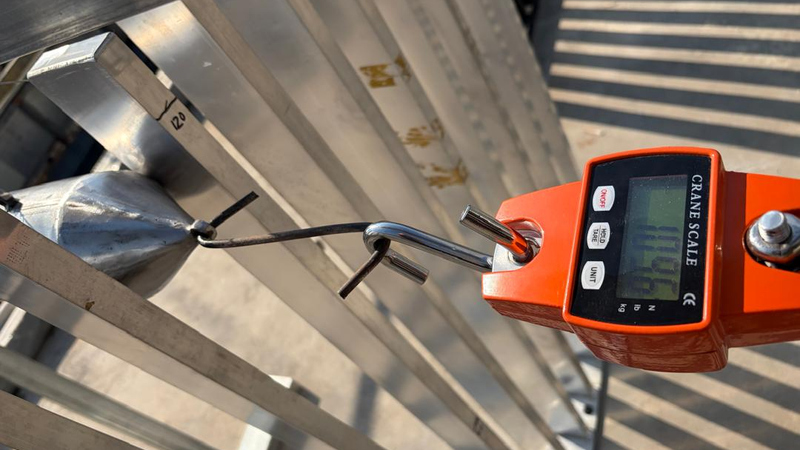
Common Pool Fence Compliance Problems
Several recurring issues can undermine an otherwise suitable pool barrier.
Incorrect Height or Excessive Gaps
Ground movement, landscaping, and installation errors can reduce the effective fence height or create gaps beneath panels.
Climbable Objects Near the Fence
Furniture, garden beds, BBQs, and other objects can create footholds. The surrounding area needs to be checked as part of ongoing maintenance.
Faulty Gate Hardware
A gate that fails to close or latch correctly can compromise the barrier. Hinges and latches should be inspected and adjusted when necessary.
Boundary Fence and Retaining Wall Issues
Horizontal rails, adjoining structures, and changes in ground level can create climbing risks or affect the required measurements.
For a more detailed product-focused discussion, see our guide to different types of pool fencing.
Choosing Compliant Pool Fencing Materials and Designs
The right material depends on the project, environmental conditions, design preferences, and installation requirements. No material automatically guarantees compliance.
Aluminium Pool Fencing
Aluminium is commonly used for pool fencing because it is lightweight and can be finished with an outdoor powder coating.
It is available in several styles, including tubular, blade, and batten designs.
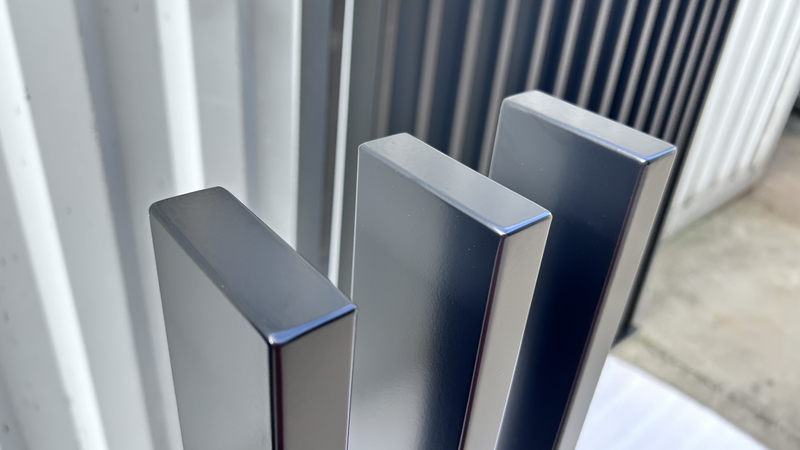
For project buyers, the important considerations include profile dimensions, spacing, post construction, gate hardware, coating specification, and installation method.
Steel Pool Fencing
Steel fencing can suit applications where the required design and structural specifications call for steel construction.
The coating and corrosion protection should be selected for the actual exposure conditions. Coastal or poolside environments require particular attention to material compatibility and maintenance.
Glass Pool Fencing
Glass fencing is often chosen when maintaining clear sightlines is a priority.
Buyers should confirm the required glass specification, support system, gate hardware, installation surface, and applicable safety requirements.
Comparing Fence Styles
The most suitable option depends on the project requirements rather than appearance alone.
How We Help Customers Select Aluminium Pool Fencing
At JZH Fence, our relevant product range includes aluminium tubular fence, aluminium blade fence, and aluminium batten fence. We also supply glass pool fencing systems.
From our B2B product enquiry experience, buyers often consider compliance, ease of installation, specifications, dimensions, and thickness together. For blade and batten designs, appearance is another important consideration.
We recommend starting with the project conditions rather than choosing a product solely from a photograph.
For example, if a buyer is considering aluminium batten fencing for a residential pool, we would first seek to confirm the required height, panel dimensions, profile spacing, post arrangement, gate requirements, and installation surface.
The same principle applies to tubular and blade fencing. A product intended for a normal residential boundary should not automatically be assumed suitable for a pool barrier without checking the design and installation against the applicable requirements.
Our batten fence options include barr floating batten fence, frameless batten fence, and Pik round batten panels. These configurations provide different visual effects, but their actual dimensions and construction still need to be reviewed for the intended application.
You can compare the available styles in our pool fencing guide or review our tubular pool fence guide for more information about product specifications and purchasing considerations.
What Should You Confirm Before Requesting a Quote?
To help a supplier prepare a more useful quotation, provide:
- Project location: State or region and intended application.
- Fence dimensions: Required height, panel width, total length, and profile spacing.
- Installation surface: Concrete, soil, decking, or another structure.
- Gate requirements: Quantity, dimensions, opening direction, and required hardware.
- Finish: Preferred colour and surface treatment.
- Order scope: Panels, posts, gates, fixings, and other accessories.
- Technical requirements: Drawings, applicable standards, and any project-specific specifications.
Providing these details at the beginning helps clarify the quotation scope and makes supplier comparisons more meaningful.
Ongoing Pool Safety: Maintenance, CPR Signage and Supervision
Pool safety does not end when installation is complete.
Inspect Hinges, Latches and Fixings
Check the gate and barrier regularly, particularly after severe weather, impacts, landscaping work, or renovations.
Loose or damaged components should be repaired promptly.
Maintain the Pool Barrier
Keep the barrier free of damage, gaps, and climbable objects. Ensure that vegetation and surrounding structures do not create access points.
CPR Signage and Active Supervision
Check the applicable requirements for CPR signage and keep the sign visible and in good condition.
A compliant barrier supports pool safety but does not replace active adult supervision, appropriate swimming education, or safe behaviour around water.
Frequently Asked Questions About Queensland Pool Fence Regulations
How High Must a Pool Fence Be in Queensland?
A pool barrier generally needs to be at least 1,200 mm high. The measurement must be taken from the relevant finished ground level, and additional conditions may apply to sloping or stepped sites.
What Is the Maximum Gap Under a Pool Fence?
The maximum gap beneath the barrier is generally 100 mm. Other openings and spacings must also satisfy the applicable requirements.
Do Pool Gates Need to Be Self-Closing and Self-Latching?
Pool gates generally need to close automatically and latch securely as required by the applicable standard. The gate and surrounding barrier should be checked regularly.
Can a Boundary Fence Be Used as a Pool Barrier?
Sometimes. The boundary fence must meet the relevant safety requirements, including height, openings, and non-climbability. The neighbouring side can also affect compliance.
Does a New Aluminium Pool Fence Automatically Meet Queensland Requirements?
No. Compliance depends on the complete barrier design, dimensions, installation, gate operation, and surrounding conditions. Confirm the applicable requirements before ordering and obtain professional advice where needed.
Do I Need a Licensed Pool Safety Inspector?
A licensed inspector is the appropriate professional to assess pool safety compliance and provide the relevant inspection outcome. A supplier’s product specification is not a substitute for an official assessment.
Choose the Right Pool Fencing for Your Project
Queensland pool fence regulations should be considered before you finalise the design, request a quotation, or begin installation.
Start by confirming the applicable safety requirements. Then consider the fence height, openings, non-climbable zones, gate configuration, installation surface, and surrounding conditions.
For B2B buyers, contractors, wholesalers, and project teams, these checks also make it easier to compare quotations on a like-for-like basis.
JZH Fence supplies aluminium tubular, blade, and batten fencing systems, together with related panels, posts, gates, and accessories. We can help you review product dimensions and configuration requirements before production.
Planning a pool fencing project in Queensland? Prepare your project location, drawings, required dimensions, installation details, and gate requirements before requesting a quotation.
Contact JZH Fence to discuss your product specifications and sourcing requirements. Always confirm final regulatory compliance with the appropriate local professional or authority before installation.