Choosing the right composite fence manufacturers takes more than comparing prices. For fencing distributors, contractors, and importers, a reliable supplier must deliver consistent WPC boards, compatible posts and accessories, and dependable shipping arrangements.
Two suppliers may quote similar-looking panels, yet the materials, protective layers, installation systems, and quality controls may be different. These details can affect your purchasing costs and customer satisfaction.
This guide covers seven practical factors for evaluating composite fencing manufacturers, from material quality and factory inspections to OEM customization and international shipping. It also explains the purchasing checks that can help you avoid problems before placing a bulk order.
What Is Composite Fencing and How Is It Manufactured?
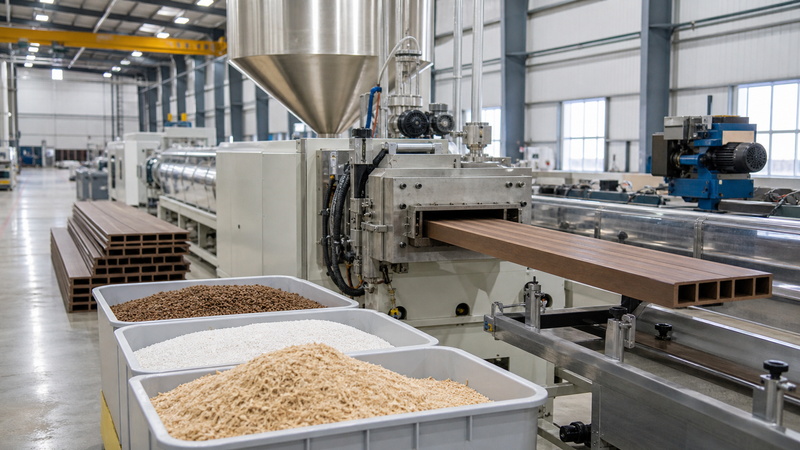
Composite fencing is made from wood-plastic composite (WPC), a material that combines wood fibers, plastic polymers, pigments, and functional additives.
It provides a timber-like appearance without the regular painting or staining associated with natural wood fencing.
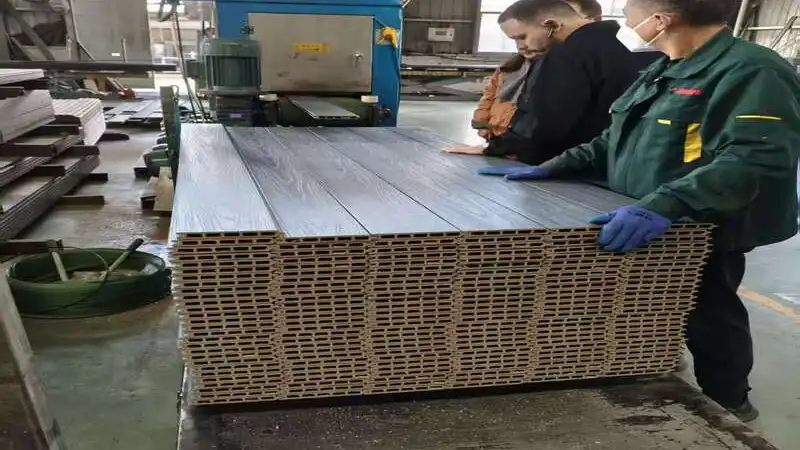
Most WPC fence boards are produced through extrusion. The raw materials are mixed, heated, and formed into boards with specific profiles. After cooling and cutting, the boards are inspected and prepared for assembly or shipment.
A complete composite fence system generally includes composite boards, posts, rails, post caps, fixing brackets, and installation hardware.
For B2B buyers, it is important to evaluate the entire system rather than treating the boards as a standalone product.
You can learn more about these components in our composite material fence guide.
What Materials Are Used in Composite Fence Panels?
WPC fencing typically contains wood fibers, thermoplastic polymers such as HDPE, and additives that support outdoor performance.
In some JZH Fence product formulations, wood fibers account for approximately 55–60% of the material, while HDPE represents approximately 35–40%. The remaining proportion contains pigments, stabilizers, and other additives.
These proportions vary by product.
Wood fibers contribute to the natural appearance and rigidity of the boards. HDPE provides a moisture-resistant polymer matrix, while additives can help improve processing, color stability, and weather resistance.
However, material composition alone does not determine product quality.
Buyers should also consider the extrusion process, board profile, wall thickness, and quality of the finished surface.
For projects in areas with strong sunlight, high humidity, or freezing temperatures, ask the manufacturer for relevant weathering and mechanical performance information.
Traditional WPC vs. Co-extrusion Composite Fencing
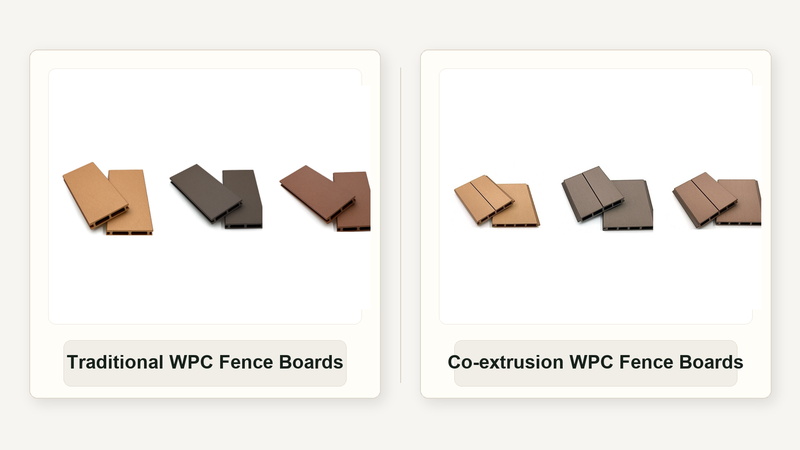
Two common options are traditional WPC fencing and co-extrusion WPC fencing.
Traditional WPC boards, sometimes called first-generation WPC, have an uncapped composite surface. They are generally more economical and can suit price-sensitive fencing projects.
Co-extrusion WPC boards have an additional protective polymer layer surrounding the composite core. This layer is designed to improve surface resistance to moisture, staining, and weathering.
| Feature | Traditional WPC Fence | Co-extrusion WPC Fence |
|---|---|---|
| Structure | Uncapped composite | Composite core with protective outer layer |
| Initial price | Generally lower | Generally higher |
| Surface protection | Standard | Enhanced |
| Color retention | Depends on formulation | Designed for improved resistance to fading |
| Maintenance | Low | Low |
| Typical applications | Budget-conscious projects | Premium residential and commercial fencing |
Both materials can be suitable for outdoor fencing when properly manufactured and installed.
For distributors targeting premium residential markets, co-extrusion fencing may offer a stronger product proposition.
Based on JZH Fence’s existing pricing references, some second-generation WPC configurations are approximately 10% more expensive than comparable first-generation products. Actual differences depend on board specifications, order quantities, and finishes.
Instead of choosing solely by initial price, compare the material structure, available test reports, and expected installation conditions.
How Do Composite Fence Manufacturers Control Product Quality?
Quality control is particularly important for distributors placing repeat orders.
A sample may look good, but the manufacturer must also maintain consistent dimensions, surface quality, and color across bulk production.
Traditional WPC and co-extrusion WPC require slightly different inspection priorities.
With traditional WPC boards, important checks include material consistency, dimensions, surface defects, and possible deformation.
For co-extrusion boards, buyers should also pay attention to the protective outer layer, including its coverage, appearance, and bonding quality.
One issue worth checking carefully is color consistency between production batches.
If a distributor orders the same fence model several months apart, visible color differences can become a problem when customers extend an existing fence or replace individual boards.
Before approving a repeat order, confirm the approved color reference, surface finish, and product specifications.
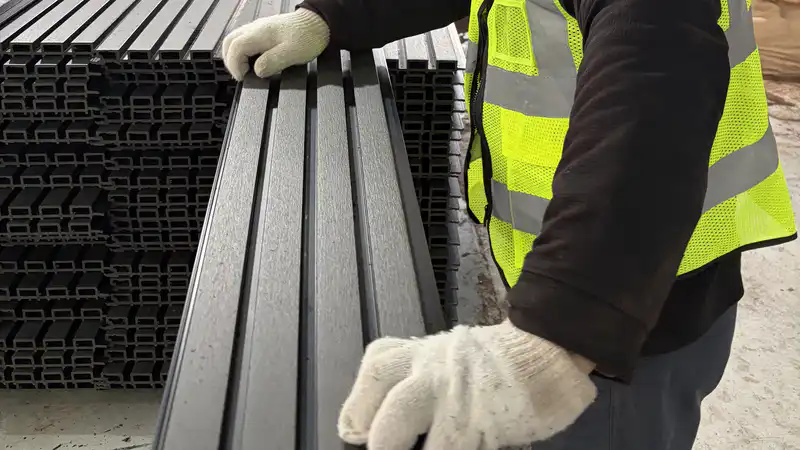
Composite Fence Quality Control Checklist
| Inspection Area | What to Check |
|---|---|
| Raw materials | Wood fiber and polymer specifications |
| Board dimensions | Length, width, thickness, and tolerance |
| Surface finish | Scratches, cracks, texture, and visible defects |
| Co-extrusion layer | Coverage and surface quality |
| Color consistency | Comparison with approved samples |
| Post compatibility | Board fit, rails, and fixing positions |
| Packaging | Protection against transport damage |
For bulk purchasing, request actual quality inspection records where available.
Ask how the supplier checks the finished boards and what documentation can be provided before shipment.
A physical sample, agreed specifications, and clearly defined inspection requirements are more useful than relying on a general promise of good quality.
Types of Composite Fence Systems Offered by Manufacturers
Different composite fencing systems serve different privacy, design, and structural requirements.
A reliable manufacturer should help buyers identify a suitable system for their market rather than offering the same configuration for every project.
Composite Privacy Fence Panels
Composite privacy fencing uses closely fitted boards to create a visual barrier between properties.
It is commonly used for residential boundaries, housing developments, outdoor seating areas, and commercial screening.
Horizontal tongue-and-groove panels are a common option.
Typical heights include 1.8 m, although final dimensions depend on the design and local requirements.
You can explore the available styles on our WPC fence product page.
Semi-privacy and Decorative Composite Fencing
Semi-privacy systems use slats or boards with intentional gaps.
They provide partial screening while allowing more airflow and visibility than solid panels.
These designs are suitable for courtyards, gardens, landscape projects, and decorative commercial boundaries.
When choosing a semi-privacy system, check the spacing between boards, fixing method, and intended installation height.
Composite Fencing with Aluminum Posts
Composite boards need a suitable structural support system.
Aluminum posts are commonly selected because they offer corrosion resistance, relatively low weight, and a clean appearance.
JZH Fence offers composite fencing configurations with 70 × 70 mm and 80 × 80 mm aluminum posts, including options with approximately 1.4 mm wall thickness.
However, the right post specification depends on the fence height, panel width, installation conditions, and structural requirements.
Exposed sites or taller fences may require additional engineering checks.
Our composite material fence guide explains why matching composite boards with suitable aluminum posts matters.
Composite Fence Gates and Matching Accessories
Some projects also require matching pedestrian gates, double gates, or customized access openings.
The gate frame, hinges, and posts must be suitable for the gate dimensions and weight.
Before ordering, confirm the opening size, gate direction, frame specifications, hinges, locks, and post requirements.
Buying compatible components together can reduce installation problems and help maintain a consistent appearance.
7 Key Factors to Consider When Choosing Composite Fence Manufacturers
For wholesalers and project buyers, a manufacturer should be evaluated on more than product appearance and price.
The following seven factors provide a practical framework for comparing suppliers.
1. Material Quality and Composition
Start by asking what materials the manufacturer uses.
Important questions include whether the boards are made with HDPE or another polymer, the wood fiber content, the presence of UV stabilizers, and whether the product has a co-extruded protective layer.
Also check whether the boards are hollow or solid.
A hollow board may have different weight, stiffness, and fixing requirements from a solid profile.
Ask for technical drawings and relevant material information rather than relying only on photographs.
For products sold in demanding climates, performance data should be part of the selection process.
2. Manufacturing Capability and Quality Control
A manufacturer’s production capability affects product consistency and delivery reliability.
Ask which stages of manufacturing are handled directly and which are outsourced.
Useful information includes production capacity, available equipment, inspection procedures, and how the supplier handles nonconforming products.
For distributors planning repeat orders, batch consistency deserves particular attention.
The supplier should be able to explain how approved samples, color codes, dimensions, and quality requirements are communicated during production.
3. Product Specifications and Customization
Check whether the manufacturer can provide the dimensions and configurations your market requires.
These may include:
- Panel height and width
- Board thickness and profile
- Color and surface texture
- Aluminum post dimensions
- Matching rails and accessories
- Gate options and custom packaging
Not all customization requires new tooling.
Changing a standard product’s color may be simpler than developing a new extrusion profile.
Confirm any tooling charges, minimum order quantities, and production lead times before approving a customized product.
4. Complete Fence System Compatibility
A common purchasing mistake is comparing composite boards without checking the complete fence system.
For example, two suppliers may quote a 1.8 m-high composite fence at different prices.
However, one quotation may include boards, aluminum posts, rails, caps, and fixing accessories, while another covers only the boards.
The lower quotation may not represent the lower final cost.
Another important detail is the number of boards required for each panel.
One standard JZH Fence 1.8 m configuration uses approximately 11 boards, but this figure depends on the board profile and installation system.
It should not be applied to every WPC product.
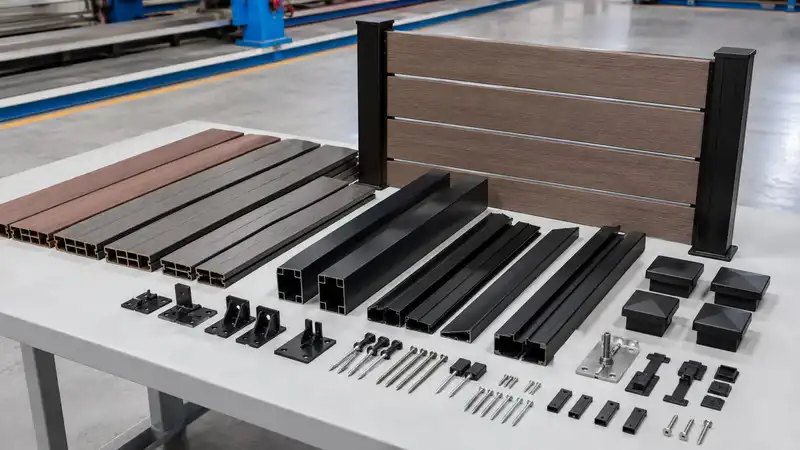
Three Common Mistakes When Ordering Composite Fencing
Mistake 1: Comparing incomplete quotations
Ask for a full list of boards, posts, rails, caps, fasteners, gate components, and packaging.
Mistake 2: Ignoring installation conditions
Concrete foundations, soil installation, sloping ground, and exposed sites may require different fixing arrangements.
Mistake 3: Approving products using catalog photographs alone
Surface texture, color, and board dimensions should be checked against physical samples before bulk production.
Before placing an order, request a complete bill of materials and installation drawings.
Our composite fence panels import guide provides a more detailed checklist for distributors and contractors.
5. Testing, Certifications, and Product Documentation
A supplier should be able to explain which standards and test documents apply to its products.
ISO 9001 is a quality management system standard. It helps demonstrate that a company has processes for managing and improving quality.
However, ISO 9001 certification does not automatically prove that a specific composite fence panel meets wind-load, UV-resistance, or fire-performance requirements.
The International Organization for Standardization provides further information about ISO 9001 and quality management systems.
Depending on your project, useful documentation may include mechanical performance tests, moisture absorption tests, accelerated weathering results, and structural information for the complete fencing system.
For commercial projects, always confirm the applicable local requirements.
Do not assume that every composite fence product requires the same certification or that a manufacturer’s general certificate applies to every model.
6. Production Lead Time and Export Capacity
For importers, production planning is as important as the product specification.
Confirm the lead time for standard products, customized orders, and repeat purchases.
Ask whether the quoted production period begins after deposit payment, sample approval, or final drawing confirmation.
Container loading capacity should also be checked.
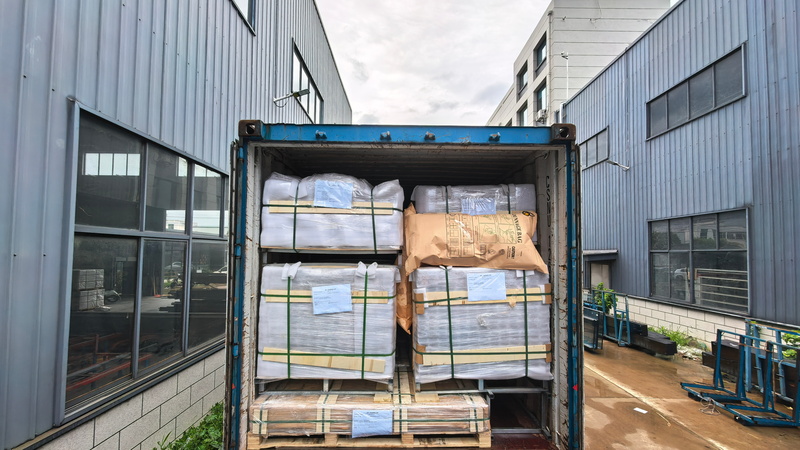
Long composite boards, posts, and accessories require careful packing to protect surfaces and prevent movement during transit.
Request a packing list showing the number of complete fence systems per container.
If the order includes gates or special packaging, these items may affect loading efficiency.
7. After-sales Support and Long-term Supply Reliability
A reliable composite fence manufacturer should support its customers after the shipment arrives.
For distributors, replacement boards and matching accessories may be needed months or years after the original order.
Ask how the supplier manages repeat orders, color consistency, spare parts, and product complaints.
Also confirm the warranty scope and the procedure for reporting damaged or defective goods.
A clear after-sales process is particularly valuable for businesses selling composite fencing under their own brand.
Where Are the Major Composite Fence Manufacturers Located?
Composite fencing is supplied by manufacturers and brands across several regions.
The best sourcing location depends on your order quantity, product specifications, delivery expectations, and target market.
Composite Fence Manufacturers in China
China has an established WPC production and export supply chain.
Many suppliers offer standard composite boards, co-extrusion products, customized profiles, and export packaging.
For overseas buyers, China can be a practical sourcing option for wholesale orders and private-label product ranges.
However, buyers should check whether the supplier operates its own production facilities, works with specialist manufacturing partners, or mainly acts as a trading company.
Also confirm who is responsible for material testing, final inspection, and matching the composite boards with metal components.
Composite Fence Manufacturers in North America
North America has established composite material brands and regional distribution networks.
Domestic sourcing may offer advantages in local product availability, communication, and replacement-part supply.
Overseas sourcing may provide additional customization opportunities for distributors purchasing container quantities.
The right decision depends on your stock requirements, landed costs, and customer expectations.
Composite Fence Manufacturers in Europe
European buyers often consider appearance, installation compatibility, product documentation, and long-term performance.
For UK distributors, composite privacy fencing with modern timber-look finishes and aluminum posts can be an attractive product category.
Cold, wet weather and regional installation requirements should be considered when choosing board structures and supporting components.
For businesses importing from overseas, repeat-order consistency and after-sales parts availability are important considerations.
Comparing Composite Fence Sourcing Regions
| Region | Potential Advantages | What Buyers Should Verify |
|---|---|---|
| China | Export supply, OEM/ODM, multiple profiles | Production capability, QC, logistics |
| North America | Regional distribution and local availability | Product choice, price, lead time |
| Europe | Regional market knowledge and supply | Documentation, availability, delivery |
No single region is the best choice for every business.
Choose the supplier that can meet your specifications, quality expectations, and purchasing requirements at a sustainable total cost.
How Much Does It Cost to Source Composite Fencing from Manufacturers?
Wholesale composite fencing prices depend on the board structure, materials, dimensions, order quantity, and accessories.
A reliable cost comparison should include the complete system and applicable shipping expenses.
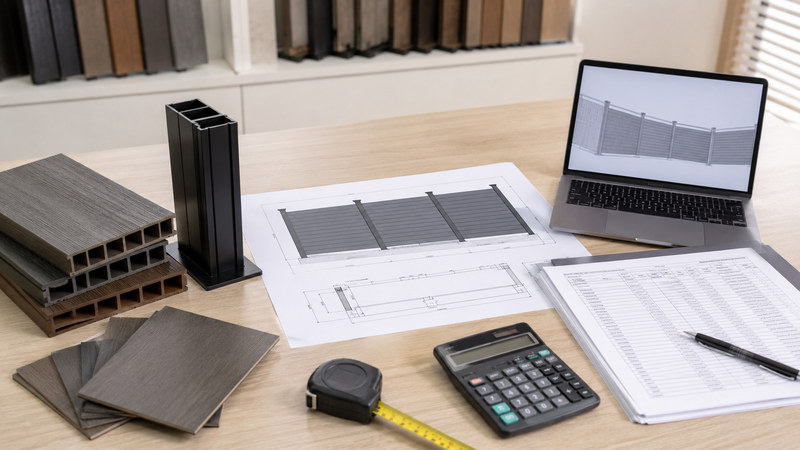
Factors Affecting Composite Fence Wholesale Prices
The main pricing factors include:
- Traditional WPC or co-extrusion WPC
- Board profile and wall thickness
- Panel height and width
- Aluminum post specifications
- Surface color and texture
- Order quantity
- Packaging requirements
- Shipping terms
Co-extrusion products generally carry a higher initial price than comparable traditional WPC boards.
However, the difference varies by specification.
For a meaningful comparison, request quotations using the same board dimensions, post system, accessories, and packing requirements.
Comparing EXW, FOB, CIF, and DDP Costs
International shipping terms determine which party is responsible for different transportation costs, risks, and procedures.
The International Chamber of Commerce’s Incoterms 2020 rules provide the internationally recognized framework for these responsibilities.
| Trade Term | Main Meaning | Buyer Considerations |
|---|---|---|
| EXW | Goods made available at the agreed location | Collection, export arrangements, transportation |
| FOB | Seller delivers goods on board at the named port | Ocean freight and destination costs |
| CIF | Seller arranges freight and specified insurance to destination port | Import clearance and final delivery |
| DDP | Seller handles delivery with import duties paid | Destination arrangements and unloading |
FOB and CIF are used for sea or inland waterway transport.
The exact responsibilities should be confirmed in the sales agreement.
For UK distributors, import duties, applicable taxes, customs charges, local transport, and unloading arrangements can make a noticeable difference to total purchasing costs.
Why the Lowest Unit Price May Not Be the Lowest Project Cost
Consider a UK distributor preparing to import a container of 1.8 m-high composite privacy fencing.
The buyer has two options.
Option A: Traditional WPC Fencing
This configuration uses traditional composite boards with aluminum posts and standard installation accessories.
It has a lower initial product cost and may suit price-sensitive customers.
Option B: Co-extrusion WPC Fencing
This configuration uses co-extrusion composite boards with compatible aluminum posts and accessories.
Its initial price is higher, but it may better suit a premium residential product range.
The buyer should compare more than the cost of the boards.
Important questions include:
- How many boards are required per panel?
- Are the posts and rails included?
- Does the quotation include all fixing accessories?
- How many complete panels fit into a container?
- What are the destination charges?
- Can the receiving site unload the goods safely?
For certain standard JZH Fence configurations, previous loading estimates have been around 430–450 complete fence panels per container. Actual capacity must be confirmed against the container type, board dimensions, post lengths, and packaging method.
A distributor requesting DDP delivery should also confirm the destination address and unloading facilities.
For example, delivery to a warehouse with forklift access may require different arrangements from delivery to a site without unloading equipment.
This example illustrates why buyers should compare the landed cost per complete fence panel, rather than relying only on the board unit price.
For a UK-specific breakdown, see our composite fencing cost guide.
OEM and ODM Composite Fence Manufacturing Services
OEM and ODM services allow distributors and fencing brands to develop products that match their local markets.
The scope of customization depends on the manufacturer’s production capabilities and the requirements of the order.
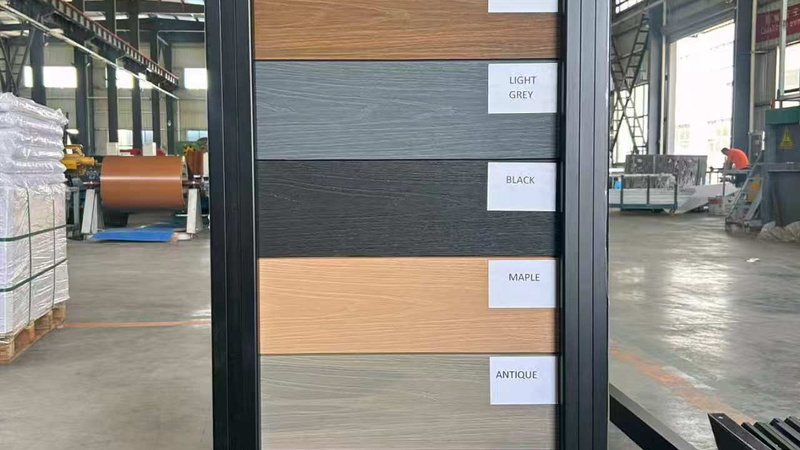
Custom Composite Fence Panels and Colors
OEM products are generally manufactured according to specifications provided by the buyer.
These may cover board dimensions, surface textures, colors, profiles, and packaging.
ODM products typically involve adapting existing manufacturer designs.
For example, a distributor may choose an existing composite fence system with a different finish, custom branding, and matching post colors.
Before confirming customization, ask whether new tooling is required and how it affects MOQ, price, and lead time.
Private Label and Packaging Options
Private-label buyers may require branded product labels, packaging, catalogs, and installation instructions.
Packaging design should also protect composite boards during export.
Long boards can be vulnerable to scratches or pressure damage if the packaging is inadequate.
Posts, rails, and accessories should be secured and identified to make receiving and installation easier.
For repeat orders, consistent product coding and labeling can help distributors manage inventory more effectively.
Sample Approval and Bulk Production Process
A clear approval process helps reduce misunderstandings.
A practical purchasing sequence includes:
- Confirm specifications: Provide panel dimensions, material structure, color, quantity, and project requirements.
- Review drawings: Check the boards, posts, rails, and accessories together.
- Approve samples: Confirm the physical appearance, profile, dimensions, and finish.
- Confirm production details: Agree on packaging, quantity, inspection requirements, lead time, and shipping terms.
- Arrange inspection and delivery: Review the necessary documents before shipment.
For repeat orders, keep an approved sample and a record of the agreed specifications.
Why Work with JZH Fence for Composite Fencing Projects?
JZH Fence supplies fencing solutions for overseas wholesalers, distributors, contractors, and project buyers.
Our product range includes WPC fencing, aluminum fencing, steel fencing, and matching accessories.
For composite fencing projects, we focus on helping customers source compatible boards, posts, and related components.
Complete Composite Fence Systems
Our WPC fence solutions include options for residential privacy, landscaping, commercial boundaries, and project applications.
Depending on the selected system, we can discuss composite boards, aluminum posts, rails, caps, gates, and installation accessories.
Sourcing compatible components together can make ordering and installation easier.
Customization and OEM/ODM Support
JZH Fence supports buyers who need different panel dimensions, surface finishes, colors, and structural configurations.
For customized orders, we recommend confirming the technical requirements through drawings and samples before production.
You can find more information about our company and product range on the JZH Fence About Us page.
Quality Control and Export Support
For international fencing orders, accurate specifications, suitable packaging, and clear communication are important.
We work with buyers to confirm their product requirements and available supply options.
Relevant samples, drawings, and product documentation can be discussed according to the selected models.
If your project has special structural, weather exposure, or compliance requirements, these should be confirmed before production.
Frequently Asked Questions About Composite Fence Manufacturers
How Do I Find Reliable Composite Fence Manufacturers in China?
Review the supplier’s product specifications, manufacturing capabilities, quality management information, and export experience.
Request samples, technical drawings, and a detailed quotation before ordering.
Also check whether the manufacturer can provide the complete fencing system, including posts, rails, gates, and accessories.
What Is the Difference Between Traditional WPC and Co-extrusion Composite Fencing?
Traditional WPC has an uncapped composite surface.
Co-extrusion WPC includes an additional protective layer designed to improve surface resistance to weathering, moisture, and staining.
Co-extrusion products generally cost more, although performance depends on the actual material formulation and manufacturing quality.
What Should I Check Before Buying Composite Fence Panels in Bulk?
Check panel dimensions, board structure, post specifications, accessories, color samples, packaging, production lead time, and shipping terms.
Ask for a complete bill of materials so you can compare quotations accurately.
Can Composite Fence Manufacturers Provide OEM and ODM Services?
Many manufacturers offer customized dimensions, colors, profiles, and packaging.
OEM typically follows buyer-supplied specifications, while ODM often adapts existing product designs.
Available options and minimum order quantities vary by supplier.
What Certifications Should I Request From a Composite Fence Supplier?
Ask for relevant quality management certificates and product test reports.
Depending on the project, you may need evidence relating to mechanical strength, moisture resistance, weathering, or other performance requirements.
Confirm that the documents apply to the specific product being purchased.
How Much Does Wholesale Composite Fencing Cost?
Wholesale prices depend on material structure, panel dimensions, post specifications, accessories, order volume, and shipping requirements.
For an accurate comparison, request the cost of the complete fencing system and identify which transportation expenses are included.
Can Composite Fences Be Supplied With Aluminum Posts and Matching Gates?
Yes. Composite fencing can be combined with aluminum posts, rails, and matching gate systems.
All components should be checked for compatibility with the intended panel dimensions and installation conditions.
Conclusion: Choosing the Right Composite Fence Manufacturing Partner
Choosing reliable composite fence manufacturers means looking beyond the initial quotation.
Material composition, board quality, manufacturing consistency, compatible accessories, customization capability, and shipping arrangements all affect the success of a bulk order.
For wholesalers and contractors, careful sample approval and complete system checks can help reduce avoidable installation issues and unexpected costs.
Whether you need traditional WPC fencing or premium co-extrusion composite panels, compare suppliers using clear specifications and complete quotations.
Looking for a composite fence manufacturer for your next project?
JZH Fence supplies composite fencing systems, aluminum posts, and matching accessories for international B2B buyers.
Contact JZH Fence to request a product catalog, discuss your specifications, or get a wholesale quotation.