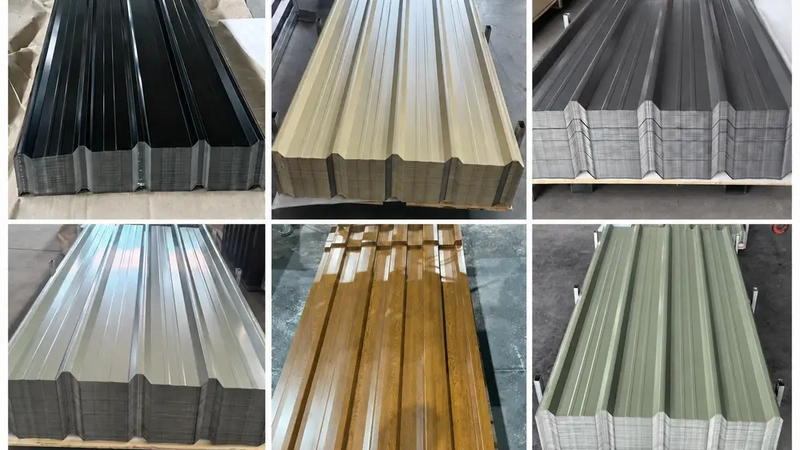
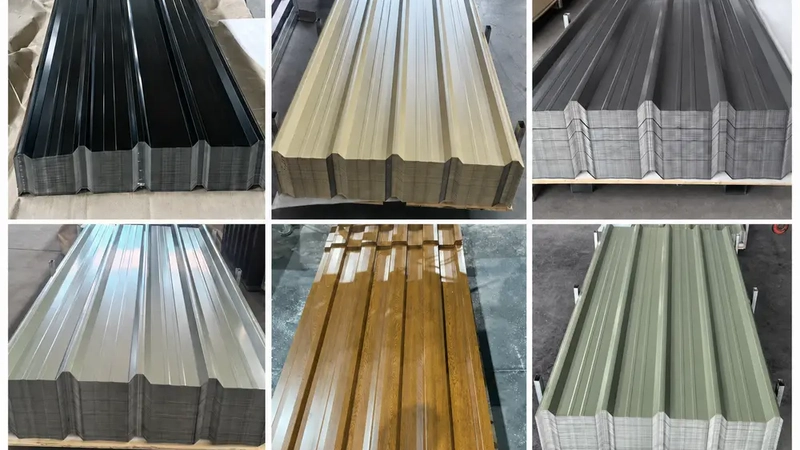
Choosing between different Colorbond fence profiles is about more than selecting the pattern you like best.
For fencing contractors, wholesalers and project buyers, profile shape can affect appearance, panel rigidity, privacy and compatibility with the complete post-and-rail system. At the same time, two profiles that look similar may use different rib dimensions, steel thicknesses or installation systems.
At JZH Fence, we manufacture Colorbond-style steel fencing systems for B2B projects, including four main steel fence profile families suitable for Australian and export markets.
In this guide, we compare these profiles with familiar Australian fencing styles, explain which specifications you should check, and show what matters during manufacturing and quality inspection.
The goal is simple: help you compare steel fencing based on the complete specification, not just a product photo.
What Are Colorbond Fence Profiles?
A fence profile is the three-dimensional shape formed into a steel sheet during roll forming.
Instead of leaving the steel completely flat, the sheet passes through forming rollers that create:
- Vertical ribs
- Wide pans
- Corrugations
- Angular folds
- Repeating wave patterns
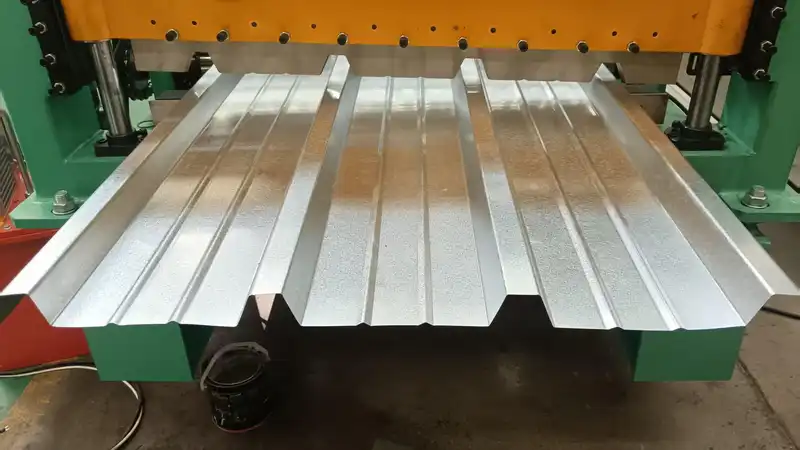
These shapes determine the appearance of the finished fence, but they also change the geometry of the steel sheet.
A roll-formed sheet will generally feel more rigid than an equivalent completely flat sheet because the ribs and folds help resist movement across the panel surface.
However, this does not mean that one profile is automatically stronger than another.
For a B2B fencing project, we recommend looking at the entire system:
Profile + Steel Thickness + Steel Grade + Coating + Posts + Rails + Installation Environment
These factors need to work together.
A Note on Australian Fence Profile Names
Australian fencing suppliers use names such as Trim, Sawtooth, Mirrascreen and Metline to describe different panel appearances.
You can see examples of these four commonly used Australian fencing style names in this Australian Colorbond fencing style comparison.
However, the exact profile geometry can vary between manufacturers.
JZH Fence uses its own roll-forming dimensions. Some of our profiles have a similar overall appearance to familiar Australian profile families, but we do not claim that our sheets are dimensionally identical to proprietary Australian products.
For easier comparison, we describe our four main profiles as follows:
| JZH Profile Description | Comparable Australian Style | Main Visual Character |
|---|---|---|
| Zig-Zag Profile | Sawtooth-style | Angular and architectural |
| Wave Profile | Mirrascreen-style | Smooth continuous waves |
| Wide-Pan Rib Profile | Trim-style | Simple and clean |
| Deep-Rib Profile | Metline-style | Strong vertical ribs |
For replacement projects or systems that must fit existing components, always confirm the cross-section drawing or physical sample before ordering.
A familiar profile name is useful for communication, but a technical drawing is much more reliable for purchasing.
Profile 1: Zig-Zag Profile – Similar to Sawtooth-Style Fencing
Our first steel fence profile uses a repeating angular shape across the sheet.
The panel alternates between raised and recessed sections, creating a distinctive zig-zag appearance when viewed across the fence line.

Visually, this design belongs to the same broad family as Australian Sawtooth-style fencing.
Where This Profile Works Well
The angular profile works particularly well when the customer wants the fence itself to contribute to the architectural design.
Typical applications include:
- Contemporary residential boundaries
- Townhouse developments
- Commercial properties
- Designer fencing
- Architectural projects
- OEM product ranges requiring greater visual differentiation
Compared with a conventional wide-pan panel, the repeated folds create stronger shadow lines across the fence.
This gives the finished boundary a more architectural appearance.
What Buyers Should Confirm
If you are trying to match an existing Sawtooth-style fence, do not assume that a similar appearance means the profiles are interchangeable.
You should confirm:
- Rib pitch
- Profile depth
- Top width
- Effective sheet width
- Panel overlap
- Connection method
For OEM or replacement projects, you can send JZH Fence a profile drawing, reference photo or physical sample for dimensional review before bulk production.
Profile 2: Wave Profile – Similar to Mirrascreen-Style Designs
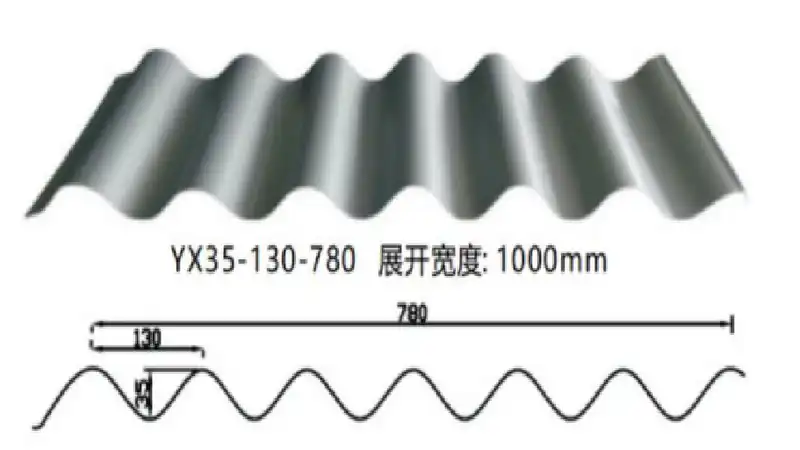
Our second profile uses continuous rounded corrugations rather than sharp angular ribs.
The result is a softer wave appearance with a repeating curved surface.
From a design perspective, it is closest to the general family of Australian Mirrascreen-style or wave-profile fencing.
Where This Profile Works Well
The Wave Profile can be suitable when the project needs a softer appearance than a conventional angular steel fence.
Typical applications include:
- Residential boundaries
- Garden fencing
- Contemporary homes
- Coastal-style architecture
- Developments where both sides of the fence remain visible
- Projects requiring a more uniform repeating profile
The continuous corrugation creates visual interest without requiring separate decorative components.
A Practical Sourcing Point
In real B2B enquiries, customers sometimes send us a reference photo and simply say:
“I need this type of wave fence.”
The photo is useful, but it is only the starting point.
Two wave profiles may look almost identical in an online image while using different:
- Wave spacing
- Profile depth
- Effective sheet width
- Panel overlap
- Rail connection
For bulk purchasing, those differences matter.
That is why we recommend confirming a drawing or physical sample before production when you need to match an existing system.
Profile 3: Wide-Pan Rib Profile – Similar to Trim-Style Fencing
Our third profile combines relatively wide flat sections with narrower raised ribs.
This creates a simpler, cleaner appearance than the Zig-Zag or Wave profiles.
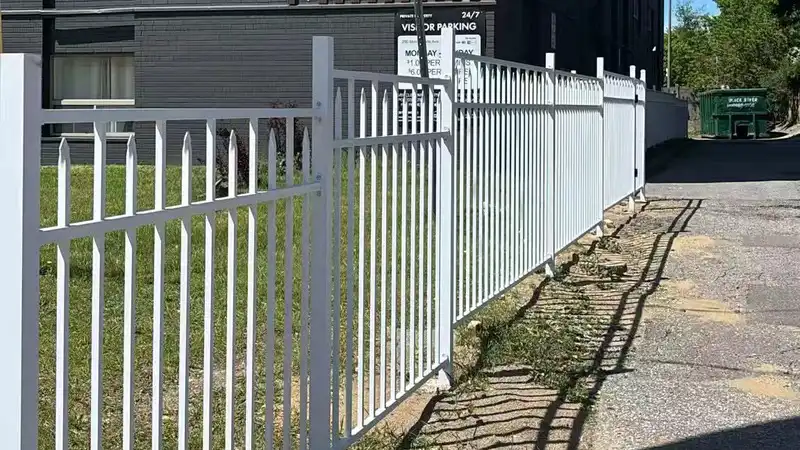
Visually, it belongs to the same general design family as Trim-style fencing commonly used for Australian residential boundaries.
Why Buyers Choose This Type
Wide-pan profiles work well when the customer wants the fence to look clean rather than highly decorative.
Typical applications include:
- Residential privacy fencing
- Housing developments
- Long boundary runs
- Commercial boundaries
- Property developments
- General-purpose steel fencing
The wider flat sections make the finished fence visually quieter.
This can be particularly useful for long boundary runs where a very busy profile might dominate the overall property design.
Manufacturer’s Selection Note
This is also a good example of why buyers should not evaluate the visible sheet alone.
Before confirming a quotation, we normally also need to understand:
- Fence height
- Steel thickness
- Steel grade
- Post spacing
- Rail configuration
- Coating requirements
- Installation environment
The profile is only one part of the complete fencing system.
Profile 4: Deep-Rib Profile – Similar to Metline-Style Fencing
Our fourth profile uses broader raised ribs with deeper shadow lines between each section.
Among our four designs, this profile is visually closest to the general appearance associated with Metline-style fencing.
The repeated vertical ribs create a stronger architectural rhythm across the fence line.
Typical Applications
This type of profile can work well for:
- Premium residential projects
- Townhouse developments
- Commercial properties
- Architectural boundaries
- Modern developments
- Projects where the fence is highly visible
The deeper-looking ribs make the fence feel more like an architectural steel element rather than simply a privacy screen.
Similar Appearance Does Not Mean Interchangeable
This is particularly important when sourcing a replacement panel.
A visually similar profile may not fit an existing Australian post-and-rail system.
Before ordering replacement material, confirm:
- Existing sheet profile
- Rib spacing
- Profile depth
- Overall width
- Existing posts
- Existing rails
- Capping
- Connection method
If you are replacing an existing system, send us a cross-section drawing or physical sample whenever possible.
Quick Comparison of Our Four Steel Fence Profiles
For faster B2B project selection, the four profiles can be compared like this:
| Profile | Visual Character | Typical Priority | Comparable Australian Style |
|---|---|---|---|
| Zig-Zag Profile | Angular, strong shadow lines | Design differentiation | Sawtooth-style |
| Wave Profile | Soft, continuous corrugation | Uniform appearance | Mirrascreen-style |
| Wide-Pan Rib Profile | Clean, simple | Privacy and bulk projects | Trim-style |
| Deep-Rib Profile | Strong vertical rhythm | Premium architectural projects | Metline-style |
There is no single profile that is best for every fencing project.
The right choice depends on what your customer values most and how the fence will be installed.
Why Fence Profile Geometry Matters
Fence profiles are often treated mainly as an aesthetic choice.
From a manufacturing point of view, however, they also change the geometry of the steel sheet.
Profile Depth
When a flat steel sheet is roll-formed into raised ribs, waves or corrugations, its cross-sectional geometry changes.
The formed shape can improve the apparent rigidity of the panel compared with a completely flat sheet.
However, a deeper profile does not automatically mean a stronger complete fence.
You still need to consider:
- Steel thickness
- Fence height
- Post dimensions
- Post spacing
- Rails
- Footings
- Wind exposure
Rib Spacing
Rib spacing influences both the visual appearance and panel geometry.
Closer ribs normally create more visual texture.
Wider pans usually produce a cleaner and more open appearance.
For OEM buyers, rib spacing is also one of the most important measurements to confirm on the technical drawing.
Profile and Post Spacing Work Together
One issue buyers sometimes overlook is the relationship between the infill sheet and the supporting structure.
A different profile cannot compensate indefinitely for excessive post spacing.
For an exposed project, we recommend reviewing the complete fence system rather than simply selecting a “stronger-looking” sheet.
The discussion should include:
Profile + Thickness + Fence Height + Posts + Rails + Spacing + Footing Conditions
For Australian projects where wind loading is relevant, project designers should also consider the applicable structural requirements for the installation location.
How We Specify Steel Thickness, Grade and Coating
One lesson from our B2B project experience is that publishing one fixed material specification for every steel fence can be misleading.
Different projects need different combinations.
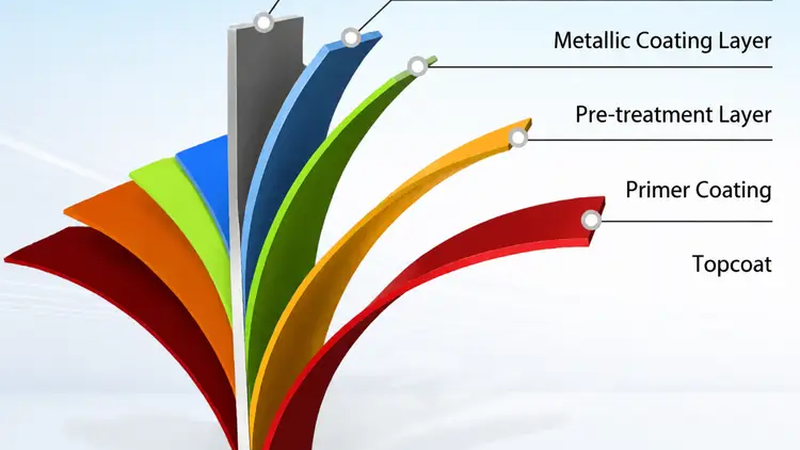
For this reason, our public specifications are normally presented as available ranges, while the final specification is confirmed according to the order.
Steel Thickness: 0.35–0.8 mm
JZH Fence can manufacture steel fence panels within an approximate thickness range of:
0.35–0.8 mm
The final thickness depends on factors such as:
- Profile geometry
- Project requirements
- Fence structure
- Destination market
- Order specification
- Target product positioning
This also gives wholesalers flexibility when developing different product ranges.
Instead of asking only:
“How much is one fence panel?”
a more useful B2B question is:
“What profile, steel thickness, steel grade and coating are included in the quotation?”
That makes supplier comparisons much more meaningful.
Steel Grade: G550 for Australia and G500 for Other Markets
For Australian-market projects, G550 steel options can be supplied.
For other export markets, G500 can be discussed depending on the product and order requirements.
The final material grade should always be confirmed during quotation and order approval.
This is particularly important if you are a distributor serving several countries.
A material specification used for one market should not automatically be copied into another without checking the local project requirements.
Metallic Coating: AZ150 and ZM120–150 Options
Corrosion protection is one of the most important material considerations for outdoor steel fencing.
Available higher-protection options can include:
- AZ150
- ZM120–150
The final coating system is confirmed according to the project and purchase specification.
For example, a normal inland residential boundary and a coastal project should not automatically be treated as the same application.
If your project is in a more corrosive environment, we recommend discussing coating requirements early in the quotation process rather than waiting until after the profile and colour have already been selected.
You can also review our guide to Colorbond-style fencing cost and installation when comparing the material specification with the overall project budget.
Factory Quality Control for Steel Fence Profiles
For a B2B buyer, the phrase “high quality” does not provide enough useful information.
A much better question is:
What does the factory actually inspect?
For our Colorbond-style steel fence projects, several quality-control points are particularly important.
Thickness Inspection
Steel thickness is checked against the confirmed order specification.
This matters because thickness affects both material cost and the product specification.
When comparing quotations from different suppliers, make sure the panels are based on comparable thicknesses.

A lower quotation does not mean much if the material specification is different.
For JZH Fence projects, the publicly available thickness range is approximately 0.35–0.8 mm, while the final thickness is confirmed according to the order.
Dimension Inspection
Panel dimensions need to work with the complete fencing system.

Important inspection points can include:
- Panel length
- Panel width
- Profile dimensions
- Rib spacing
- Post dimensions
- Rail dimensions
- Connection position
Dimensional consistency can also affect installation efficiency.
If panels, posts and rails do not match correctly, installers may need extra cutting or adjustment on site.
For projects requiring replacement posts or a complete support system, you can also review our Colorbond fence post solutions.
Colour Inspection
Colour is one of the first things the end customer notices.
For bulk orders, we therefore recommend checking colour consistency between production batches.
Inspection can include:
- Surface colour
- Finish consistency
- Visible colour difference
- Surface appearance
- Obvious coating defects
If colour matching is important, a physical colour sample should be confirmed before bulk production.
Screen colours are useful for initial selection, but they should not always be treated as final colour approval.
Coating and Corrosion-Protection Inspection
For outdoor steel fencing, corrosion protection is one of the most important QC considerations.
It becomes particularly important for:
- Coastal projects
- Humid environments
- Exposed commercial sites
- Long-term outdoor installations
Available material options can include AZ150 or ZM120–150, depending on the confirmed order.
We avoid describing a steel fence as completely “rust-proof” or “corrosion-proof.”
A more practical approach is to select the corrosion-protection system according to the expected environment.
Profile and Surface Inspection
The roll-formed profile itself also needs visual inspection.
Typical inspection points include:
- Rib shape
- Profile consistency
- Edge condition
- Scratches
- Dents
- Visible deformation
- Surface finish
This becomes particularly important for architectural profiles.
Once multiple sheets are installed in a continuous fence line, small differences in profile shape can become easier to see.
Packaging Inspection
Quality control should not stop when production is complete.
Export fence panels may pass through several stages:
Factory handling → Truck transport → Container loading → Sea freight → Unloading → Jobsite handling
Packaging therefore needs to protect:
- Panel surfaces
- Formed ribs
- Edges
- Coated finishes
For export orders, packaging should be confirmed together with the loading plan.

A simple way to understand the overall QC process is:
Thickness → Dimensions → Profile → Colour → Coating → Packaging
For a B2B buyer, these inspection details provide much more useful information than a generic “premium quality” claim.
Which Fence Profile Should You Choose?
The right profile depends on the project rather than on one universal ranking.
For Standard Residential Privacy
The Wide-Pan Rib Profile is often a practical starting point.
Its simpler appearance works well across long boundary lines and general privacy applications.
For Contemporary Architectural Projects
The Zig-Zag Profile creates stronger geometric lines and more visible shadow effects.
It can help differentiate an architectural or premium product range.
For a Softer Profile Appearance
The Wave Profile provides continuous rounded corrugations rather than sharp angular folds.
It can work well when a softer repeating pattern is preferred.
For Stronger Architectural Presence
The Deep-Rib Profile creates pronounced vertical lines and can suit premium residential or commercial projects.
For Existing Fence Replacement
Do not choose by appearance alone.
Compatibility should come first.
Send the supplier:
- Existing profile drawing
- Cross-section photo
- Measurements
- Sample, where possible
This reduces the risk of receiving sheets that look similar but do not fit the existing system.
What B2B Buyers Should Confirm Before Ordering
When a buyer asks only:
“What is your price per panel?”
there is usually not enough information for a fair comparison.
A better supplier comparison looks like this:
| Basic Question | Better B2B Question |
|---|---|
| What profile do you have? | Can you provide the cross-section drawing? |
| What is the panel price? | What thickness and steel grade are included? |
| Is it suitable for Australia? | What steel grade and coating are being quoted? |
| Can you make this design? | Can you work from my drawing or sample? |
| Is it corrosion resistant? | What coating system is available for my environment? |
| Is installation easy? | Are the sheets compatible with the posts and rails? |
| Can you match my existing fence? | Have you checked the rib dimensions and effective width? |
These questions make it easier to compare suppliers using the same technical basis.
Questions to Ask Your Steel Fence Supplier Before Ordering
Before placing a bulk order, ask your supplier:
- What steel grade is included in the quotation?
- What steel thickness is being supplied?
- What coating options are available?
- Can you provide the profile cross-section drawing?
- What is the effective panel width?
- How are panel dimensions inspected?
- How is colour consistency controlled?
- How are finished surfaces inspected?
- Are posts and rails supplied as a complete system?
- Can you provide samples before bulk production?
- How are panels protected during container shipping?
- Can the profile be customised for an OEM product line?
For a wholesaler or contractor, these questions usually reveal much more about a supplier than simply comparing price per panel.
Frequently Asked Questions
Are JZH Fence profiles identical to Australian Trim, Sawtooth, Mirrascreen or Metline profiles?
No.
Some JZH Fence profiles have a similar overall appearance to these familiar Australian profile families, but we use our own roll-forming dimensions.
For exact compatibility, buyers should confirm the technical drawing or physical sample before ordering.
Which profile is best for residential privacy fencing?
A simple wide-pan rib profile can be a practical option for residential privacy fencing because it creates a clean and continuous boundary.
However, profile choice should still be considered together with fence height, panel thickness, posts and site conditions.
What steel thickness is available?
JZH Fence offers an approximate public steel thickness range of 0.35–0.8 mm.
The final thickness is confirmed according to the profile, project structure, market and purchase specification.
What steel grade is available for Australian fencing projects?
For Australian-market projects, G550 options are available.
For other export markets, G500 can be discussed depending on the required product specification.
What coating options are available?
Available project options can include AZ150 and ZM120–150.
The final coating system should be selected according to the expected project environment and order requirements.
Does a deeper fence profile always mean a stronger fence?
No.
Profile depth is only one factor.
Fence performance also depends on:
- Steel thickness
- Fence height
- Post spacing
- Posts
- Rails
- Footings
- Installation
- Site conditions
The complete fence system should be considered together.
Can JZH Fence manufacture custom fence profiles?
Yes.
For OEM, wholesale and project orders, JZH Fence can discuss custom profiles based on your:
- Drawing
- Cross-section
- Sample
- Required appearance
- Target dimensions
We recommend completing profile confirmation before bulk production.
Choosing the Right Colorbond Fence Profile
Comparing Colorbond fence profiles should not stop at deciding whether you prefer a Trim-style, Sawtooth-style, Wave or Metline-style appearance.
For B2B sourcing, the more important question is whether the complete fencing system matches your project.
That means comparing:
Profile + Steel Thickness + Steel Grade + Coating + Posts + Rails + Installation Environment
JZH Fence manufactures Colorbond-style steel fencing systems for wholesalers, fencing contractors and project buyers.
Available manufacturing options include:
- Four main steel fence profile families
- 0.35–0.8 mm steel thickness range
- G550 options for Australian-market projects
- G500 options for other export markets
- AZ150 coating options
- ZM120–150 coating options
- Matching posts and rails
- Gates and accessories
- OEM profile development
- Private-label supply
Because each project is different, the final specification is confirmed according to the order rather than fixed by one website parameter.
If you already have an existing Australian fence profile, you can send us your cross-section drawing, reference photo or physical sample for comparison.
Contact JZH Fence to request a profile catalogue, sample or project quotation.