Choosing custom ornamental fencing is not only about finding a fence that looks good.
For contractors, developers, wholesalers, and project buyers, the more important questions often involve material strength, corrosion protection, installation method, gate hardware, local regulations, and whether the supplier can manufacture consistently from approved drawings.
A fence that looks nearly identical in a catalog can perform very differently once it is installed in a residential development, commercial property, coastal area, or government project.
This guide explains the main types of ornamental fencing, how steel and aluminum compare, which specifications should be confirmed before production, and what we have learned from handling customized overseas fence projects.
If your project requires a heavier-duty metal perimeter, you can also compare our steel fence systems for commercial, residential, and project applications.
What Is Custom Ornamental Fencing?
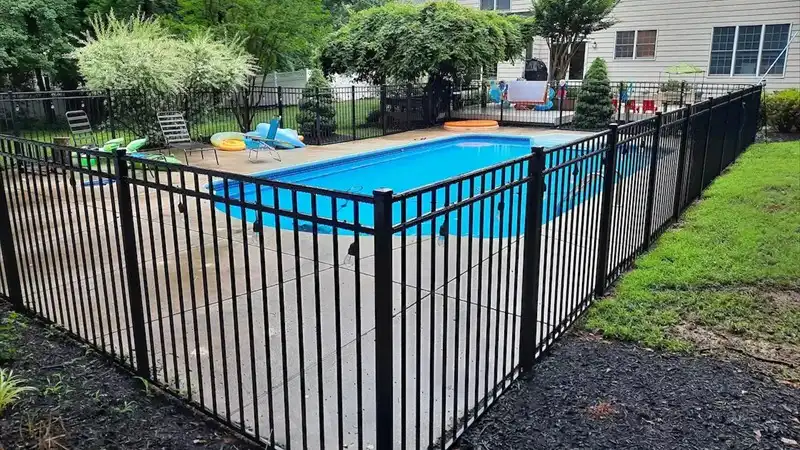
Ornamental fencing is a metal fence system built with vertical pickets, horizontal rails, posts, gates, and decorative components.
Unlike solid privacy fencing, it normally maintains open sight lines while providing boundary control, security, and architectural value.
Modern ornamental fencing is commonly manufactured from:
- Galvanized steel
- Aluminum
- Traditional wrought iron
For most modern projects, steel and aluminum have largely replaced traditional hand-forged wrought iron because they are easier to manufacture consistently, finish, transport, and install.
Ornamental fence systems can be used for residential boundaries, apartment developments, commercial facilities, schools, parks, government projects, pool areas, and security perimeters.
For commercial or higher-security applications, you can also compare ornamental systems with our security fence solutions, which include tubular, mesh, anti-climb, and other perimeter systems.
3 Main Ornamental Fence Materials Compared
Material selection affects not only the initial price of the fence but also corrosion resistance, transportation, installation, maintenance, and long-term project cost.
From the projects and inquiries we handle, buyers rarely choose a material based on strength alone. Project location, expected service life, budget, appearance, and local market requirements normally need to be considered together.
| Material | Typical Applications | Main Advantages | Main Considerations |
|---|---|---|---|
| Galvanized steel | Residential, commercial and general boundary projects | Good strength and cost-performance | Coating quality and welded areas require attention |
| Aluminum | Coastal, residential, commercial and architectural projects | Lightweight and corrosion-resistant | Initial material cost can be higher |
| Wrought iron | Historic properties, luxury gates and restoration work | Traditional appearance and heavy construction | High cost and greater maintenance requirements |
Galvanized Steel Ornamental Fencing
For many residential and general-purpose projects we handle, galvanized steel is often selected when buyers want to balance structural strength and cost.
Steel provides good rigidity for fence panels, posts, and gates. Different post wall thicknesses and profile sizes can also be specified for projects that require heavier construction.
For buyers sourcing different project configurations, our steel fence range includes systems intended for residential, commercial, and project supply.
The final performance, however, depends heavily on the surface treatment.
A steel fence should not be evaluated only by asking:
“Is this fence galvanized?”
You should also check how the finished product protects welded areas, cut edges, fasteners, and connections.
These small areas can become weak points when the fence is exposed outdoors for long periods.
For reference, ASTM F2408 sets requirements for coated tubular-picket ornamental fence systems made from galvanized steel and addresses structural performance as well as coating characteristics such as adhesion, corrosion resistance, impact resistance, and weathering. See ASTM F2408 ornamental fence requirements
Aluminum Ornamental Fencing
Aluminum is frequently considered for projects where corrosion resistance, appearance, lighter weight, and lower maintenance are more important.
This is especially relevant for:
- Coastal properties
- Higher-end residential developments
- Resorts
- Architectural projects
- Pool areas
- Humid environments
Because aluminum does not develop red rust in the same way as carbon steel, it can reduce some of the corrosion concerns associated with steel fencing.
If your project requires a more enclosed architectural system, you can also review our aluminum privacy fence systems, including full-privacy, semi-privacy, horizontal, vertical, gate, post, and accessory options.
However, aluminum usually comes with a higher material cost than a basic galvanized steel configuration.
For that reason, we normally recommend evaluating environment, expected service life, project positioning, and target budget together instead of assuming one material is always better than another.
Traditional Wrought Iron
Traditional wrought iron is mainly relevant where historic character, traditional fabrication, or a premium architectural appearance is required.
It can create highly decorative gates and fence sections, but it is heavier and normally requires more maintenance than modern aluminum or coated steel systems.
For most contemporary B2B fencing projects, engineered ornamental steel and aluminum systems are usually more practical.
Common Ornamental Fence Designs
The term ornamental fence can describe many different panel designs.
The appearance is mainly controlled by picket shape, picket spacing, rail configuration, top treatment, and decorative components.
Classic Picket Fence
A traditional ornamental picket fence uses vertical pickets fixed between two or more horizontal rails.
It works well for:
- Residential boundaries
- Parks
- Schools
- Apartment projects
- Commercial properties
Picket height, spacing, wall thickness, and rail configuration can all be adjusted according to project requirements.
Flat-Top Ornamental Fence
Flat-top fencing uses a horizontal upper rail that finishes above the pickets.
The result is a clean and relatively modern appearance without projecting spear points.
It is commonly considered for residential developments, public areas, and projects where a softer top profile is preferred.
Spear-Top Ornamental Fence
Spear-top designs extend the vertical pickets above the upper rail.
They provide a more traditional appearance while also making the perimeter more difficult to climb.
These styles are often used for:
- Commercial boundaries
- Estates
- Government facilities
- Security-oriented projects
For Australian projects using similar tubular perimeter systems, our garrison fence range provides both aluminum and steel tubular configurations for residential, commercial, and project applications.
Double-Rail and Triple-Rail Fence Designs
Additional rails can increase structural rigidity and also create more opportunities for decorative details.
Depending on the project, rings, finials, arches, or different picket arrangements can be incorporated into the panel.
The important point is that decorative details should be confirmed on drawings before mass production.
Corrosion Protection Matters More Than the Base Metal Alone
One lesson from actual ornamental fence projects is that buyers should look beyond the base metal when comparing corrosion performance.
For steel systems, the protective process plays an equally important role.
Zinc Protection Plus Powder Coating
For many ornamental steel applications, a zinc-protected surface combined with powder coating can be used to improve outdoor corrosion resistance and appearance.
The surface system generally provides two functions:
- The zinc-containing protective layer helps protect the steel substrate.
- The powder-coated exterior provides an additional barrier against moisture and weather exposure.
The outer coating also creates a cleaner appearance and allows different color options.
Black remains one of the most common colors for ornamental fencing, although project-specific colors can also be produced.
Surface preparation is important as well. ISO 12944-4 specifically covers several types of steel surfaces and surface preparation, including hot-dip-galvanized and zinc-electroplated surfaces. See ISO 12944-4 surface preparation guidance
What We Look at During Corrosion Testing
Our internal corrosion observations do not focus only on the large flat surfaces of the fence.
We also pay attention to areas such as:
- Welded joints
- Connections
- Fasteners
- Corners
- Internal contact points
In internal accelerated testing, we have observed that after exposure, some concealed connection or welded areas may begin to show slight oxidation while the visible external coating can remain intact, with no obvious paint peeling or large visible rust spots.
This matters because real fence deterioration often begins at small details rather than in the center of a well-coated panel.
However, accelerated testing should not automatically be converted into an exact number of outdoor service years.
Actual durability can be influenced by:
- Test method
- Coating system
- Surface preparation
- Humidity
- Salt exposure
- UV exposure
- Installation conditions
- Maintenance
The ISO 12944 series provides an established framework for the corrosion protection of steel structures using protective paint systems, including design, surface preparation, testing, application, and maintenance considerations. See ISO 12944 corrosion protection guidance
For project buyers, accelerated test results are therefore more useful as comparative evidence than as a simple “X hours equals X years” calculation.
What Specifications Should Be Confirmed Before Ordering?
Many problems in custom ornamental fencing are not caused by manufacturing defects.
They happen because an important specification was never clearly confirmed before production.
From our project communication experience, the following information should be agreed before an order moves into manufacturing.
Panel Dimensions
Confirm:
- Panel width
- Panel height
- Rail quantity
- Picket dimensions
- Picket spacing
Do not assume the manufacturer’s standard configuration automatically matches your local requirement.
Post Size and Wall Thickness
Post specifications can vary significantly depending on the project.
A standard residential fence may use a relatively light post, while commercial, government, gate, or security projects may require a much heavier section.
For example, one European project we supplied specified 100 × 100 mm posts with a 3.0 mm wall thickness because the project required a heavy-duty boundary solution.
When higher security or more demanding perimeter performance is required, it can also be useful to compare the project against dedicated security fencing systems rather than simply increasing the thickness of a residential fence.
Installation Method
This is one of the most common details buyers forget to confirm.
The main question is whether the posts will be:
- Embedded into concrete
- Surface-mounted with base plates
- Installed using another project-specific foundation system
Post length and fabrication details may change depending on the installation method.
Gate Opening Direction
For pedestrian and vehicle gates, confirm whether the gate opens inward or outward and whether it is left-hand or right-hand opening.
This affects hinge position, lock location, and final fabrication.
Hinges and Locks
Gate hardware should not be treated as a minor accessory.
Confirm:
- Hinge style
- Hinge fixing method
- Lock type
- Handle style
- Required appearance
- Local installation habits
A technically functional hinge can still create a project problem if it does not match the buyer’s preferred installation method or local aesthetic expectations.
Local Standards
For commercial, government, school, pool, and security projects in particular, local requirements should be confirmed before production.
These may influence:
- Fence height
- Picket spacing
- Anti-climb requirements
- Gate configuration
- Post size
- Installation method
When possible, ask the buyer to provide the relevant drawing, specification, tender document, or local code reference.
For U.S. projects involving galvanized tubular ornamental steel fencing, buyers can also use ASTM F2408 as one reference point when determining whether specific material, coating, and performance requirements apply to the project. Review ASTM F2408
Poland Ornamental Fence Project: What We Learned From a Detail-Oriented Contractor
A residential renovation project in Poland provides a useful example of why detailed confirmation matters in customized ornamental fencing.
The customer was an engineering contractor involved in the renovation of an existing residential area.
Because part of the project involved a government-related residential boundary, the buyer had strict requirements for both structural specifications and small fabrication details.
One of the required post specifications was approximately 100 × 100 × 3.0 mm, significantly heavier than what might be used for an ordinary residential boundary fence.
But the most useful lessons from the project did not come from the post size.
They came from the details.
The Hinge Looked Wrong to the Customer
Our original gate design used a welded hinge configuration.
Functionally, the hinge worked.
However, the customer felt the welded hinge looked unattractive and did not match the installation style commonly used in his market.
This created an issue after fabrication.
To solve it, the original welded area was ground back and the hinge arrangement was changed to a screw-fixed hinge system.
The modification required additional work, including some installation effort on the customer’s side, but the final configuration matched his expectations more closely.
The lesson was simple:
Never confirm a custom gate based only on dimensions.
The hinge itself, fixing method, appearance, and adjustment method should also be shown and approved.
Weld Appearance and Lock Design Also Mattered
The same customer inspected welding details carefully.
He paid particular attention to:
- Weld smoothness
- Visible grinding
- Gate lock appearance
- Hardware positioning
- Dimensional consistency
These were not necessarily major structural issues, but they strongly influenced whether the customer considered the product acceptable.
For technical buyers, especially those working from engineering drawings, “close enough” is usually not enough.
Drawings Reduced the Risk
During this project, dimensions, spacing, height, and component details had to be checked repeatedly.
That increased communication time before production, but it reduced the possibility of disputes after delivery.
This experience changed how we approach complex customized fence inquiries.
For technically demanding projects, we prefer to confirm the system using detailed CAD or production drawings instead of relying only on product photos or written descriptions.
Ornamental Fence Types by Application
Different applications require different fence configurations.
Residential Ornamental Fencing
Residential buyers generally focus on:
- Appearance
- Cost
- Basic security
- Easy installation
- Low maintenance
Galvanized and coated steel can offer a practical balance for these requirements.
Aluminum is also frequently selected for projects where corrosion resistance and lower maintenance are prioritized.
For residential projects requiring more visual screening, buyers can compare open ornamental designs with aluminum privacy fence panels.
Commercial Ornamental Fencing
Commercial sites usually require stronger posts, more rigid panels, and greater attention to gate systems.
The specification should reflect traffic levels, security requirements, gate frequency, and site exposure.
Our steel fence systems for project applications can also be considered when strength and bulk project supply are priorities.
Coastal Ornamental Fencing
Coastal fencing should be evaluated carefully because salt and humidity can accelerate corrosion of susceptible materials.
Aluminum can be a practical option for these environments.
Where steel is required, buyers should pay particular attention to:
- Corrosion protection system
- Surface preparation
- Welded areas
- Fasteners
- Coating integrity
ISO 12944 provides a useful technical framework for considering environmental exposure and protective paint systems for steel structures. Read more about ISO 12944
Government and Institutional Projects
Government, school, infrastructure, and public projects generally involve more detailed specifications.
Drawings, material specifications, dimensional tolerances, coating requirements, and installation methods may all need approval.
For these projects, customization capability is often more important than simply offering a large catalog.
High-Security Ornamental Fencing
Security-oriented fencing may require:
- Greater fence height
- Smaller picket spacing
- Heavy-duty posts
- Additional rails
- Anti-climb top profiles
- Reinforced gates
These parameters should be designed according to the actual project rather than selected only by appearance.
Buyers working on industrial or perimeter-security projects can also compare ornamental fencing with dedicated commercial and security fence systems.
10 Things to Confirm Before Ordering Custom Ornamental Fencing
Based on the issues we repeatedly see during project discussions, the following checklist can prevent many avoidable changes later.
| Item | What You Should Confirm |
|---|---|
| 1. Fence height | Finished height required by the project |
| 2. Panel width | Standard or customized panel size |
| 3. Post | Profile size, wall thickness and total length |
| 4. Pickets | Section, wall thickness and spacing |
| 5. Rails | Rail size and quantity |
| 6. Installation | Embedded post, base plate or another fixing method |
| 7. Gate | Width, height, opening direction and quantity |
| 8. Hardware | Hinges, locks, handles and fasteners |
| 9. Finish | Zinc protection, powder coating and color |
| 10. Regulations | Local building, project or tender requirements |
For complicated projects, the best approach is to create a final approved CAD drawing or production drawing covering all major dimensions and accessories.
This is particularly important for custom gates because hinge style, lock location, opening direction, and installation details can all affect final production.
How to Choose the Right Ornamental Fence for Your Project
A good custom ornamental fencing specification begins with the application rather than the fence style.
Start by asking five questions.
What Environment Will the Fence Be Installed In?
A normal inland residential project and a coastal project should not automatically use the same corrosion protection strategy.
Climate and exposure matter.
For coastal or low-maintenance applications, an aluminum system may deserve consideration. For applications requiring greater structural rigidity, a coated steel system may be more appropriate.
How Much Security Is Required?
Residential boundaries, apartment developments, commercial facilities, and high-security sites require different heights, picket spacing, post sizes, and gate configurations.
For projects where security becomes the primary requirement rather than appearance, compare the design with purpose-built security fencing options.
Are There Local Regulations?
Confirm these requirements before deciding the final dimensions.
Government, pool, public, and commercial projects may have specific requirements that affect the design.
The manufacturer can help translate those requirements into panel, post, gate, and hardware specifications, but the buyer or project team should confirm which local code or tender requirement applies.
How Will the Fence Be Installed?
The answer determines:
- Post length
- Base plate configuration
- Fixing hardware
- Foundation requirements
- Sometimes panel dimensions
This information should ideally be confirmed before quotation rather than after the order is placed.
Has Every Gate Detail Been Approved?
For customized orders, this is one of the most important final checks.
Confirm not only gate dimensions but also:
- Opening direction
- Hinges
- Locks
- Handles
- Fixing method
- Appearance
Our Poland project showed that a small hardware detail can create more discussion than the fence panel itself.
Working With a Custom Ornamental Fence Manufacturer
For B2B ornamental fence projects, manufacturing capability is only part of the supplier evaluation.
Project support is equally important.
JZH Fence works with contractors, wholesalers, project buyers, and distributors supplying ornamental steel, aluminum, tubular, security, and other fencing systems for international markets.
Depending on the project, we can work from customer drawings or help develop production drawings based on the required:
- Fence dimensions
- Post and rail sections
- Picket configuration
- Gates
- Hardware
- Surface treatment
- Installation method
You can explore our steel fencing solutions, aluminum privacy fencing systems, and garrison and tubular fencing according to your project requirements.
For customized projects, we recommend confirming drawings and critical accessories before mass production.
This may require more communication at the beginning, but it is usually much less expensive than changing hinges, locks, posts, or installation details after production.
If you are sourcing custom ornamental fencing for a residential, commercial, government, wholesale, or distribution project, send JZH Fence your drawings, specifications, BOQ, or reference photos.
Contact JZH Fence to request a quotation, discuss custom specifications, or confirm whether your current ornamental fence design can be manufactured for your market.