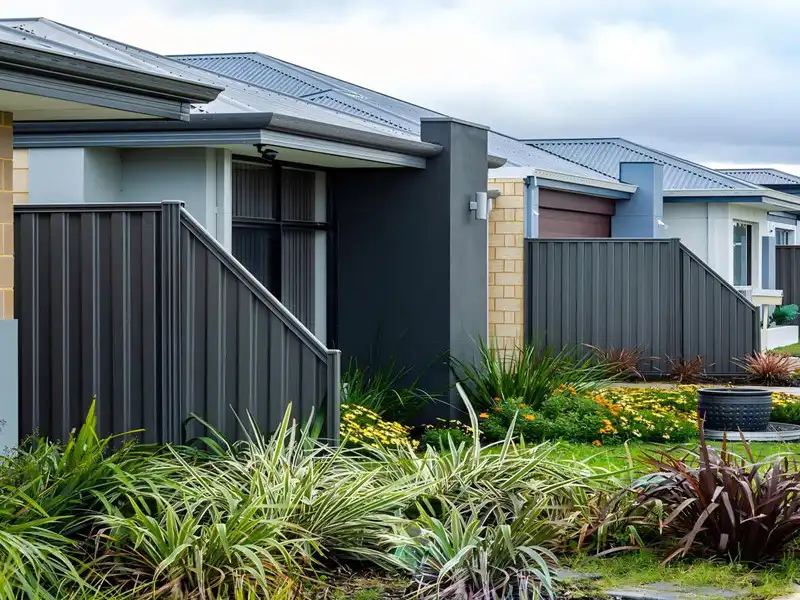
A corrugated metal fence is a practical option when you need privacy, durability and a clean architectural look without the maintenance required by timber fencing. But choosing the right system involves more than selecting a color and ordering a stack of steel sheets.
Panel thickness, rib profile, posts, rails, coating and local exposure conditions all affect how the finished fence performs.
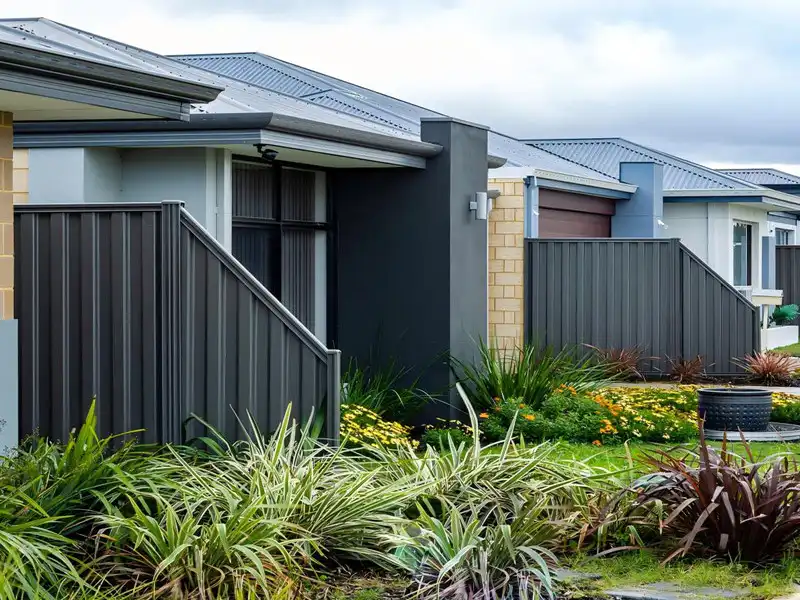
This guide explains how corrugated metal fencing works, how to choose panel specifications, what affects cost, how to reduce corrosion risk and what information to prepare before asking a supplier for a quotation.
What Is a Corrugated Metal Fence?
A corrugated metal fence uses roll-formed metal sheets as the main fence infill.
During roll forming, flat steel or aluminum sheet passes through rollers that create repeated ribs, waves or box-shaped profiles. These profiles increase stiffness without requiring a very thick sheet.
A typical corrugated steel fence system includes:
- Corrugated steel infill panels
- Steel or aluminum posts
- Horizontal rails
- Fasteners
- Post caps
- Top and bottom trims
- Pedestrian or driveway gates where required
For coated steel panels, the material is usually more than a single layer of steel.
A typical structure can include:
Steel substrate → metallic coating → pretreatment → primer → topcoat
This layered construction helps provide both corrosion protection and the final color.
ASTM A653/A653M covers zinc-coated galvanized steel sheet, while ASTM A792/A792M covers steel sheet with a 55% aluminum-zinc alloy coating.
Corrugated panels can be used for:
- Residential boundary fencing
- Privacy fencing
- Commercial properties
- Warehouses
- Agricultural sites
- Equipment enclosures
- Industrial perimeter fencing
Why Choose Corrugated Metal Fencing?
Corrugated fencing is popular because it combines a solid privacy barrier with relatively simple construction.
Low Maintenance
Timber fencing normally requires periodic staining, painting or sealing.
Metal panels do not require this type of routine treatment. Maintenance usually focuses on keeping the surface clean, checking fasteners and repairing significant coating damage before exposed steel begins to corrode.
Full Privacy
Because corrugated metal sheets form a continuous barrier, they can provide much more visual privacy than open tubular, mesh or picket fencing.
This makes them useful for:
- Residential boundaries
- Commercial yards
- Equipment areas
- Waste enclosures
- Storage sites
Good Structural Efficiency
The ribs in a corrugated panel improve stiffness.
That does not mean the panel can work independently of the fence structure. Posts, rails, footing design and post spacing remain important, especially on tall fences or exposed sites.
Wide Range of Finishes
Corrugated steel can be supplied in many colors and finishes.
Dark grey, black and neutral tones are common on modern projects, while green, beige and other colors may be selected to suit landscape or commercial requirements.
Corrugated Metal Fence vs Wood vs Vinyl
There is no single fence material that is best for every project.
The right choice depends on what matters most to you.
| Factor | Corrugated Metal | Wood | Vinyl |
|---|---|---|---|
| Privacy | High | High | High |
| Rot resistance | High | Low | High |
| Insect resistance | High | Low | High |
| Routine maintenance | Low | High | Low |
| Structural rigidity | High with correct framing | Medium | Medium |
| Design options | High | High | Medium |
| Fire performance | Non-combustible metal | Combustible | Can soften or melt |
| Coastal suitability | Depends on coating system | Requires protection | Generally resistant to corrosion |
If your priority is a long-term privacy fence with low routine maintenance, corrugated metal is worth considering.
If natural appearance is the main priority, timber may still be preferable.
The important point is to compare the complete fence system, not just the infill panel.
What Types of Corrugated Fence Panels Are Available?
The profile affects both appearance and stiffness.
Wavy Corrugated Panels
Traditional corrugated panels use rounded, repeating waves.
They are often associated with:
- Rural properties
- Agricultural buildings
- Farm boundaries
- Rustic architectural designs
Their softer profile gives the fence a more traditional appearance.
Shallow Ribbed Panels
Shallow ribs create a flatter surface with less dramatic shadow lines.
They are often used when you want a cleaner, more contemporary appearance.
Typical applications include residential developments, offices and modern commercial boundaries.
Deep-Rib and Box-Rib Panels
Deeper profiles provide stronger visual lines and greater panel stiffness.
They are often considered for:
- Taller fences
- Industrial sites
- Commercial boundaries
- Wind-exposed locations
However, deeper ribs alone do not make a fence suitable for high wind.
The supporting structure still needs to be designed correctly.
| Panel Profile | Appearance | Relative Rigidity | Common Application |
|---|---|---|---|
| Wavy | Traditional | Medium | Rural and residential |
| Shallow rib | Modern | Medium | Residential and commercial |
| Deep rib | Industrial | Higher | Commercial and exposed sites |
How Thick Should Corrugated Metal Fence Panels Be?
This is one of the most common specification questions buyers ask.
Corrugated steel panels can be manufactured in different thicknesses. Depending on the supplier and market, specifications may be expressed in millimeters or gauge.
Common fencing enquiries may involve thicknesses around:
- 0.35 mm
- 0.50 mm
- 0.60 mm
- 0.80 mm
The exact specification should be selected according to the complete fence design rather than assuming that the thickest panel is automatically the best option.
Our Experience: Panel Thickness Is Only One Part of the Fence
When reviewing a corrugated fence enquiry, panel thickness should not be considered in isolation.
We normally need to understand:
- Fence height
- Post spacing
- Wind exposure
- Panel rib profile
- Rail configuration
- Intended application
For example, increasing sheet thickness while keeping widely spaced posts and an inadequate rail structure may not solve the actual structural problem.
For many projects, adjusting the post spacing, rail configuration or panel profile can be just as important as increasing the thickness of the sheet.
This is why a supplier should understand the complete fence system before recommending a specification.
Five Factors to Check Before Choosing Panel Thickness
1. Fence Height
A taller solid fence catches more wind than a short fence.
As height increases, posts, footings and rails usually become more important.
2. Wind Exposure
A sheltered residential boundary and a fence installed in an exposed coastal or open area should not automatically use the same structural configuration.
3. Post Spacing
Closer post spacing can reduce the unsupported span of the fence.
4. Rib Depth
Deeper profiles usually provide greater panel stiffness than very shallow profiles.
5. Application
A residential privacy fence and a commercial perimeter fence may have very different performance requirements.
How to Choose Corrugated Metal Fencing for Different Projects
Residential Privacy Fencing
For residential projects, buyers usually balance:
- Privacy
- Appearance
- Reasonable material thickness
- Easy installation
- Low maintenance
Very heavy industrial specifications are not always necessary.
Commercial Boundaries
Commercial buyers may pay more attention to:
- Structural stability
- Consistent panel dimensions
- Coating durability
- Gate integration
- Repeat supply
- Bulk packaging
If you are purchasing for multiple projects, consistent specifications between production batches can also be important.
High-Wind Locations
For wind-exposed projects, avoid solving the problem by changing sheet thickness alone.
Check the complete system:
- Post section
- Post wall thickness
- Post spacing
- Rail quantity
- Footing design
- Panel profile
- Fastener spacing
Local engineering requirements should take priority where wind loading is regulated.
Will Corrugated Metal Fencing Rust?
Steel can corrode when exposed to moisture and oxygen.
The purpose of metallic coatings and paint systems is to protect the steel substrate and delay that corrosion.
For example, galvanized sheet uses a zinc coating, while aluminum-zinc coated sheet uses an alloy coating designed for corrosion-resistant applications.
ASTM A653/A653M identifies different galvanized coating designations and notes that atmospheric corrosion resistance is related to coating mass.
That is an important point for buyers:
“Galvanized” alone does not tell you everything about corrosion performance.
You should also ask about the coating specification.
How Should Corrugated Metal Fencing Be Specified for Coastal Areas?
A coastal fence is exposed to a different environment from an inland residential fence.
Salt deposits, humidity and frequent wetting can accelerate corrosion if the material system and installation details are unsuitable.
Our Experience: Coastal Corrosion Is a System Problem
When reviewing a coastal corrugated fence project, focusing only on the steel sheet can miss other weak points.
The complete system should be checked, including:
- Metallic coating
- Paint system
- Cut edges
- Screw holes
- Fasteners
- Posts
- Rails
- Bottom clearance
- Drainage around the fence
Customers sometimes ask only:
“Will the steel panel rust?”
A better question is:
“Which parts of the complete fence system are exposed to corrosion, and how are they protected?”
Areas That Need Particular Attention
Cut Edges
Cutting a coated sheet can expose the steel at the edge.
Good fabrication and appropriate finishing reduce unnecessary coating damage.
Screw Holes
Fasteners penetrate the panel and therefore need to be suitable for both the material and environment.
Scratched Areas
Deep scratches that penetrate protective layers should not simply be ignored.
Bottom Edges
Keeping the fence panel away from permanently wet soil or trapped debris helps reduce prolonged moisture exposure.
Fasteners and Connections
A corrosion-resistant panel paired with unsuitable screws or fittings can still create maintenance problems.
Match the Corrosion Protection to the Environment
| Environment | Specification Direction |
|---|---|
| Normal inland location | Standard project-appropriate coated steel |
| Humid environment | Enhanced corrosion protection may be considered |
| Coastal environment | Higher corrosion resistance and suitable fasteners should be evaluated |
| Severe marine exposure | Project-specific material specification is recommended |
Do not select a metallic coating only from a generic online table.
Local exposure conditions, product warranty requirements and supplier recommendations should also be considered.
Vertical or Horizontal Corrugated Metal Fence?
Both orientations can work.
The difference is mainly visual and structural detailing.
Vertical Panels
Vertical corrugated panels create strong upright lines and naturally direct water downward.
They are commonly used where you want the fence to appear taller.
Horizontal Panels
Horizontal installation creates long visual lines that can make a boundary appear wider.
It works well with contemporary architecture.
However, horizontal layouts need proper edge support and framing. Do not rotate a panel simply for appearance without checking whether the framing system supports that orientation.
How Much Does a Corrugated Metal Fence Cost?
There is no reliable universal corrugated metal fence price per meter because the final cost depends heavily on the specification and local installation conditions.
Two fences that look almost identical in a photograph may use completely different materials.
Important cost variables include:
- Panel thickness
- Fence height
- Rib profile
- Metallic coating
- Paint finish
- Post size
- Post spacing
- Rail quantity
- Gates
- Order quantity
- Packaging
- Shipping destination
- Local installation labor
For an imported B2B order, freight and container utilization can also have a significant impact on landed cost.
Why Can Two Corrugated Fence Quotes Be Very Different?
Price comparisons become misleading when specifications are incomplete.
Imagine Supplier A quotes a lower price than Supplier B.
Before concluding that Supplier B is expensive, compare:
A lower price per panel does not necessarily mean a lower price for an equivalent fence system.
For contractors, wholesalers and developers, asking suppliers to quote against the same specification makes comparison much easier.
What Information Should You Prepare Before Requesting a Quote?
This is where many fencing enquiries slow down.
Our Experience: “I Need 500 Meters of Fence” Is Not Enough
A message such as:
“We need 500 meters of corrugated metal fencing. Please send your best price.”
gives the supplier the total length, but leaves most of the price-driving specifications unknown.
Before preparing an accurate quotation, we normally need to clarify the fence configuration.
You can speed up the quotation process by preparing the following information.
10 Specifications to Send Your Fence Supplier
| Information | Example |
|---|---|
| Total fence length | 500 m |
| Fence height | 1.8 m |
| Panel thickness | 0.50 mm |
| Panel profile | Ribbed |
| Post spacing | 2.4 m |
| Post type | Steel post |
| Rail quantity | 2 or 3 rails |
| Color | Charcoal |
| Gates | 2 pedestrian gates |
| Destination | Sydney, Australia |
If you do not know every specification, that is fine.
Provide what you know and explain:
- Project location
- Application
- Fence height
- Total length
A manufacturer can then help identify which technical details still need to be confirmed.
How to Install a Corrugated Metal Fence
Installation varies by fence design and local conditions, but the basic sequence is similar.
Step 1: Mark the Fence Line
Confirm:
- Property boundary
- Fence length
- Gate positions
- Corners
- Changes in ground level
Check for underground services before excavation.
Step 2: Install the Posts
Set the posts according to the required spacing.
Post depth and footing dimensions should be determined by factors such as:
- Fence height
- Soil conditions
- Wind exposure
- Local frost depth
- Local building requirements
Avoid treating one universal post depth as suitable for every site.
Step 3: Install the Rails
Fit horizontal rails between the posts.
Check that the frame is:
- Plumb
- Level
- Correctly spaced
- Properly fixed
Step 4: Position the Panels
Place the corrugated sheets onto the supporting frame.
Check alignment carefully before fixing the complete run.
Step 5: Fasten the Panels
Use appropriate self-drilling or self-tapping fasteners and washers as specified for the system.
Avoid over-tightening screws, which can deform the sheet or damage protective coatings.
Step 6: Install Caps and Trims
Finish the fence with appropriate:
- Post caps
- Top trims
- Bottom trims
- Corner details
These parts improve appearance and help protect exposed edges.
Six Common Corrugated Fence Installation Mistakes
1. Spacing Posts Too Far Apart
Solid panels catch wind.
Excessive spacing increases load on the rails, posts and connections.
2. Selecting the Fence Only by Panel Thickness
A thick sheet cannot compensate for an inadequate frame.
Consider the entire system.
3. Allowing Panels to Sit in Wet Soil
Constant moisture and trapped debris around the bottom edge can increase corrosion risk.
4. Using Unsuitable Fasteners
Fasteners should suit both the fence material and the installation environment.
This becomes particularly important in coastal locations.
5. Over-Tightening Screws
Excessive torque can damage the sheet, washer or coating around the fastener.
6. Ignoring Wind Exposure
A privacy fence behaves like a large solid surface in the wind.
High-wind projects require more attention to posts, spacing, footings and rails than a sheltered fence.
How to Maintain Corrugated Metal Fencing
Corrugated fencing is relatively low maintenance, but low maintenance does not mean zero maintenance.
Every 6–12 Months
Check:
- Dirt buildup
- Loose fasteners
- Scratches
- Damaged paint
- Debris around the bottom of the panels
After Severe Weather
Inspect:
- Panel movement
- Post alignment
- Rail connections
- Loose screws
- Gate alignment
In Coastal Areas
Salt deposits should be removed more frequently where necessary.
Rinsing exposed surfaces with clean water can help prevent salt and dirt from remaining on the coating for long periods.
Always follow the maintenance recommendations for the specific coating system supplied.
Is Corrugated Metal Fencing Right for Your Project?
Use this quick comparison before deciding.
| Requirement | Corrugated Metal Fence |
|---|---|
| Full privacy | Very suitable |
| Low routine maintenance | Very suitable |
| Modern appearance | Very suitable |
| Commercial boundary | Suitable |
| Coastal environment | Suitable with correct material system |
| High-wind environment | Requires appropriate structural design |
| Lowest possible upfront cost | Not always |
| Custom colors | Suitable |
| Bulk project supply | Suitable |
A corrugated metal fence makes the most sense when you value privacy, low routine maintenance, consistent appearance and a durable metal fence system.
Frequently Asked Questions
How long does a corrugated metal fence last?
There is no single lifespan that applies to every corrugated fence.
Service life depends on the steel substrate, metallic coating, paint system, exposure environment, installation quality and maintenance.
Be cautious with any supplier promising one lifespan figure for every climate and specification.
What thickness is best for corrugated metal fencing?
There is no universal best thickness.
The correct specification depends on fence height, profile, post spacing, rail configuration, wind conditions and project application.
Does corrugated metal fencing rust?
Steel can corrode if protective systems are damaged or unsuitable for the environment.
Metallic coatings, pretreatment and paint systems help protect the steel substrate.
Can corrugated metal fencing be used near the coast?
Yes, but material selection needs more attention.
The panel coating, fasteners, posts, rails, cut edges and maintenance plan should all be considered.
Is corrugated metal fencing cheaper than wood?
It depends on your location, material specification and installation labor.
Do not compare only the initial panel price. Maintenance and replacement over the life of the fence also affect total ownership cost.
Should corrugated fence panels run vertically or horizontally?
Both options are possible.
Vertical panels emphasize height and drainage, while horizontal panels create a wider visual appearance. The supporting frame should be designed for the selected orientation.
How far apart should corrugated fence posts be?
Post spacing depends on fence height, wind exposure, post section, rail system and panel specification.
Use the fence supplier’s system requirements or project engineering rather than applying one spacing to every project.
What information is needed for a corrugated fence quotation?
At minimum, provide:
- Total length
- Fence height
- Project location
- Application
For a more accurate quotation, also provide panel thickness, profile, posts, rails, color, gate quantities and destination.
Buying Corrugated Metal Fence Panels for Wholesale or Project Use
For contractors, fencing distributors and project buyers, the most important step is to define the fence as a complete system.
JZH Fence supplies fencing products for overseas wholesale, contractor and project applications.
Depending on the project requirements, corrugated fencing specifications can include:
- Custom panel dimensions
- Different panel thicknesses
- Steel posts and rails
- Matching gates
- Different surface finishes
- Color customization
- OEM/ODM production
- Export packaging
- Drawing and specification support
If you are also comparing similar steel fencing systems, you can read our guide to Colorbond-style fencing cost and installation for another example of how steel panels, posts and accessories work together as a complete fence system.
Conclusion
When choosing a corrugated metal fence, do not make the decision based only on panel price or sheet thickness.
Look at the complete combination of:
panel thickness + profile + posts + rails + coating + environment + installation
That approach makes it easier to compare suppliers, avoid specification gaps and select a fence system that fits the actual project.
If you are sourcing corrugated metal fence panels for a commercial project, wholesale order or distribution business, send us your fence height, total length, preferred color, project location and any drawings you already have.
We can review the information, identify the specifications that still need to be confirmed and prepare a project quotation.