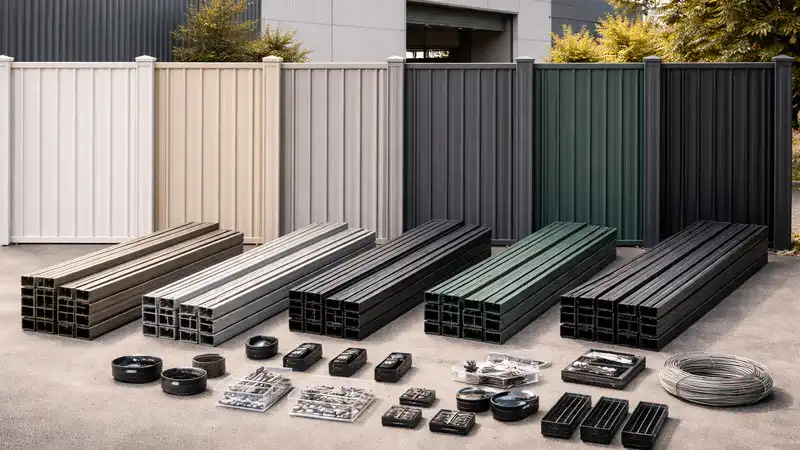
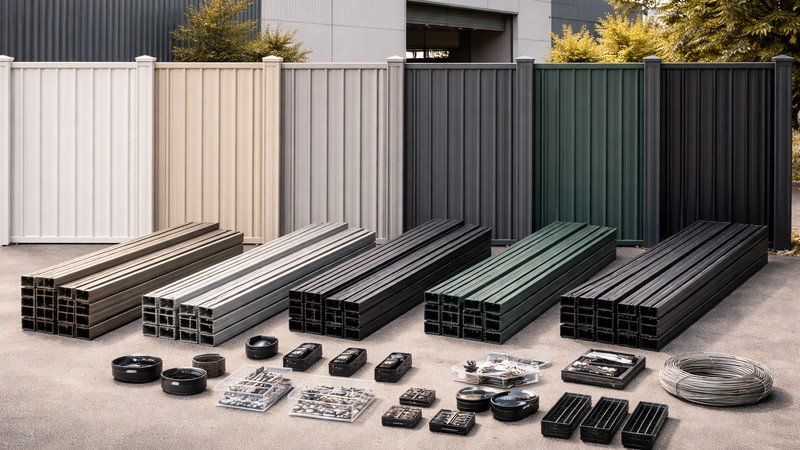
Choosing the right Colorbond fence posts is not simply a matter of selecting the thickest steel or the longest post available. Post length, wall thickness, panel thickness, rail configuration and installation method all need to work together as one fencing system.
For wholesalers, fencing contractors and project buyers, getting these details wrong can lead to difficult installation, wasted material or avoidable replacement costs. If you are sourcing the complete system rather than posts alone, you can also compare JZH Fence’s Colorbond-style fence panels and complete fencing systems before confirming your specifications.
At JZH Fence, many of the specifications we recommend today come from actual production, export and installation feedback. This guide explains the common sizes we supply, how we calculate post length, what thicknesses buyers usually choose, and two product improvements we made after real customer projects.
Product terminology: In this article, “Colorbond fence posts” refers to posts used with Colorbond-style pre-painted steel fencing systems. COLORBOND® is a registered trademark of BlueScope Steel Limited. Buyers should confirm the steel brand, coating, thickness and complete specification stated in each quotation.
Quick Overview: Common Colorbond Fence Post Specifications
If you are comparing suppliers or preparing a quotation, these are the specifications we are most often asked to confirm.
| Item | Common Specification | JZH Production / Project Experience |
|---|---|---|
| Steel infill sheet thickness | 0.35mm / 0.5mm | Approx. 0.35–0.8mm available |
| Custom sheet thickness | 0.42–0.45mm | Available according to order requirements |
| Common post section | 42 × 70mm | 4270 series |
| Post wall thickness | 0.8–1.0mm | Up to approximately 1.2mm available |
| 1.5m fence | Approx. 2.1m post | Based on about 600mm embedment |
| 1.8m fence | Approx. 2.4m post | Common project combination |
| 2.1m fence | Approx. 2.7m post | Common project combination |
| Rails for 1.8m fence | 2 rails | Usually top and bottom |
| Post cap | TPU option available | Designed for better installation tolerance |
These figures are useful starting points rather than universal engineering rules. Soil, wind exposure, fence height, installation method and local requirements can change the final specification.
For buyers sourcing other steel perimeter systems at the same time, you can also review our steel fence solutions for wholesale and project applications.
Why Colorbond Fence Post Specifications Matter
A fence post carries much more responsibility than simply holding an infill sheet upright.
A complete steel fence depends on several parts working together:
- Post length and embedment
- Post wall thickness
- Steel sheet thickness
- Top and bottom rails
- Post spacing
- Ground conditions
- Connections and accessories
- Gates, corners and changes in direction
For this reason, we normally recommend confirming the fence as a complete system instead of buying posts only by nominal size.
A 1.0mm post, for example, does not automatically make every fence suitable for a high-wind project. The post length, footing, spacing, panel height and installation environment also matter.
How Do You Calculate the Correct Colorbond Fence Post Length?
One of the most common questions we receive is:
“If my fence is 1.8 metres high, what length of post should I order?”
For many standard projects, we start with a simple calculation:
Post length = fence height above ground + required embedment
A commonly used project estimate is approximately 600mm of post below ground, although actual footing depth must be confirmed according to site conditions.
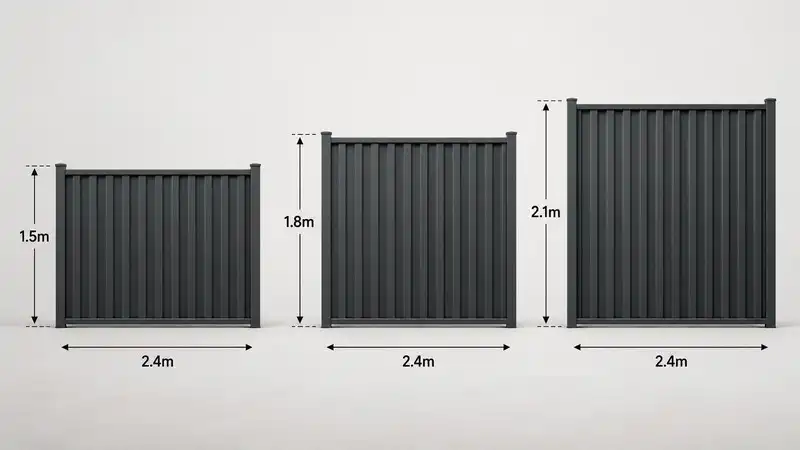
| Fence Height Above Ground | Typical Working Estimate for Embedment | Approximate Post Length |
|---|---|---|
| 1.5m | 600mm | 2.1m |
| 1.8m | 600mm | 2.4m |
| 2.1m | 600mm | 2.7m |
So for a typical 1.8m Colorbond-style fence, a 2.4m post is a common combination.
For a 2.1m fence, the corresponding post length is often around 2.7m.
However, do not use the 600mm figure automatically for every site. Loose soil, exposed locations, taller fencing and unusual ground conditions can require a different footing design.
This is why project location and installation conditions should be confirmed before production.
What Steel Sheet Thickness Should You Choose?
Another common source of confusion is steel sheet thickness.
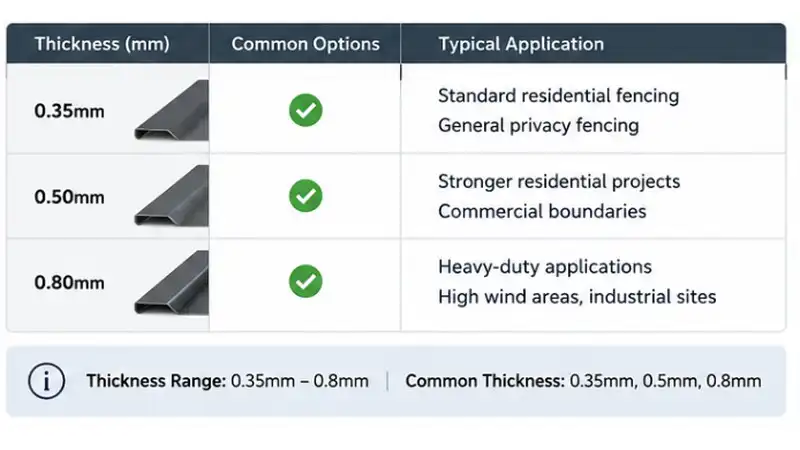
For the Colorbond-style steel fencing we manufacture, two common options are:
0.35mm and 0.5mm
Our production range can cover approximately:
0.35mm to 0.8mm
For projects requiring an intermediate specification, thicknesses around 0.42–0.45mm can also be produced according to the confirmed order.
The thickest material is not automatically the best purchasing decision.
You should consider:
- Target market
- Project specification
- Fence height
- Wind exposure
- Required rigidity
- Budget
- Expected order volume
For distributors, this matters because adding unnecessary material thickness increases product cost and container weight without always creating a meaningful benefit for the intended application.
When comparing quotations from different suppliers, also confirm how the thickness is defined in the specification sheet. Do not compare two thickness numbers until you know that both suppliers are measuring them on the same basis.
Common Colorbond Fence Post Section and Wall Thickness
42 × 70mm Post Section
One of our commonly supplied sections is:
42mm × 70mm, often referred to internally as the 4270 series.
Unlike post length, which can normally be cut according to the order, the post cross-section depends on the production tooling.
That means buyers should not assume that the width of a roll-formed post can be changed freely.
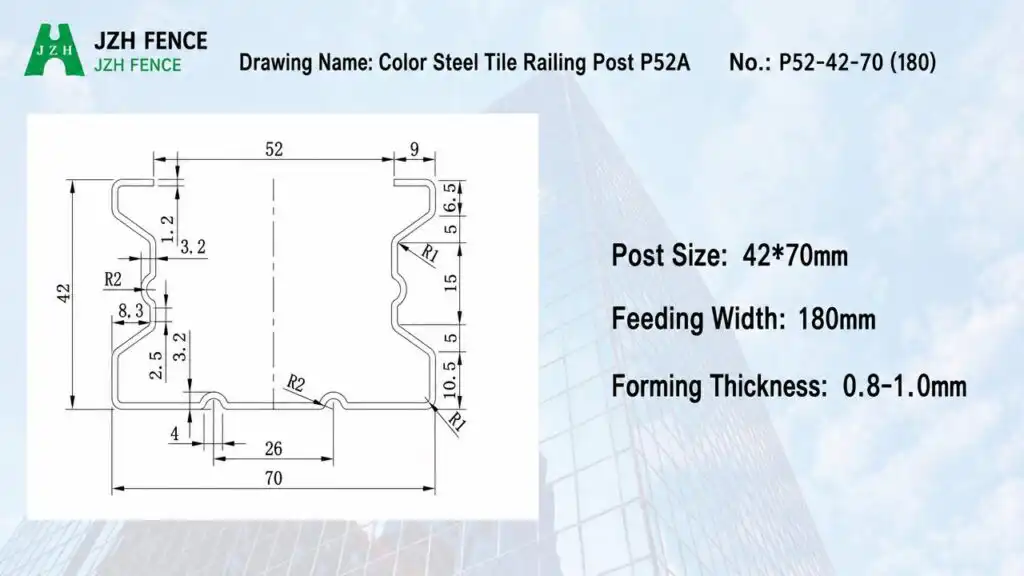
If your existing fence system already uses a specific rail, cap or panel connection, send us the drawing before ordering. It is much safer to check compatibility before production than to adjust accessories after the container arrives.
What Post Wall Thickness Is Common?
For our Colorbond-style fence posts, the common wall-thickness range is:
0.8–1.0mm
We can produce heavier options of approximately 1.2mm for suitable requirements, but 1.0mm is one of the more commonly requested specifications in our current orders.
Again, heavier does not always mean better.
The correct choice depends on fence height, spacing, structural requirements and project cost.
What About P52 Posts?
We also encounter P52-type specifications, but they are not our main recommended product.
From our current order experience, this section has mainly appeared in occasional Canadian requirements. Its manufacturing cost is higher, while demand is much lower than for the 42 × 70mm series.
For standard distributor and project orders, the 4270 series is therefore usually the more practical place to start unless the customer already has a system that specifically requires P52.
How Many Rails Does a 1.8m Colorbond Fence Need?
For a standard 1.8m-high Colorbond-style fence, the usual configuration is:
2 horizontal rails
Typically:
one top rail + one bottom rail
There is usually no need to add additional rails simply because the fence is 1.8m high.
The configuration may change when decorative components are added at the top of the fence. For example, if a project uses an additional decorative panel or lattice section, another structural component may be required depending on the final drawing.
For B2B orders, it is better to confirm the complete panel assembly before calculating rail quantities.
Otherwise, a small misunderstanding multiplied across several hundred fence bays can create a significant shortage at the installation site.
Post Spacing and Installation Details Buyers Often Miss
Small differences in the connection between two posts can affect both installation and material cost.
Back-to-Back Installation
When two compatible steel post components are installed back to back, our preferred arrangement is normally to keep them tightly fitted without an unnecessary gap.
This provides a cleaner connection and avoids adding material that the project does not need.
Installation With Square-Tube Infill
If a square tube is used between the post components, the assembly may require approximately:
50–65mm of reserved space
depending on the confirmed system.
However, this increases both material use and cost.
In many of the projects we handle, customers therefore prefer a closer steel-component connection where the system allows it.
The final assembly drawing should always take priority over a general spacing recommendation.
For projects involving sloping ground, gaps below the panel or changes in ground level, our guide to Colorbond fence plinths, sleepers and retaining applications explains what should be checked before selecting the bottom structure.
What We Learned From Installation: Why We Upgraded Our Post Caps to TPU
A post cap looks like a very small component in a complete fence order.
In practice, it can create an unexpected installation problem.
The Problem We Found on Site
Drawings are precise.
Construction sites are not always precise.
During real installation, it is difficult to guarantee that every fence post will be perfectly vertical and every connecting component will align with zero deviation.
We found that some installations could have approximately 5–10mm of gap or positional variation.
Our earlier hard-plastic post caps had relatively little flexibility. When the posts were not aligned perfectly, installers had less tolerance when fitting the cap.
That made a simple accessory harder to install than it needed to be.
Why We Changed to TPU
To solve this problem, we changed the post-cap material to TPU — thermoplastic polyurethane for suitable configurations.
The important improvement is not simply that TPU is a different type of plastic.
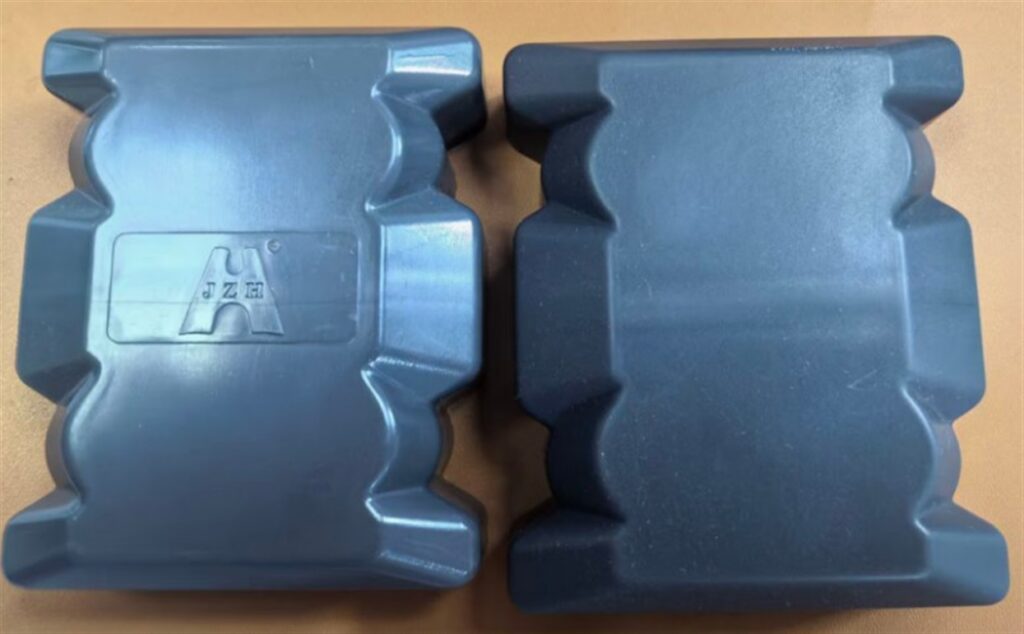
It provides greater elasticity and installation tolerance.
When there is a small amount of site deviation, the cap can adapt more easily instead of requiring every connected component to be positioned with near-perfect accuracy.
What Changed After the Upgrade?
The TPU design helped us improve:
- Installation tolerance
- Fitting convenience
- Adaptability to small site deviations
- Installation efficiency
This is a good example of why we do not evaluate fencing accessories only from drawings.
A component can look correct in production but still need improvement after installers begin using it in real site conditions.
For buyers developing their own private-label fence systems, installation feedback should therefore be part of product development, not just an after-sales issue.
Steel Grade, Coating and Performance Around Concrete
Post dimensions are only one part of service life.
The steel substrate, metallic coating, paint system and installation environment also need to be confirmed.
For posts that will be installed into concrete, you should pay particular attention to how the post material is specified.
According to official COLORBOND guidance on fence posts installed in concrete, fence posts use a different metallic coating beneath the paint from other parts of the fence and are suitable for concrete immersion. The same guidance warns that concrete should not contact the rails or infill sheets, because this may adversely affect their performance.
For project orders, we therefore recommend confirming:
- Which component is embedded
- Coating specification
- Concrete level
- Cut-edge position
- Drainage
- Site environment
- Coastal or inland exposure
The quotation and production drawing should then reflect the confirmed application.
Buy the Post as Part of a Complete Fence System
A post does not work alone.
A complete Colorbond-style steel fence may include:
| Component | What Needs to Be Confirmed |
|---|---|
| Infill sheets | Thickness, profile, colour and coating |
| Posts | Section, length and wall thickness |
| Rails | Profile, length and quantity |
| Post caps | Size and material |
| Screws / connectors | Quantity and compatibility |
| Gates | Opening size, frame and hardware |
| Plinths | Dimensions and ground-level requirements |
| Packaging | Pallet structure and loading method |
Buying these components from unrelated sources without checking dimensions can save a small amount at the purchasing stage but create much larger compatibility problems on site.
This is particularly important for wholesalers who plan to stock replacement components.
If your post, rail and cap systems remain consistent across batches, repeat orders become much easier to manage.
If you are still deciding between panel specifications, installation configurations and overall project cost, see our Colorbond-style fencing cost and installation guide for the wider system-level considerations.
What We Learned From an Australian Customer: Why We Changed Our Export Pallet
Product quality does not end when production is finished.
For an export order, the product still needs to survive factory handling, container loading, sea transport, unloading and inland delivery.
One of our Australian customer cases changed the way we think about packaging.
The Initial Packaging Problem
A long-term customer in Canberra purchased fencing in 1.5m and 1.8m heights.
Our earlier shipments used a steel pallet.
The pallet itself was strong, but strength alone was not the real issue.
Because the load was not distributed evenly enough across the packed fence products, some goods suffered serious compression damage during transportation.
For the customer, it did not matter that the products had passed inspection before leaving the factory.
They arrived damaged.
Instead of simply adding more straps or using more steel, we changed the pallet material and support method.
So from the buyer’s perspective, it was still a product-quality problem.
Our Solution: Change the Way the Load Was Supported
The packaging was upgraded from:
steel pallet → plywood pallet
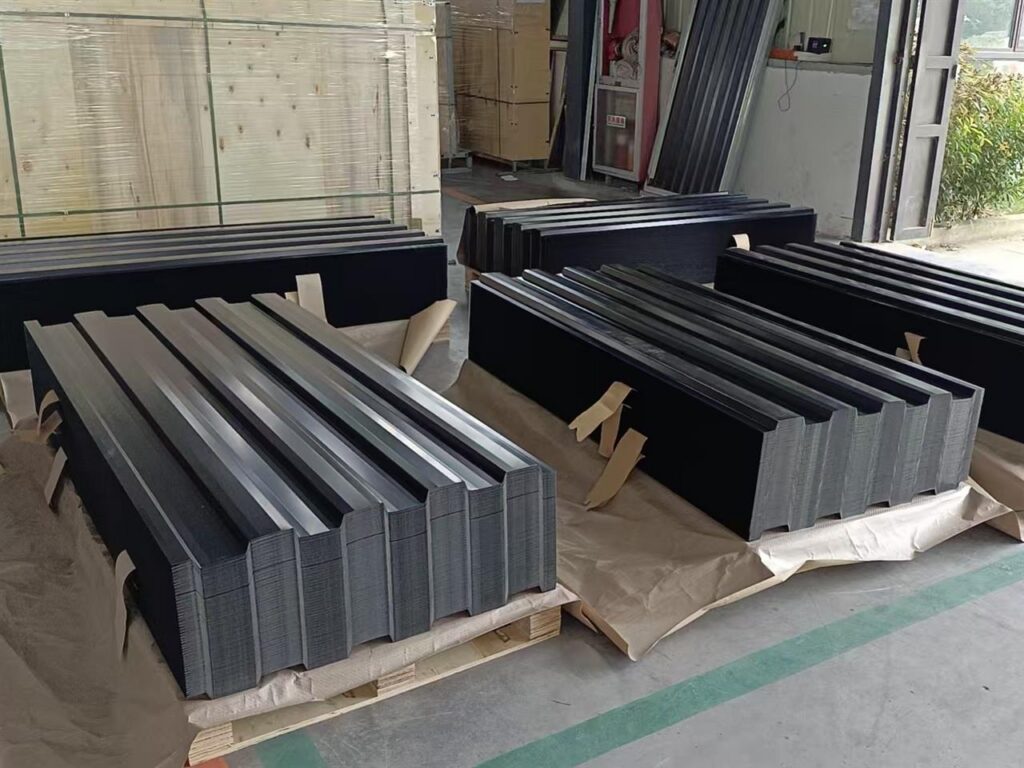
The purpose was to improve the way the load was distributed across the packed products.
This reduced concentrated pressure during handling and transportation.
What Happened After the Packaging Upgrade?
After adopting the revised plywood pallet arrangement, we did not encounter the same compression-damage problem again for this customer.
The change also removed one of the customer’s main concerns about repeat shipments.
This experience gave us an important lesson:
For bulk fencing orders, packaging engineering is part of product quality.
A stronger pallet is not necessarily a better pallet.
The more important questions are:
Where is the load carried? How is pressure distributed? How will the package behave during loading, sea transport and unloading?
These questions matter even more for distributors ordering full containers rather than small sample quantities.
How We Plan Packaging for Colorbond-Style Fence Posts
After experiences like the Canberra shipment, we pay more attention to the complete loading condition instead of treating packaging as an afterthought.
Before finalising bulk-order packaging, factors may include:
product length, pallet support, weight distribution, strapping position, edge protection, forklift handling and container loading arrangement.
Different orders can require different solutions.
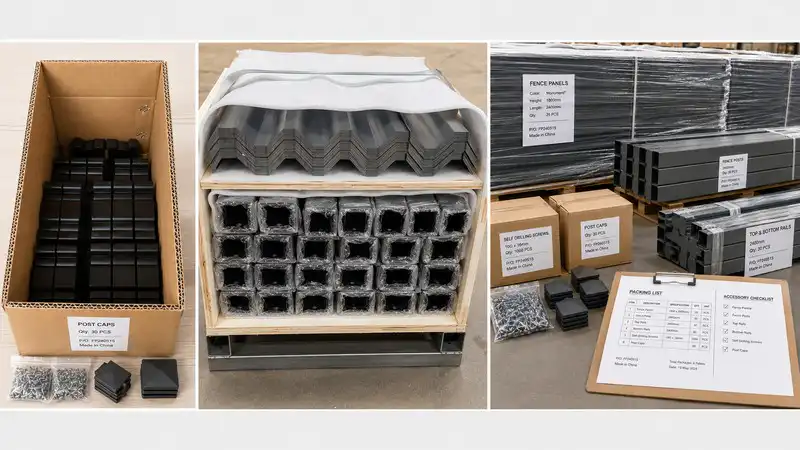
For example, a shipment containing only standard posts is different from a mixed container containing:
- Fence sheets
- Posts
- Rails
- Gates
- Accessories
For mixed loading, package dimensions and unloading order also matter.
If you are a distributor with specific warehouse equipment or unloading restrictions, tell the supplier before packaging is confirmed.
That information can affect how the pallets should be designed.
Custom Colorbond Fence Posts for Wholesale and Project Orders
For wholesale and project buyers, we can adjust many parts of the fence system according to the confirmed specification.
Typical requirements include:
post length, wall thickness, steel sheet thickness, colour, rail configuration, gates and related accessories.
However, not every dimension should be described as “fully customizable.”
For example, post cross-sections such as the 42 × 70mm profile are tooling-dependent.
If you need a non-standard cross-section, the feasibility and tooling requirement need to be evaluated separately.
This distinction is important for B2B buyers.
A good supplier should tell you which parameters can be changed easily and which changes affect tooling, production cost or MOQ.
What Should You Send Before Requesting a Quote?
The fastest way to get an accurate quotation is to provide enough information for the supplier to understand the complete system.
For a Colorbond-style fencing project, we recommend sending:
- Project country and location
- Total fence length or required quantity
- Fence height
- Required post length
- Post section and wall thickness
- Infill sheet thickness
- Colour
- Post spacing
- Rail configuration
- Gate quantity and dimensions
- Installation method
- Coastal, inland or other special environment
- Packaging or unloading requirements
- Existing drawings or reference samples
If you do not know every specification yet, send the project layout first.
We can use the drawing to identify which dimensions still need to be confirmed before production.
Frequently Asked Questions
What Size Post Is Normally Used for a 1.8m Fence?
For many standard projects, a 2.4m post is a common starting point.
The basic calculation is:
1.8m above ground + approximately 600mm embedment = approximately 2.4m
Actual footing depth should still be confirmed according to soil, wind and project requirements.
What Is the Common Wall Thickness for Colorbond-Style Fence Posts?
In our current production and order experience, 0.8–1.0mm is a common range.
We can also produce heavier specifications up to approximately 1.2mm where required.
What Is the Common Steel Sheet Thickness?
Common options include 0.35mm and 0.5mm.
Our manufacturing range can extend from approximately 0.35mm to 0.8mm, while intermediate specifications such as 0.42–0.45mm can also be produced according to the order.
Is a Thicker Fence Post Always Better?
No.
Thickness needs to be considered together with post length, spacing, fence height, footing design, wind exposure and cost.
Using more steel than the application requires can increase purchasing and freight costs without necessarily solving the main structural issue.
How Many Rails Are Normally Used for a 1.8m Fence?
A standard 1.8m Colorbond-style fence usually uses two rails — one at the top and one at the bottom.
Additional decorative sections may change the configuration.
Why Does JZH Use TPU for Some Post Caps?
We introduced TPU to provide better flexibility when real installation conditions create small alignment differences.
During site installation, we have seen approximately 5–10mm of deviation or gap in some assemblies. A more flexible TPU cap provides more installation tolerance than the original rigid-plastic version.
Why Does Export Pallet Design Matter?
Long fence components can experience concentrated pressure and movement during loading and transportation.
In one Canberra customer order, changing from a steel pallet to a plywood pallet with better load distribution eliminated the compression-damage problem we had previously encountered.
For that reason, we treat packaging design as part of the delivery specification for bulk orders.
Final Check Before Ordering Colorbond Fence Posts
When comparing Colorbond fence posts, do not make your decision from post thickness alone.
Confirm the complete combination of:
sheet thickness + post section + post wall thickness + post length + embedment + rails + accessories + installation method + packaging
These details determine whether the system is easy to install and whether it arrives ready for the project.
At JZH Fence, we manufacture Colorbond-style steel fencing systems for wholesalers, distributors, fencing contractors and project buyers. We can supply coordinated posts, infill sheets, rails, post caps, gates and accessories according to confirmed project specifications.
If you are preparing a new order, send us your fence height, total quantity, required specifications and project location.
Request a quote, ask for product drawings, or contact JZH Fence to confirm the right post and complete fencing system for your project.