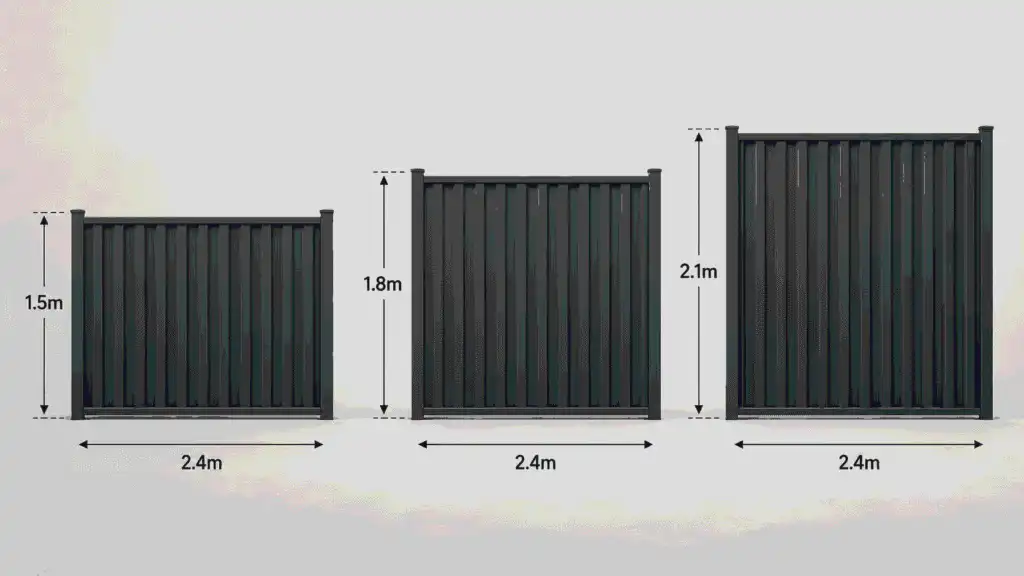
Choosing the right standard Colorbond fence height is not simply a matter of selecting a 1.5m, 1.8m, or 2.1m panel. The finished height can affect privacy, local compliance, post length, material thickness, rail configuration, and installation requirements.
For Australian residential projects, 1.8m is one of the most commonly requested boundary fence heights, especially for side and rear boundaries. However, there is no single height rule that applies to every property or council area.
This guide explains the most common Colorbond fence heights, where each size is typically used, what specifications change when the fence becomes taller, and what B2B buyers should confirm before placing an order.
What Is the Standard Colorbond Fence Height?
Common Colorbond fence heights include 1.2m, 1.5m, 1.8m, and 2.1m.
Among these sizes, 1.8m is one of the most common choices for residential privacy fencing in Australia. Lower heights are often used where full privacy is not required, while 2.1m and taller systems are usually selected for projects requiring additional screening or custom specifications.
| Fence Height | Typical Application | Buying Consideration |
|---|---|---|
| 1200 mm | Garden dividers, low boundaries, selected front areas | Limited privacy |
| 1500 mm | Medium-privacy boundaries, front returns | Balance between visibility and screening |
| 1800 mm | Residential side and rear boundaries | One of the most common Australian sizes |
| 2100 mm | Higher privacy requirements | Local height rules should be checked |
| 2400 mm+ | Commercial, industrial, custom projects | Usually requires project-specific specifications |
The key point is simple: panel availability does not automatically mean that the height is permitted on every site.
Before ordering, you should consider the fence location, local planning requirements, ground levels, retaining walls, wind exposure, and installation method.
If you are sourcing a complete system rather than panels only, see our guide to Colorbond-style fence panels for the posts, rails, caps, fixings, gates, and other components you should confirm before ordering.
Which Colorbond Fence Height Should You Choose?
The best Colorbond fence height depends on what the fence needs to achieve.
Privacy is important, but it should not be the only factor. You should also consider the fence position, neighbouring properties, ground conditions, local rules, wind exposure, and the complete post-and-rail specification.
1.2m to 1.5m for Lower Boundaries
A 1.2m or 1.5m Colorbond-style fence can suit areas where full visual privacy is not required.
Typical applications include internal garden separation, front returns, low property boundaries, equipment screening, and selected commercial areas.
Front boundary requirements can be significantly different from side and rear boundary requirements. This is why you should not assume that one height can be used around the entire property.
1.8m for Residential Privacy
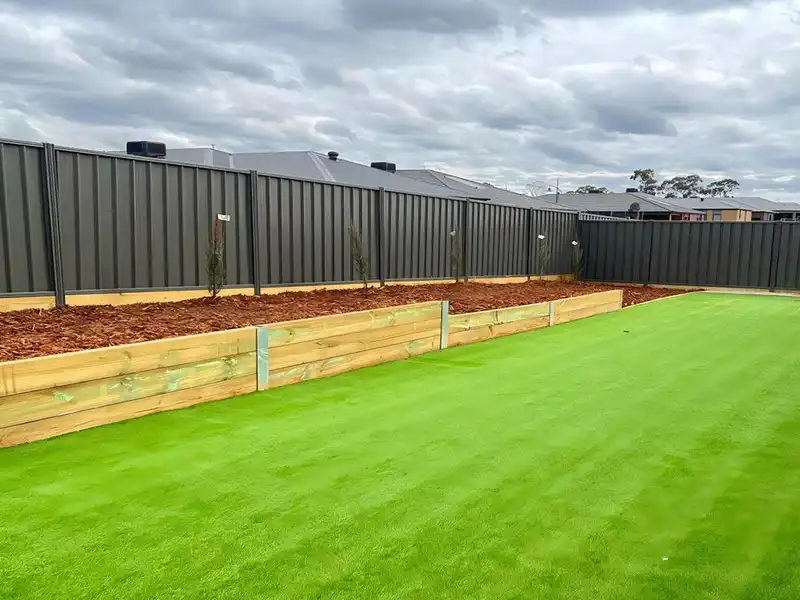
For Australian enquiries we receive, 1.8m is one of the most common residential boundary fence heights.
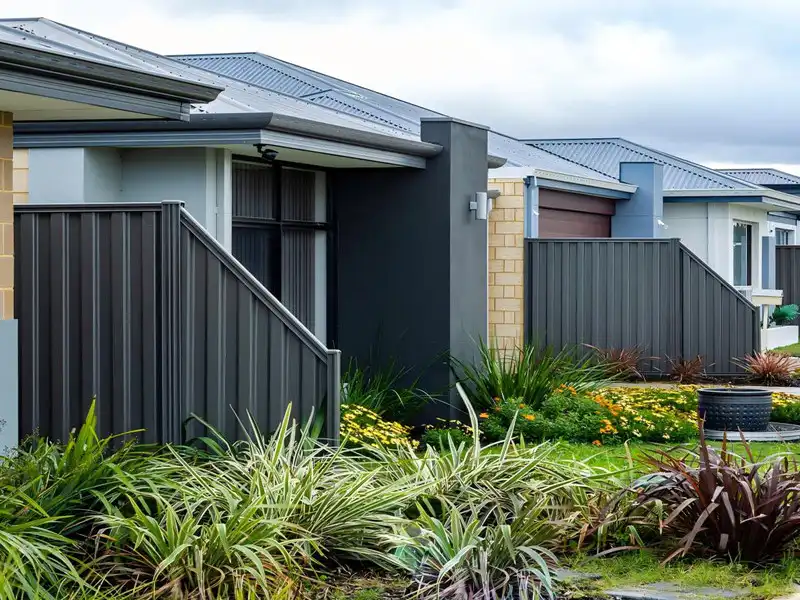
It is frequently selected for side boundaries, rear boundaries, backyard privacy, residential developments, and general property separation.
From a purchasing perspective, 1.8m is also practical because the panels, posts, rails, caps, and accessories can be configured as a complete standard system.
2.1m for Additional Privacy
A 2.1m Colorbond-style fence may be considered where additional screening is needed.
Examples include a neighbouring property sitting at a higher level, a two-storey building overlooking the yard, a boundary facing a public area, or a project specification that calls for a taller fence.
But there is an important distinction:
A manufacturer being able to produce a 2.1m fence does not mean a 2.1m fence is automatically permitted on your site.
Always check the applicable council or project requirements before ordering.
2.4m and Above for Custom Projects
Fence heights of 2.4m and above are better treated as custom or project-specific solutions.
They may be used for commercial sites, industrial boundaries, warehouses, logistics facilities, special privacy projects, and custom export orders.
At these heights, you should not treat the system as simply a standard residential fence with a taller sheet. Posts, rails, foundations, spacing, and site exposure need more attention.
From Our Australian Enquiries: Why Buyers Often Start with 1.8m
One pattern we see in Australian enquiries is that buyers often start with a 1.8m main fence, even when they want additional privacy.
Instead of immediately increasing the entire system to 2.1m or higher, some buyers consider a decorative topper or lattice extension above the main 1.8m fence.
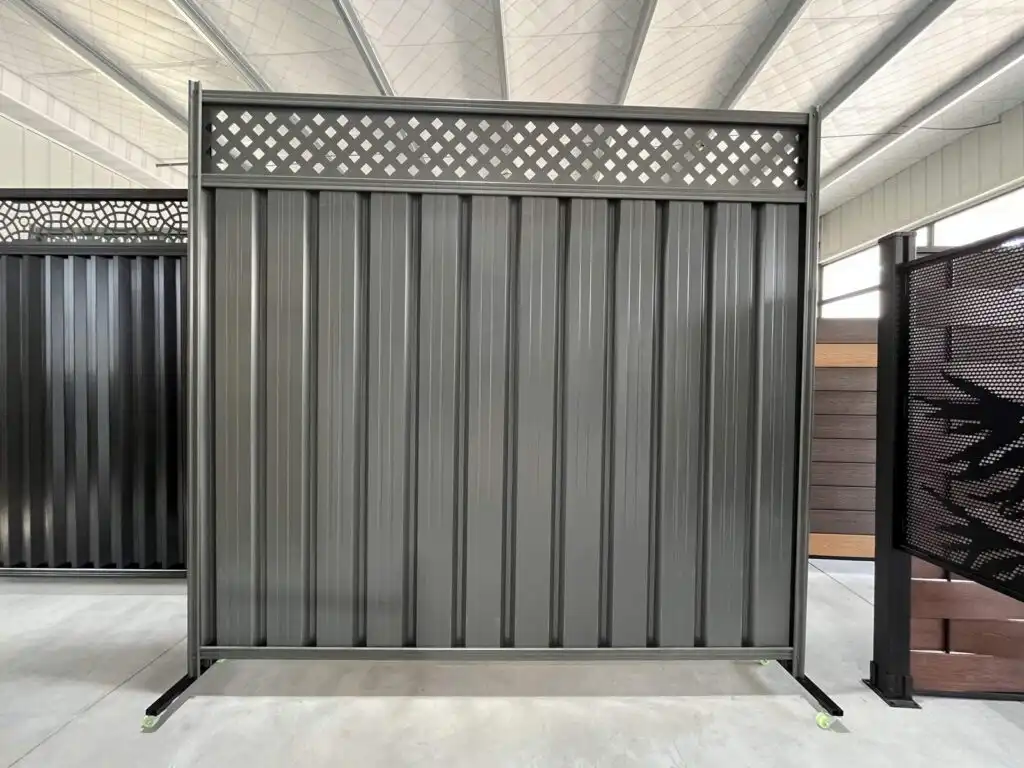
We have recently produced topper samples for this type of Australian application so customers can check the structure and appearance before deciding on the final configuration.
You can also see several topper and privacy design approaches in our guide to modern Colorbond-style fence designs.
However, a topper should never be treated as a way to bypass local height controls.
The combined finished height of the main fence and topper still needs to comply with the applicable planning or council requirements.
Australian Council Rules: Is 1.8m Always Allowed?
No.
Although 1.8m is a common residential fence height in Australia, there is no single rule that makes 1.8m automatically compliant on every property.
Requirements can vary by state, council, zoning, fence position, road frontage, corner-block conditions, retaining walls, and ground level.
For example, the NSW Planning Portal guidance for fences states that, for certain residential zones, side and rear boundary fences must not be higher than 1.8m to qualify as exempt development, while fences along a primary or secondary road boundary are generally limited to 1.2m under those exempt-development rules.
This is why you should separate two questions:
What height can the supplier manufacture?
and
What height is permitted on the project site?
They are not always the same.
Front Fence vs Side and Rear Boundary
One of the first questions you should ask is:
Where will the fence be installed?
Front fences can be affected by vehicle sightlines, pedestrian visibility, driveway access, street appearance, and local planning controls.
The City of Newcastle fence development guidance provides a useful real-world example. It notes that certain lattice extensions or fences erected on top of retaining walls can require development consent when the resulting total height exceeds 1.8m. citeturn451452search0
That is why project location and fence position should be confirmed before production.
Corner Blocks, Retaining Walls and Sloping Sites
Height becomes more complicated when the fence is installed on a retaining wall, sloping land, uneven ground, or a stepped boundary.
In these cases, you need to confirm how the finished height will be measured.
If your project includes a level difference or retaining condition, our Colorbond fence plinth guide explains the additional ground-level and post checks that should be made before ordering.
What Specifications Change When Fence Height Increases?
A taller fence does not only require a longer steel sheet.
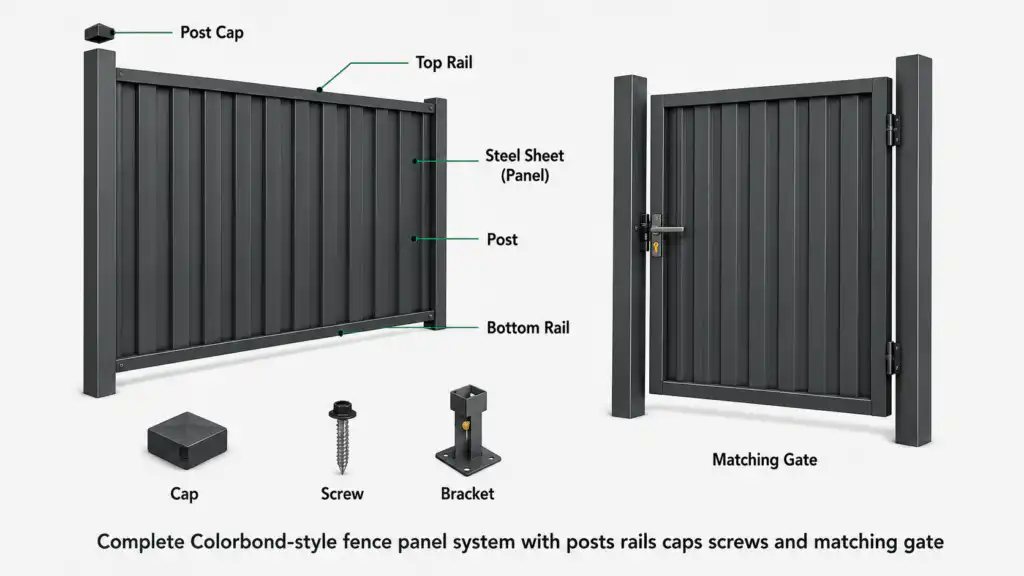
The complete fencing system should be reviewed.
| Specification | Typical JZH Fence Option |
|---|---|
| Steel infill sheet thickness | 0.35–0.8 mm production range |
| Common sheet thickness | 0.35 mm and 0.5 mm |
| Other available thicknesses | 0.42–0.45 mm can be customised |
| Common post section | 42 × 70 mm |
| Common post wall thickness | 0.8–1.0 mm |
| Maximum post wall thickness | Up to 1.2 mm, depending on specification |
| Typical 1.8m fence post length | Around 2.4m |
| Typical 2.1m fence post length | Around 2.7m |
| Standard rails for 1.8m fence | Normally 2 rails |
| Additional topper | May require additional rails or components |
These figures are manufacturing and supply references rather than universal structural requirements.
Final specifications should still be confirmed according to the actual site and project requirements.
From Our Factory: What Really Changes from 1.8m to 2.1m?
One lesson from our production and quotation experience is that increasing a fence from 1.8m to 2.1m is not simply adding 300mm to the infill sheet.
The post length changes as well.
In many of our typical configurations, post length is calculated as:
finished fence height + approximately 600mm embedment
For example:
- A 1.8m fence commonly uses a post around 2.4m long
- A 2.1m fence commonly uses a post around 2.7m long
A common post section we supply is 42 × 70 mm, with wall thickness typically between 0.8mm and 1.0mm. A 1.0mm wall thickness is one of the more common specifications in our current enquiries.
For a standard 1.8m system, two horizontal rails are normally used. If a decorative topper is added, the rail and component configuration may need to change.
The approximately 600mm embedment is a typical supply reference, not a universal footing rule. Actual embedment depth should be checked against site conditions, soil, wind exposure, drawings, and any local engineering requirements.
What Do Buyers Need to Confirm Before Ordering?
Fence height is only one part of a complete quotation.
From our day-to-day B2B enquiries, buyers usually need to confirm five core specification groups.
1. Panel Dimensions
Confirm the finished panel height, panel width, total fence length, and required quantity.
Many enquiries initially provide only total metres and fence height. That is useful, but not enough to define a complete fencing system.
2. Post, Rail and Infill Sheet Specifications
Confirm the dimensions and thicknesses of the posts, rails, and infill sheets.
For posts, both section size and wall thickness matter. For the infill sheet, the buyer should confirm whether the project requires 0.35mm, 0.5mm, or another thickness.
3. Complete Component List
A fence should be purchased as a system, not as an isolated panel.
Depending on the design, the complete set may include infill sheets, posts, top and bottom rails, post caps, fasteners, brackets, decorative toppers, gates, and other accessories.
Confirming the material list before production helps reduce missing-component problems during installation.
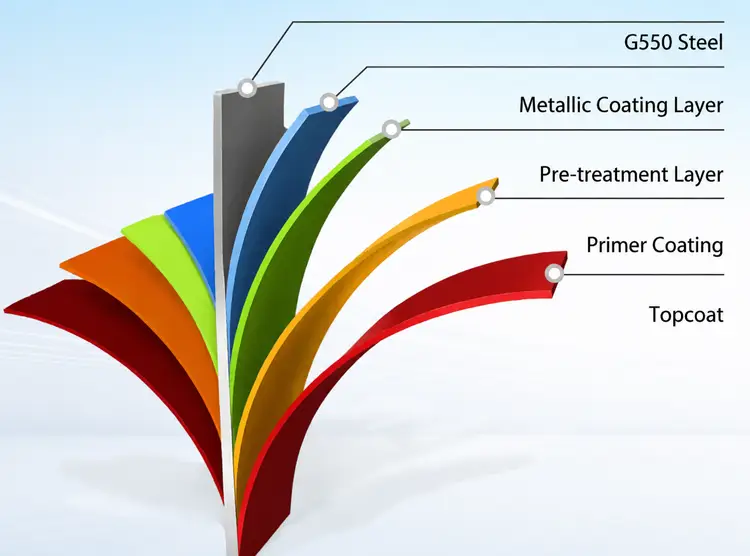
4. Base Steel and Metallic Coating
Buyers often ask whether the steel uses zinc or an aluminium-zinc metallic coating.
For our current Colorbond-style fencing supply, commonly discussed options include AZ60, AZ100, and AZ150, with other specifications available according to the order.
The right choice depends on the project environment, corrosion requirement, and budget.
5. Surface Finishing
It is also important to distinguish how the different components are finished.
In our common production configuration:
- Posts and rails use powder coating
- Steel infill sheets use a pre-painted / roll-coated finish
This matters when you compare colour consistency, corrosion protection, production method, and replacement components.
From Our Sales Enquiries: Height Alone Is Not Enough for a Quote
A common enquiry might look like this:
“We need 500 metres of 1.8m steel fencing.”
That gives us a starting point, but it is not enough for a final quotation.
A more complete B2B enquiry should include:
1.8m finished height + required panel width + post specification + sheet thickness + coating requirement + surface finish + total quantity + project location
This information helps the supplier match the system faster and makes quotations from different suppliers easier to compare.
If you are sourcing a complete steel fencing package, you can also review our steel fence solutions before sending your specification.
Does Fence Height Change the Steel Thickness?
Not automatically.
Fence height is one factor, but steel thickness should not be selected by height alone.
You should also consider project application, wind exposure, site conditions, post spacing, corrosion environment, and any engineering requirements.
Our current production range for steel infill sheets can cover approximately 0.35mm to 0.8mm.
Common specifications include 0.35mm and 0.5mm, while thicknesses such as 0.42mm to 0.45mm can also be produced according to project requirements.
The key buying rule is:
Do not compare fence quotations by height and price alone. Compare the full panel, post, rail, coating, and accessory specification.
Which Coating Should You Choose for Coastal or Corrosive Areas?
Corrosion protection becomes more important when fencing is installed near the coast or in another aggressive environment.
| Environment | Typical Coating Direction |
|---|---|
| General project conditions | AZ60–AZ100 |
| Higher corrosion requirement | Increased metallic coating specification |
| Coastal or more demanding environment | AZ150 or higher can be considered |
Where the buyer has a higher corrosion requirement or sufficient budget, AZ150 or above can be considered.
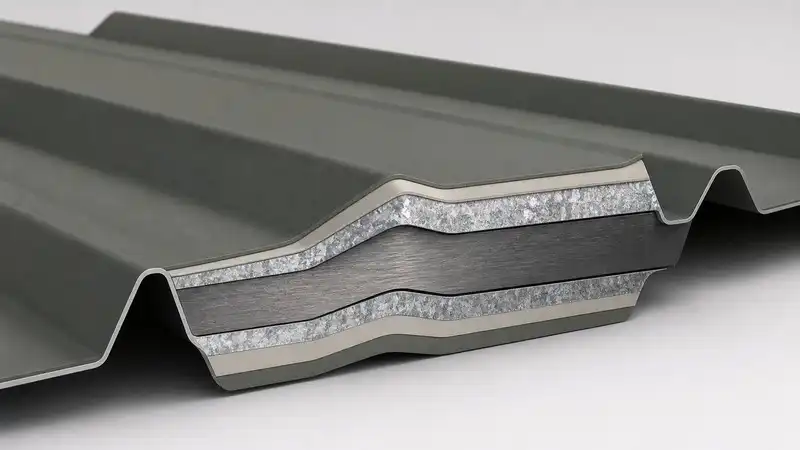
However, the goal is not always to select the highest available coating weight. The better approach is to match the material specification to the project environment and expected service conditions.
We do not recommend making unsupported claims such as “AZ150 will always last a fixed number of years longer.” Actual durability also depends on exposure, surface finish, installation, maintenance, and other environmental factors.
What About Wind Loads on Taller Colorbond-Style Fences?
As fence height increases, the exposed surface area increases as well.
That means wind conditions should be considered when selecting posts, spacing, rails, footings, and installation methods.
JZH Fence does not use one universal wind-load test result to determine every project configuration, and our current Colorbond-style fence system does not have one independent wind-rating report that can be applied to every installation environment.
For exposed or high-wind projects, we therefore ask buyers to provide the project location, installation environment, fence height, ground conditions, drawings, and any local engineering requirements.
If a project requires a mandatory wind rating or engineer-certified structure, that requirement should be confirmed before production.
Standard Fence Height vs Custom Height: What Changes in the Order?
Standard sizes normally simplify purchasing because components can be matched to an established system.
Custom heights require more checks.
A custom-height order can change:
- Sheet length
- Post length
- Rail configuration
- Topper configuration
- Component quantity
- Packaging
- Installation drawings
We also see different height preferences across markets.
Australian residential enquiries frequently focus on 1.8m systems, while North American enquiries can include 1.8m, 2.1m, and 2.4m custom heights.
This reflects our enquiry experience, not a statement that taller fences are automatically permitted in North America. Local zoning and municipal rules still need to be checked.
FAQs
What is the most common Colorbond fence height?
For Australian residential side and rear boundary enquiries, 1.8m is one of the most common fence heights.
However, the permitted height still depends on the property and local requirements.
Can a Colorbond fence be 2.1m high?
Yes. A 2.1m Colorbond-style fence can be manufactured.
But manufacturing availability and planning approval are two different things. Check local requirements before ordering.
Can I add a topper above a 1.8m fence?
Yes. Decorative toppers can provide extra privacy and visual detail.
We have produced topper samples for Australian customers considering this type of configuration. The total finished height, including the topper, still needs to comply with local requirements.
How long should posts be for a 1.8m fence?
In many of our typical configurations, a 1.8m fence uses a post approximately 2.4m long, allowing around 600mm for embedment.
This is a supply reference only. Actual embedment depth should be confirmed according to site and engineering requirements.
How many rails are normally used for a 1.8m fence?
A standard 1.8m Colorbond-style steel fence normally uses two horizontal rails in our common configuration.
If the fence includes a topper or a special structure, the complete rail configuration should be confirmed again.
What steel sheet thickness is available?
Our current production range can cover approximately 0.35mm to 0.8mm.
Common options include 0.35mm and 0.5mm, while specifications such as 0.42mm to 0.45mm can also be customised.
Ordering Custom Colorbond-Style Fence Heights from JZH Fence
For B2B buyers, selecting the right height is only the first step.
JZH Fence supplies complete Colorbond-style steel fencing systems for wholesalers, contractors, distributors, builders, and project buyers.
Available components can include steel fence panels, posts, rails, post caps, decorative toppers, fasteners, accessories, and matching gates.
We can also discuss different fence heights, sheet thicknesses, post thicknesses, metallic coating specifications, surface finishes, and component configurations.
If you already have project drawings or an existing local fencing system, send us the specification so we can check production compatibility.
If you do not yet have a final specification, start with your required fence height, panel size, total quantity, project location, and coating requirement.
That gives us enough information to begin matching the system.
Conclusion
Choosing the right standard Colorbond fence height involves more than deciding between 1.5m, 1.8m, and 2.1m panels.
For many Australian residential enquiries, 1.8m is a common starting point, but local rules, fence position, retaining walls, privacy requirements, and site conditions should still be checked.
For B2B purchasing, height also affects the wider system, including post length, sheet thickness, rails, metallic coating, surface finish, and component configuration.
If you are sourcing Colorbond-style steel fencing for a residential development, distribution business, or commercial project, send JZH Fence your required height, panel dimensions, quantity, project location, and target specification.