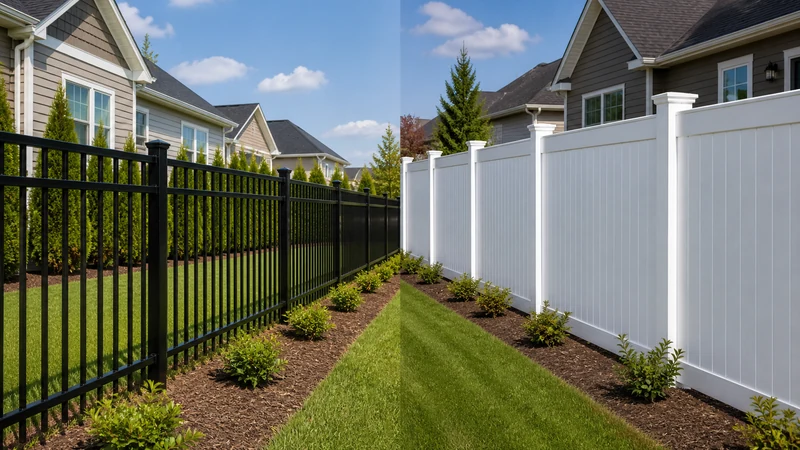
When buyers compare aluminum vs vinyl fence cost, the first question is usually simple: “Which fence has the lower price per panel or per linear foot?”
However, the lowest unit price does not always produce the lowest completed-project cost.
Fence height, total length, gates, post spacing, foundations, wind exposure, privacy requirements, coating, hardware, installation labor, packaging, and freight can all change the final quotation. Maintenance and replacement costs may create an even larger difference over the service life of the fence.
For contractors, developers, distributors, and property managers, the more useful comparison is:
How much will the complete fence system cost to purchase, install, maintain, repair, and eventually replace?
This guide compares aluminum and vinyl fencing from that project-based perspective. Buyers sourcing customized metal fencing can also review JZH Fence’s fence manufacturing and export capabilities.
Quick Answer: Is Aluminum or Vinyl Fencing More Cost-Effective?
Vinyl fencing usually has a lower initial cost, especially when the project requires a standard full-privacy boundary.
Aluminum fencing normally has a higher purchase price, but it can offer lower routine maintenance, stronger architectural value, and better suitability for open-style security, pool, commercial, and exposed-site applications.
The right choice depends on what the project actually needs.
| Decision factor | Vinyl fence | Aluminum fence |
|---|---|---|
| Initial material cost | Usually lower for standard privacy systems | Usually higher |
| Typical appearance | Solid, uniform privacy panels | Open picket, ornamental, slat, or screen designs |
| Privacy | Strong advantage in standard configurations | Requires slats or solid infill for privacy |
| Routine maintenance | Cleaning plus possible panel or component replacement | Periodic cleaning and hardware inspection |
| Wind behavior | Solid panels create greater wind pressure | Open pickets allow more airflow |
| Color options | Commonly white and neutral colors | Black, bronze, charcoal, and custom powder-coated colors |
| Project positioning | Budget-focused privacy | Architectural, security, pool, and long-term applications |
| Best comparison method | Complete system cost | Complete system cost |
There is no universal price that applies to every project. Regional labor rates, fence design, product specifications, site conditions, and installation scope can produce very different results.
1. How Initial Costs Compare
The initial cost of a fence is more than the price of its panels.
A complete quotation may include:
- Fence panels or rails and pickets
- Line, corner, and end posts
- Post caps and brackets
- Concrete foundations or base plates
- Pedestrian and driveway gates
- Hinges, latches, locks, and gate posts
- Powder coating or other finishes
- Installation labor
- Export packaging
- Inland transportation and international freight
This is why comparing one vinyl panel with one aluminum panel can be misleading. The two products may use different panel widths, post spacing, foundation requirements, and gate structures.
Field Insight: What Usually Changes the Final Quote?
In real inquiries or projects, when buyers initially compare only the unit prices of aluminum and PVC fencing, which site conditions or configurations eventually change the complete quotation and material choice?
According to our sales team’s experience, aluminum fencing is usually evaluated and quoted as a complete system, rather than as an isolated panel. The quotation needs to account for panels, posts, gates, hardware, foundations, finish, and project layout.
The most common factors that change the final price are:
- Fence height
- Total fence length
- Number and size of gates
- Corner and end-post quantities
- Soil or foundation conditions
- Required privacy level
- Local wind-load requirements
- Hardware specifications
- Powder-coating requirements
- Packing and transportation arrangements
For North American and European projects, buyers may also give more weight to appearance, finish quality, maintenance requirements, warranty coverage, and expected service life.
Compare Equal Scope, Not Unequal Products
Before deciding that one material is more expensive, make sure both quotations cover the same scope.
Check whether both prices include:
- The same total installed length
- The same fence height
- The same number of gates
- Equivalent post and foundation specifications
- Comparable privacy performance
- Similar hardware quality
- The required surface finish
- The same delivery and installation responsibilities
A cheaper quotation may simply include fewer components.
2. Installation and Foundation Costs
Installation conditions can narrow or widen the cost difference between aluminum and vinyl fencing.
On a flat site with clear access, a standard fence system may be relatively straightforward to install. Costs rise when the project includes slopes, rocky ground, retaining walls, existing concrete, underground services, multiple corners, or restricted equipment access.
Foundation Conditions
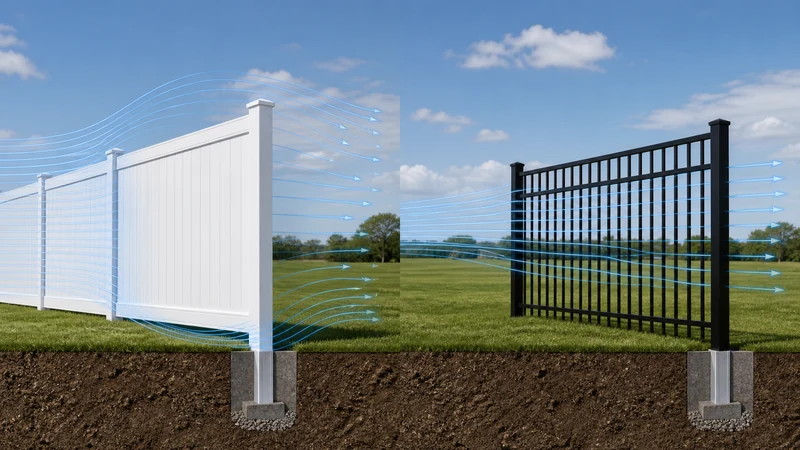
Solid privacy fencing creates a larger surface area against the wind. Depending on local engineering requirements, it may need:
- Larger posts
- Shorter post spacing
- Deeper foundations
- More concrete
- Additional reinforcement
Open-style aluminum fencing allows more air to pass through the fence. This may reduce wind pressure, but it does not eliminate the need for structural evaluation.
For projects governed by North American structural requirements, the buyer or engineer may need to reference the applicable edition of the ASCE 7 Minimum Design Loads standard and local building regulations.
Post size, embedment depth, concrete volume, fixing method, and spacing should be determined from project conditions—not from a generic catalog illustration.
Gates Can Change the Budget Quickly
Gates are often one of the most underestimated parts of a fence quotation.
A gate may require:
- Reinforced gate posts
- Heavier frames
- Adjustable hinges
- Latches or locks
- Drop bolts
- Automation preparation
- Additional foundations
- Site-specific opening directions
Buyers should specify the quantity, width, height, opening type, and intended use of every gate before comparing quotations.
3. Maintenance Costs Over Time
Both vinyl and aluminum fencing are generally positioned as lower-maintenance alternatives to traditional painted wood or steel fencing. However, low maintenance does not mean no maintenance.
Vinyl Fence Maintenance
Vinyl fencing normally needs periodic washing to remove dirt, pollen, algae, or surface staining. Cleaning frequency depends on the climate and surrounding environment.
PVC does not rot like wood, so “vinyl fence rotting” should not be used as a general product claim. The Vinyl Institute’s material guidance also distinguishes vinyl from materials that decay through biological rot.
Possible problems should instead be described precisely. Depending on formulation, installation, exposure, color, and service conditions, these may include:
- Surface discoloration
- Loss of gloss
- Brittleness
- Cracking after impact
- Heat-related deformation
- Loose components
- Replacement of a damaged panel
Whether these problems occur—and how quickly—depends heavily on product quality and the project environment.
Aluminum Fence Maintenance
Powder-coated aluminum fencing typically requires periodic cleaning and inspection rather than regular repainting. Buyers should still inspect:
- Hinges and latches
- Fasteners and brackets
- Scratches or coating damage
- Connections near dissimilar metals
- Areas exposed to salt, chemicals, or persistent moisture
Aluminum does not develop the red rust associated with carbon steel, but its long-term performance still depends on alloy selection, pretreatment, coating quality, drainage, installation details, and the surrounding environment.
For architectural powder-coated aluminum, buyers can ask which coating specification applies. FGIA publishes the AAMA 2603, AAMA 2604, and AAMA 2605 finish-performance documents for aluminum extrusions and panels. The appropriate level should be selected according to the project’s exposure and performance requirements.
Buyers can review the FGIA overview of aluminum finish-performance standards before confirming coating requirements with the supplier.
Field Insight: What Do We Know About Long-Term Maintenance?
Have we handled high-UV, coastal salt-spray, high-wind, or severe-cold projects that show a real difference between aluminum and PVC in later cleaning, repair, or replacement costs?
Our current sales experience positions powder-coated aluminum fencing as a higher-quality, lower-maintenance solution, particularly for buyers who prioritize long-term appearance and reduced maintenance work.
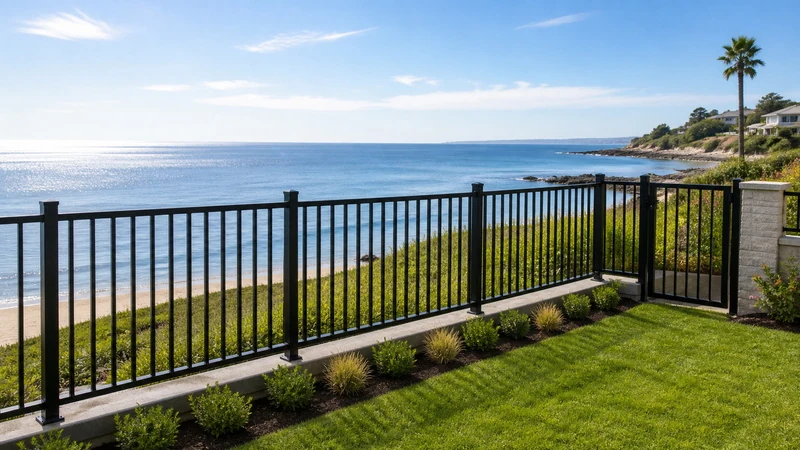
However, the information collected so far is a sales observation rather than a complete, documented after-sales case. We still need the following evidence before presenting a numerical lifecycle comparison:
- Project country and climate
- Fence configuration
- Installation date
- Coating specification
- Cleaning frequency
- Repairs or component replacements
- Photographs after several years
- Customer or contractor feedback
4. Durability, Lifespan, and Climate Impact on Cost
Fence durability cannot be evaluated independently from the installation environment.
The same product may perform differently in a mild inland residential area, a coastal commercial site, a high-wind hillside, or a region with frequent freezing and thawing.
| Site condition | Cost consideration for vinyl | Cost consideration for aluminum |
|---|---|---|
| High UV exposure | Formulation and color stability need review | Coating specification and color retention need review |
| Coastal salt exposure | Fasteners and internal components still require evaluation | Pretreatment, coating, fasteners, and isolation from dissimilar metals are important |
| High-wind site | Solid panels may require stronger posts and foundations | Open pickets reduce wind area, but engineering is still required |
| Severe cold | Impact performance and brittleness should be checked | Connections, foundations, and freeze-thaw movement should be checked |
| High-traffic area | Damaged panels may require sectional replacement | Pickets, rails, or panels may bend and need repair or replacement |
| Chemical exposure | Confirm material compatibility | Confirm coating and alloy compatibility |
Wind Load Can Change Both Material and Price
A full-privacy fence blocks sightlines, but it also blocks airflow. On exposed sites, this can significantly increase the load transferred to posts and foundations.
Before requesting a final quotation, the buyer should provide:
- Project location
- Required fence height
- Fence opening or privacy rate
- Design wind speed, if available
- Ground or mounting condition
- Post spacing
- Applicable local standard
- Gate sizes
A fence supplier can then recommend a more appropriate profile, post, spacing, and fixing method.
5. Aesthetic Appeal and Customization Costs
Appearance is not only a residential concern. For commercial buildings, hotels, apartment developments, schools, and public projects, fencing becomes part of the architectural design.
Vinyl Design Options
Vinyl fencing is commonly selected for a clean, uniform privacy boundary. Standardized panels and colors can help control the initial budget.
Custom textures, decorative tops, non-standard colors, or reinforced configurations may increase the price and lead time.
Aluminum Design Options
Buyers can source custom aluminum and metal fence systems in several configurations, including:
- Traditional vertical pickets
- Ornamental spear-top fencing
- Flat-top pool fencing
- Horizontal slat fencing
- Semi-privacy screens
- Full-privacy aluminum panels
- Custom gates
- Project-specific RAL colors
Black powder-coated aluminum is especially common where buyers want a modern or wrought-iron-style appearance without the repainting normally associated with traditional painted ironwork.
Customization affects profile selection, fabrication, coating, packaging, minimum order quantity, and production time. Buyers should therefore distinguish between a standard factory system and a fully customized architectural fence.
6. Privacy Fence vs Open-Style Fence
Privacy requirements can change the cost comparison more than the material itself.
A standard vinyl fence is often cost-effective when the main objective is to create a solid backyard or property boundary. An open-picket aluminum fence serves a different purpose: visibility, access control, architectural appearance, or perimeter definition.
Aluminum can also provide privacy, but the system may require:
- Closely spaced slats
- Solid aluminum panels
- Infill boards
- Louvers
- Heavier posts
- Additional rails or channels
These additions increase material weight, wind area, and foundation requirements.
Therefore, comparing a standard vinyl privacy fence with a basic aluminum picket fence is not a true like-for-like comparison. Buyers should first decide whether they need full privacy, semi-privacy, or open visibility.
7. Total Cost of Ownership
For a long-term project, the most useful formula is:
Total Cost of Ownership = Purchase Cost + Freight + Installation + Cleaning + Repairs + Replacement − Residual Value
The importance of each cost depends on the buyer.
A residential developer may prioritize initial construction cost. A property manager may care more about service calls and annual maintenance budgets. A distributor may focus on product consistency, packaging, stock turnover, and replacement-part availability.
A Practical Comparison Framework
Instead of asking only, “Which fence is cheaper?”, ask:
- What is included in each complete fence system?
- What foundation work is required?
- How many gates and reinforced posts are needed?
- What maintenance will the owner need to arrange?
- Can individual damaged parts be replaced?
- What coating or material specification is supplied?
- What is covered by the warranty?
- What evidence supports the expected service life?
- How will the fence perform in the project climate?
- What happens if matching replacement components are needed later?
This approach gives procurement teams a more realistic cost comparison.
Project Scenario: Why a North American Buyer Considered Aluminum Instead of PVC
The following is an illustrative project scenario based on recurring sales inquiries. It should not be presented as a completed customer case until the order details and result have been verified.
A North American buyer initially preferred PVC fencing because its quoted unit price was lower. The project required a black perimeter fence with matching gates, and the buyer first compared the cost of the main fence sections.
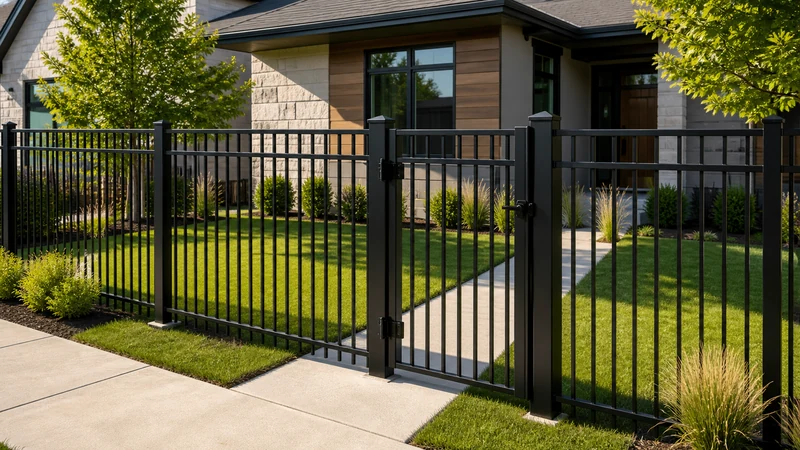
After reviewing the complete system, the quotation also needed to cover:
- Fence panels
- Line, end, and corner posts
- Gate posts
- Pedestrian or driveway gates
- Hinges and latches
- Concrete foundations
- Black exterior finish
- Packaging and delivery
The aluminum option had a higher upfront price. However, it offered the dark architectural appearance the buyer wanted, together with a powder-coated finish and a maintenance plan focused mainly on cleaning and hardware inspection.
The buyer therefore needed to decide between:
- A lower initial material price
- A higher-specification aluminum system intended to support longer-term appearance and lower routine maintenance
Before making the final selection, the project team also needed to confirm wind exposure, post foundations, gate sizes, coating specification, warranty coverage, and the expected ownership period.
Contractors handling a similar project can submit their layout and specifications through the JZH Fence project inquiry page to compare a complete aluminum fence system instead of panels alone.
When Should You Choose Vinyl Fencing?
Vinyl may be the better choice when:
- The project requires standard full privacy
- The initial budget is the main constraint
- A white or neutral uniform appearance is preferred
- The project environment is moderate
- Standard panel dimensions suit the site
- The buyer accepts periodic cleaning and possible component replacement
- Local supply of matching replacement panels is available
The product formulation, reinforcement, posts, fasteners, and installation method should still be checked before purchase.
When Should You Choose Aluminum Fencing?
Aluminum may be the better choice when:
- The project requires an open picket or ornamental fence
- Black, bronze, charcoal, or custom colors are important
- The fence is highly visible within the architectural design
- Lower routine maintenance is a priority
- The project includes pool, garden, commercial, or perimeter applications
- The buyer wants matching metal gates
- The site requires a carefully engineered open-area design
- Long-term appearance is more important than the lowest initial price
For privacy applications, buyers should request an aluminum slat or panel system specifically designed for the required privacy and wind conditions.
Buyer’s Checklist: Information Needed for an Accurate Fence Quote
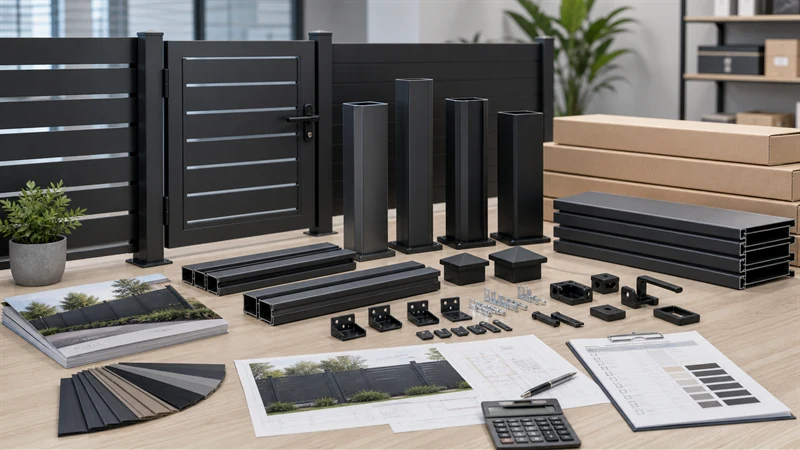
Before requesting an aluminum or vinyl fence quotation, prepare the following information.
Project Information
- Project country and city
- Residential, commercial, industrial, or public application
- Total fence length
- Fence height
- Layout drawing or marked site plan
- Number of corners and terminations
Fence Configuration
- Full privacy, semi-privacy, or open style
- Preferred panel design
- Required color
- Post spacing
- Ground-mounted, concrete-mounted, or wall-mounted installation
- Slope or stepped sections
Gate Requirements
- Gate quantity
- Gate width and height
- Pedestrian, double-swing, sliding, or automated gate
- Opening direction
- Locking and access-control requirements
Technical Requirements
- Wind-load information
- Local building or pool-fence requirements
- Coating specification
- Fastener material
- Foundation requirements
- Warranty documentation
Commercial Requirements
- Required quantity
- Delivery destination
- Incoterm
- Installation scope
- Packaging requirements
- Replacement-part requirements
- Target delivery date
Providing these details helps suppliers compare aluminum and vinyl systems on the same basis and reduces expensive changes after quotation.
Frequently Asked Questions
1. Is aluminum fencing always more expensive than vinyl fencing?
Not always, because the two materials are frequently used for different fence configurations. Standard vinyl privacy fencing will often have a lower initial price than an aluminum privacy or ornamental system. However, the final difference depends on height, gates, posts, foundations, finish, order quantity, freight, and installation.
2. Does vinyl fencing rot?
No. PVC does not rot biologically like wood. If a vinyl fence develops a problem, it should be described accurately—for example discoloration, brittleness, cracking, deformation, loose components, or impact damage.
3. Does aluminum fencing require maintenance?
Yes, but routine work is generally limited. A powder-coated aluminum fence should be cleaned periodically, while its hinges, latches, fasteners, connections, and coating condition should be inspected. Coastal and industrial environments may require more frequent cleaning.
4. Is aluminum better for high-wind areas?
An open-picket aluminum fence has less wind area than a solid privacy panel, which can reduce wind pressure. However, no fence should be described as suitable for a high-wind project without checking the profiles, post spacing, foundations, fixings, gates, and local engineering requirements.
5. How can buyers compare two fence quotations accurately?
Ask both suppliers to quote the same total length, height, layout, gate schedule, post system, foundations, hardware, finish, packaging, freight, and installation scope. A price-per-panel comparison is not enough.
Conclusion: Compare the Complete Fence System
The aluminum vs vinyl fence cost decision should not be based on panel price alone.
Vinyl can be an economical solution when the project needs standardized full privacy and the initial budget is the main concern. Aluminum is often better suited to buyers who prioritize architectural appearance, open-style security, matching metal gates, lower routine maintenance, and long-term project value.
Before choosing either material, compare:
- The complete system scope
- Installation and foundation requirements
- Privacy and wind-load needs
- Maintenance responsibilities
- Repair and replacement options
- Coating and hardware specifications
- Warranty terms
- Expected ownership period
Planning an aluminum fence project? Send JZH Fence your project requirements, including the layout, total length, fence height, gate schedule, installation method, required color, and delivery destination. Our team can prepare a project-specific fence configuration and quotation for contractors, distributors, developers, and commercial buyers.