
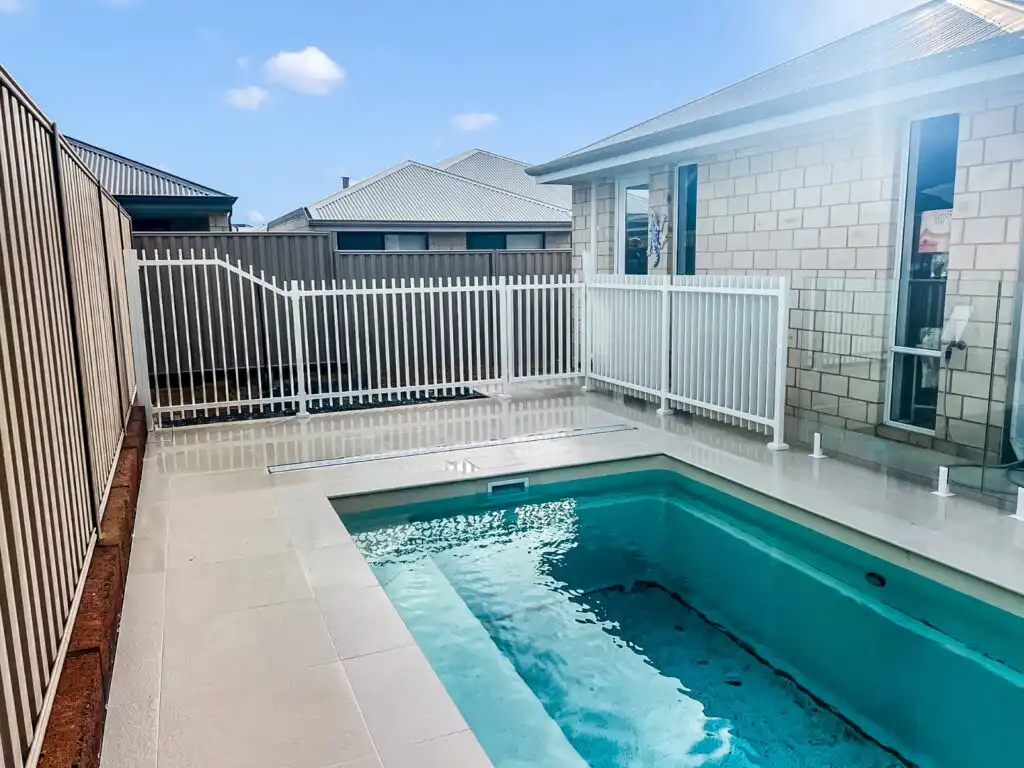
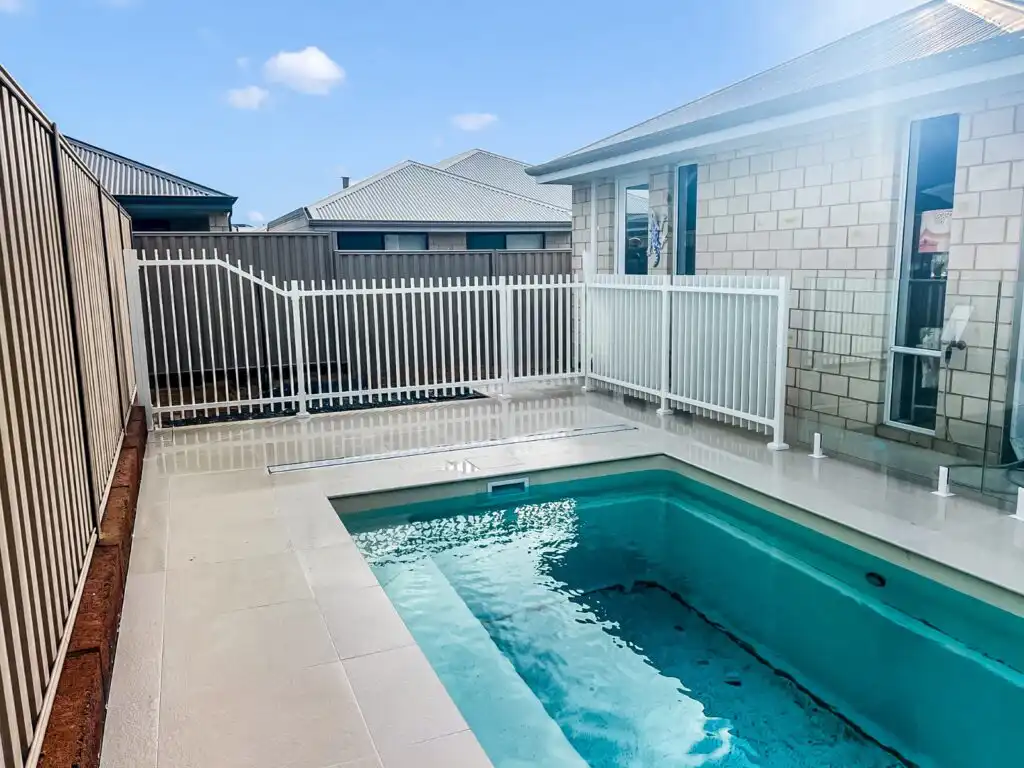
Aluminium blade fencing has become a popular choice for architects, fencing contractors, builders, and property developers looking for a clean modern appearance without the maintenance demands of traditional timber or untreated steel fencing.
But choosing the right blade fence involves more than selecting a colour or blade profile. Fence height, blade spacing, post specifications, installation surface, project location, and local compliance requirements can all affect the final system.
At JZH Fence, these are some of the details we confirm before moving from an initial enquiry to a project-specific quotation.
This guide explains how aluminium blade fencing works, how it compares with steel blade fencing, what to check before ordering, and what we have learned from actual blade fence projects.
What Is Aluminium Blade Fencing?
Blade fencing is a metal fencing system made with narrow vertical profiles, known as blades, fixed between horizontal rails.
Unlike conventional tubular fencing, which normally uses square or round pickets with relatively open visibility, blade fencing uses flatter and wider profiles. This creates deeper shadow lines and a more architectural appearance.
Common aluminium blade profiles include:
- 50 × 16 mm
- 65 × 16 mm
- 75 × 25 mm
The exact dimensions can vary according to the project.
By changing the blade width and spacing, you can also change how the fence performs visually.
A wider blade or smaller gap provides greater screening, while a narrower blade or larger gap gives the fence a more open appearance and allows more light and airflow through the boundary.
This makes aluminium blade fencing particularly suitable for projects where you want to balance:
- Privacy
- Visibility
- Airflow
- Security
- Architectural appearance
If your project requires greater visual screening rather than an open blade design, you can also compare it with JZH Fence’s aluminum privacy fence systems. aluminum privacy fence systems
JZH Fence can supply fencing as a coordinated system including panels, posts, matching gates, brackets, base plates, and accessories.
Key Benefits of Aluminium Blade Fencing
The main advantage of blade fencing is that it combines architectural appearance with practical outdoor performance.
Modern Architectural Appearance
Vertical blades create simple, clean lines that work particularly well with modern residential and commercial architecture.
Black and dark charcoal finishes are especially common because they can match window frames, gates, façades, landscaping, and other architectural elements.
Compared with solid sheet fencing, blades also create more depth through light and shadow.
Adjustable Privacy and Visibility
A blade fence does not have to be completely open or completely private.
You can adjust the relationship between the blade width and blade gap to create the amount of screening required for the project.
For example, a residential front boundary may need some visibility toward the street, while a side boundary or commercial screening area may require smaller gaps.
If full or semi-private screening is your main goal, see JZH Fence’s aluminum privacy fence options, which include vertical and horizontal configurations. aluminum privacy fence options
Corrosion Resistance
Aluminium does not rust in the same way as untreated carbon steel.
Combined with suitable surface preparation and powder coating, it can provide a practical solution for outdoor fencing applications.
For projects in coastal or high-corrosion environments, however, the specification should still be considered carefully.
Based on our project experience, we normally pay additional attention to coating requirements and fasteners used in these environments. Depending on the project specification, stainless-steel or aluminium fasteners may be considered to improve corrosion resistance.
Lower Maintenance Requirements
Aluminium fencing generally requires less routine maintenance than timber fencing.
You do not need to regularly stain or paint the panels simply to prevent timber decay.
Routine cleaning and inspection of fittings are normally more important than repeated refinishing.
For contractors, property managers, and developers, this can reduce long-term maintenance work across larger projects.
Lightweight Construction
Another practical benefit is weight.
Aluminium panels are generally easier to transport and handle on site than comparable heavy steel systems.
This can simplify:
- Loading and unloading
- On-site handling
- Positioning panels
- Gate installation
- Large project logistics
For international buyers, weight can also be an important part of shipping and container planning.
Aluminium Blade vs Steel Blade Fencing
Aluminium and steel blade fencing can look similar, but they are suited to different project requirements.
| Factor | Aluminium Blade Fencing | Steel Blade Fencing |
|---|---|---|
| Weight | Relatively lightweight | Heavier |
| Corrosion behaviour | Does not rust like carbon steel | Requires suitable protective treatment |
| Maintenance | Generally low | Depends heavily on coating and exposure |
| Appearance | Slim, modern architectural profile | Heavier and more robust appearance |
| Handling | Easier to transport and position | Greater handling requirements |
| Typical use | Residential, commercial, pool and architectural boundaries | Industrial, commercial and higher-security applications |
| Customisation | Blade size, spacing, colour, panel and gate dimensions | Also highly customisable |
Neither material is automatically better.
The correct choice depends on the project.
For a modern residential frontage or architectural pool boundary, aluminium blade fencing is often the more practical choice.
For an industrial perimeter where security and stronger perimeter protection are priorities, buyers can also compare JZH Fence’s commercial security fencing systems. commercial security fencing systems
Another relevant option for Australian commercial projects is garrison fencing, which uses tubular aluminium or steel profiles rather than flat blades. garrison fencing
JZH Fence manufactures different metal fencing systems, allowing project buyers to select a solution according to the actual application rather than forcing one material into every project.
Blade Profiles, Heights, Spacing and Colours
The visual effect of a blade fence is mainly determined by four factors:
- Blade dimensions
- Blade spacing
- Fence height
- Surface finish
Blade Size
Typical blade profiles may include 50 × 16 mm, 65 × 16 mm, and 75 × 25 mm.
Smaller profiles generally produce a lighter visual appearance.
Wider or deeper blades create stronger lines and can increase screening depending on the spacing used.
Fence Height
Typical project heights can include:
- 1000 mm
- 1200 mm
- 1500 mm
- 1800 mm
Custom heights can also be discussed for project orders.
The correct height should always be determined according to the application and applicable local requirements rather than appearance alone.
Blade Spacing
Blade spacing is one of the most important specifications in the entire system.
It affects:
- Privacy
- Visibility
- Airflow
- Appearance
- Compliance in certain applications
Two fences using exactly the same blade profile can perform very differently if their spacing is changed.
Colours and Surface Finishes
Popular choices include:
- Satin black
- Dark charcoal
- Grey
- White or light neutral colours
- Wood-look finishes where available
For B2B projects, colour consistency across panels, posts, and matching gates is especially important because all components are viewed as one complete system.
What We Confirm Before Quoting a Blade Fence Project
One thing we have learned from actual enquiries is that customers often initially provide only two pieces of information:
the fence height and the total project length.
That is enough for an early discussion, but usually not enough for an accurate project quotation.
Before confirming a blade fencing solution, we normally try to clarify the following information.
1. Fence Height
First, we confirm the required finished fence height.
This is particularly important when the system will be used for:
- Pool fencing
- Residential boundaries
- Commercial screening
- Security boundaries
The required height may be influenced by both the application and local regulations.
2. Blade Size and Spacing
We need to understand whether the buyer prefers a more open architectural appearance or greater screening.
That normally means confirming:
- Blade width
- Blade depth
- Gap between blades
These parameters can affect both appearance and project suitability.
3. Panel Dimensions
We also confirm:
- Panel height
- Panel width
- Total fence length
Panel dimensions influence the number of posts, fixing points, accessories, packaging, and shipping calculations.
4. Post Specification
The post is easy to overlook, but it is a critical part of the system.
Depending on the project, we may need to confirm:
- Post dimensions
- Wall thickness
- Post length
- Base-mounted or in-ground installation
A fence panel cannot be specified independently from its supporting structure.
5. Installation Surface
We also ask where the fence will actually be installed.
Typical surfaces include:
- Concrete
- Soil
- Decking
- Existing structural bases
A fence mounted to concrete generally requires a different post and fixing arrangement from a fence installed directly into the ground.
6. Application
Before quoting, it is useful to know whether the project is for:
- Residential boundary fencing
- Pool fencing
- Commercial property
- Decorative frontage
- Security screening
This allows us to discuss the system in the context of the actual project instead of quoting only from a product photo.
7. Project Environment
Finally, we ask about the project location and exposure conditions.
A coastal project may require different consideration from a standard inland residential project.
This can affect coating requirements, fasteners, and other specification details.
Three Details Buyers Commonly Miss
From our experience, three items deserve particular attention:
Blade spacing, post specifications, and installation foundations.
They may appear to be small details during an initial enquiry, but if they change later, they can affect:
- Drawings
- Quotation
- Post length
- Accessories
- Fixing method
- Installation planning
- Compliance requirements
For this reason, providing more information at the beginning usually helps both the buyer and manufacturer develop a more accurate solution.
Australian Pool Fence Compliance: What Buyers Should Check
Pool fencing is one application where blade fence dimensions cannot be selected only for appearance.
In Australia, AS 1926.1:2024 addresses the design, construction, and performance of swimming pool safety barriers. Standards Australia published an overview of the revised standard in 2024. AS 1926.1:2024 swimming pool safety barrier overview
However, you should not assume that every aluminium blade fence panel is automatically suitable for every pool project.
Pool barrier requirements can also be implemented through state legislation and local requirements. For example, Queensland guidance requires pool barriers to be at least 1200 mm high and limits the gap beneath the barrier to 100 mm. Queensland pool fence requirements
NSW Government guidance similarly highlights important measurements such as minimum barrier height, vertical-member gaps, bottom clearance, and the non-climbable zone. NSW pool fencing requirements
A project therefore needs to consider factors such as:
- Finished barrier height
- Gap between vertical members
- Ground clearance
- Potential climbing points
- Gate direction
- Self-closing mechanism
- Self-latching mechanism
- State and local requirements
This is why blade spacing and the final installation configuration are particularly important.
For Australian pool projects, we recommend checking the applicable state, council, and project requirements before finalising panel dimensions or placing a bulk order.
Blade Gates, Posts and Accessories
A blade fence is more than the panel itself.
To achieve consistent appearance and installation, the posts, gates, and accessories should be considered as part of one system.
Matching Blade Gates
Gate options can include:
- Pedestrian gates
- Single swing gates
- Double swing gates
- Custom driveway gates
For architectural projects, the blade style and spacing of the gate can be aligned with the adjacent fencing.
This helps maintain a consistent visual line across the entire boundary.
Post Options
Two common installation methods are:
In-ground posts:
Used where posts are embedded into the ground and secured with an appropriate footing.
Base-plate posts:
Used where the fence is installed onto an existing concrete structure or another suitable engineered surface.
The final post specification should be selected according to fence height, installation conditions, and structural requirements.
JZH Fence’s broader aluminum fencing systems also demonstrate how panels, posts, rails, gates, and installation accessories can be supplied together for project orders. aluminum fencing systems
Accessories
A full system may also include:
- Panel brackets
- Anchor bolts
- Base plates
- Screws
- Post caps
- Gate hinges
- Gate latches
For distributors and contractors, sourcing these components together can reduce compatibility problems on site.
How Is Aluminium Blade Fencing Installed?
Blade fence installation depends on the project, but a typical process follows these steps:
- Measure the fence line and confirm the panel layout.
- Mark the post positions according to panel dimensions.
- Install the posts using either an in-ground or base-mounted system.
- Check that all posts are level and plumb.
- Fix the blade fence panels between the posts.
- Install pedestrian or driveway gates.
- Adjust hinges, latches, and alignment.
- Complete a final inspection of fixings and panel levels.
The correct footing depth or fixing method should not be treated as one universal number.
It can depend on:
- Fence height
- Ground conditions
- Wind conditions
- Post dimensions
- Local engineering requirements
For B2B orders, JZH Fence can provide drawings and installation information according to the agreed product specification.
Where Is Aluminium Blade Fencing Used?
Because blade size, spacing, and height can be adjusted, the system can be used across several different project types.
Residential Boundary Fencing
Blade fencing works particularly well with modern homes.
It can be used for:
- Front boundaries
- Side boundaries
- Entry areas
- Driveway fencing
- Privacy screening
Compared with a completely solid fence, blades can make a boundary feel lighter and more architectural.
For projects where maximum visual privacy is the priority, buyers can compare blade fencing with full-privacy and semi-privacy aluminium fence panels. full-privacy and semi-privacy aluminium fence panels
Pool Areas
Aluminium is well suited to outdoor environments, which is one reason blade fencing is considered for pool projects.
However, the design must first be checked against applicable pool barrier requirements.
For these projects, height and blade spacing should be confirmed before production.
If the project requires a more traditional open tubular appearance, JZH Fence’s tubular and garrison fencing options provide another system to compare. tubular and garrison fencing options
Commercial Projects
Blade fencing can also be specified for:
- Apartment developments
- Office properties
- Hospitality projects
- Schools
- Commercial boundaries
- Public projects
Commercial projects may require different panel dimensions, posts, gates, and coating specifications compared with residential installations.
Where the project’s priority shifts from architectural appearance toward perimeter protection, see JZH Fence’s security fence solutions for commercial and industrial projects. security fence solutions for commercial and industrial projects
Real Project: Black Aluminium Blade Fence for an Australian Residential Boundary
A useful example comes from an Australian residential boundary project supplied with black powder-coated aluminium blade fencing.
The final fence configuration included:
| Project Detail | Specification |
|---|---|
| Market | Australia |
| Application | Residential boundary |
| Fence type | Aluminium blade fence |
| Height | Approx. 1.4 m |
| Panel width | Approx. 600 mm |
| Colour | Black |
| Finish | Powder coated |
| Installation surface | Concrete |
| Installation method | Screw-fixed |
At the beginning of the project, appearance was one of the customer’s main concerns.
The customer wanted a fence that complemented the modern residential architecture and created clean vertical lines along the boundary.
However, appearance was only one part of the specification.
Before confirming the system, we also needed to consider:
- Fence height
- Panel dimensions
- Blade style
- Concrete mounting method
- Post and fixing arrangement
- Surface finish
Because the fence was being installed onto concrete, the fixing method also had to be considered as part of the panel and post system.
The result was a black aluminium blade fence that balanced modern appearance, clear boundary definition, durability, and relatively low maintenance requirements.
What This Project Taught Us
This project reflects an important point we often explain to buyers:
Do not select a blade fence only from a product image.
Two systems that look similar in a catalogue can behave very differently on site if they use different:
- Heights
- Panel widths
- Blade spacing
- Posts
- Base plates
- Fasteners
- Installation methods
The more complete the project information is before production, the easier it is to reduce later changes to drawings and specifications.
Aluminium Blade Fencing for Coastal Projects
Coastal projects deserve additional attention because fencing can be exposed to salt, moisture, and more aggressive environmental conditions.
When discussing an aluminium fencing system for these projects, we normally pay attention to:
- Surface preparation
- Powder coating specification
- Fastener materials
- Post and connection details
- Project exposure conditions
Where appropriate, higher-durability powder coating and stainless-steel or aluminium fasteners can be considered.
The final specification should still be selected according to the actual project environment rather than using one configuration for every coastal location.
Custom and OEM/ODM Blade Fencing
For wholesalers, distributors, fencing contractors, and project buyers, standard panels are not always enough.
JZH Fence can discuss custom blade fencing according to project requirements.
Customisable items can include:
- Blade dimensions
- Blade spacing
- Panel height
- Panel width
- Post dimensions
- Gate dimensions
- Colour
- Surface finish
- Accessories
OEM and ODM requirements may also include:
- Customer branding
- Packaging
- Labels
- Installation manuals
- Project drawings
- Market-specific product configurations
You can review JZH Fence’s wider fencing manufacturing and project supply capabilities when evaluating a multi-product or custom project. fencing manufacturing and project supply capabilities
For customised products, the specification should be confirmed before production.
Why Work With JZH Fence for Aluminium Blade Fencing?
JZH Fence supplies fencing systems for international B2B customers including distributors, wholesalers, fencing contractors, builders, and project buyers.
Our approach is not simply to quote a panel from a photograph.
For project enquiries, we aim to understand the application first and then confirm the relevant specifications.
Complete System Supply
Panels, posts, gates, and accessories can be coordinated under one fencing system.
Customisation
Blade profiles, spacing, dimensions, colours, posts, and gates can be discussed according to the project.
Project Support
Customers can provide drawings, specifications, or project requirements so that key details can be clarified before production.
Manufacturing and Quality Control
JZH Fence manufactures different fencing systems including aluminium fencing, WPC fencing, Colorbond-style steel fencing, garrison fencing, and other metal fencing solutions.
You can learn more about JZH Fence’s fencing product range and manufacturing capabilities here. JZH Fence’s fencing product range and manufacturing capabilities
Product-specific certificates, reports, and compliance documents should always be confirmed according to the particular fence model and project requirement.
FAQ About Aluminium Blade Fencing
What is the best spacing for aluminium blade fencing?
There is no single best blade spacing for every project.
Smaller gaps generally provide more screening, while larger gaps increase openness, airflow, and visibility.
The correct spacing should be selected according to privacy requirements, appearance, application, and local compliance requirements.
Can aluminium blade fencing be used around a swimming pool?
It can potentially be used for pool projects, but the exact configuration must meet applicable local pool barrier requirements.
Fence height, blade spacing, ground clearance, climbability, and gate design all need to be checked.
For Australian projects, review the relevant pool barrier requirements for your state or local authority rather than assuming every blade panel is automatically compliant. Australian pool barrier guidance
What is the difference between blade fencing and tubular fencing?
Tubular fencing normally uses square or round vertical pickets with a relatively open appearance.
Blade fencing uses wider, flatter profiles that create stronger architectural lines and can provide more screening depending on the gap between blades.
You can compare this with JZH Fence’s Australian-style garrison and tubular fence systems. Australian-style garrison and tubular fence systems
Can blade fencing be installed onto concrete?
Yes.
A suitable base-mounted post and fixing system can be used for many concrete installations.
The post, base plate, anchor, and structural requirements should be determined according to the individual project.
Is aluminium blade fencing suitable for coastal areas?
Aluminium is often considered for coastal fencing because it does not rust like untreated carbon steel.
However, coating specifications, fasteners, connection details, and the severity of the exposure environment should still be considered before the final system is selected.
Get a Quote for Your Aluminium Blade Fencing Project
Choosing the right aluminium blade fencing is easier when the important project information is confirmed at the beginning.
If you are sourcing blade fencing for a residential development, commercial project, pool area, or wholesale market, send JZH Fence as much of the following information as possible:
- Project location
- Total fence length
- Required height
- Preferred blade size
- Preferred blade spacing
- Panel dimensions
- Installation surface
- Gate requirements
- Colour
- Project drawings, if available
JZH Fence supplies complete fencing systems for overseas distributors, wholesalers, contractors, and project buyers. Explore JZH Fence fencing solutions
Send your drawings or project specifications to discuss a suitable panel, post, gate, and accessory configuration.